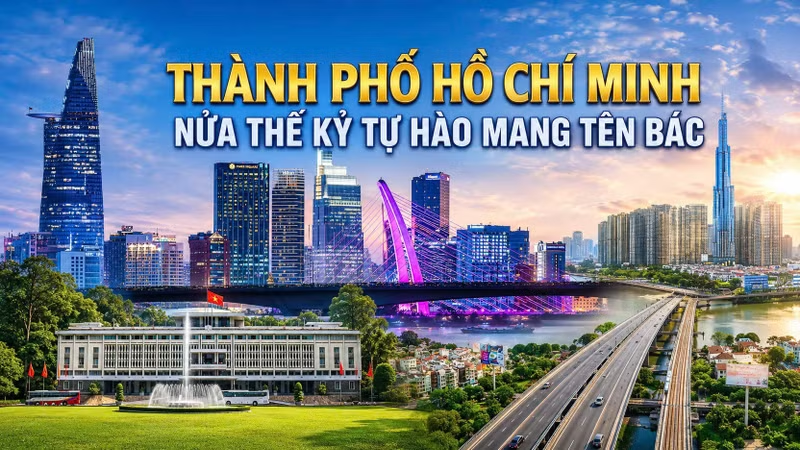
Ho Chi Minh City Marks 50 Years Under Uncle Ho's Name: Achievements and Future Aspirations
Economy
2026年7月2日
3
Nhan Dan

Ho Chi Minh City Marks 50 Years Under Uncle Ho's Name: Achievements and Future Aspirations

AI サマリー

Ho Chi Minh City celebrates 50 years since its renaming to honor President Ho Chi Minh. Over the past half-century, the city has overcome numerous challenges, achieving remarkable progress in economy, culture, and society, and now looks towards further development.

July 2, 2026, marks the 50th anniversary of Sai Gon-Gia Dinh City officially being honored with the name of President Ho Chi Minh. Throughout this half-century of development, the city named after Uncle Ho has overcome numerous difficulties and challenges, leaving behind proud milestones with brilliant achievements in all fields. Ho Chi Minh City - Half a Century Proudly Bearing Uncle Ho's Name The ceremony commemorating the 50th anniversary of Sai Gon-Gia Dinh City officially being honored with the name of President Ho Chi Minh took place on the morning of July 2. 50 Years of the City Bearing President Ho Chi Minh's Name: Historical Imprint, Aspirations for Development, and Institutional Breakthroughs Under Vietnam's one-party system, renaming major cities often carries significant political and historical symbolism. The renaming of Ho Chi Minh City (formerly Saigon) held crucial importance in the context of national reunification and the establishment of the socialist regime after the Vietnam War. Over these 50 years, the city has served as a hub for economic development, driving Vietnam's rapid economic growth. In particular, attracting foreign investment and developing manufacturing have been remarkable, greatly contributing to enhancing Vietnam's position in global supply chains. However, the city also faces challenges such as lagging infrastructure development due to rapid urbanization, environmental issues, and widening income disparities. Regarding relations with China, while economic ties are strong, geopolitical tensions also exist, particularly concerning issues like the South China Sea. Amidst these complex factors, Ho Chi Minh City aims for further development under the slogan 'For the whole country, together with the whole country.'

多角的分析

経済的影響

ホーチミン市の50年間の発展は、ベトナム経済の成長モデルを象徴している。特に、1986年のドイモイ政策以降、外国直接投資(FDI)の誘致に成功し、製造業を中心とした輸出主導型経済の確立に寄与した。しかし、経済成長の裏側では、不動産価格の高騰、インフラ投資の遅れ、そして急速な都市化に伴う環境負荷の増大といった構造的な問題が顕在化している。これらの課題への対応が、今後の持続的な経済成長の鍵となる。

投資家心理

ホーチミン市は、ベトナム経済のエンジンとして、国内外の投資家にとって依然として魅力的な市場である。特に、テクノロジー、物流、消費財分野への投資が活発化している。一方で、不動産市場の過熱や、法制度の運用における不確実性、インフラのボトルネックは、投資リスクとして認識されている。投資家は、ベトナム政府の経済政策や、都市開発計画の進捗を注視する必要がある。

社会的影響

ホーチミン市の急速な発展は、社会構造にも大きな変化をもたらしている。都市部と地方部、富裕層と貧困層との間の所得格差は拡大傾向にあり、これが社会的な摩擦の原因となる可能性がある。また、交通渋滞、大気汚染、住宅問題などは、市民の日常生活に直接的な影響を与えている。特に、若年層は、より良い雇用機会や生活環境を求めて都市部に流入する傾向が強く、これらの課題への効果的な対策が求められている。

市民の声

ホーチミン市民にとって、市がホー・チ・ミン主席の名を冠してから50年という節目は、過去の発展を振り返りつつ、未来への期待を抱く機会である。しかし、日々の生活においては、依然として交通渋滞や高騰する生活費といった課題に直面している。特に、不動産価格の上昇は、若年層の住宅取得を困難にしており、将来への不安を感じさせている。政府は、これらの市民の切実な声に耳を傾け、より公平で持続可能な都市開発を進めることが求められている。

背景・歴史的文脈

サイゴン・ザーディン市がホーチミン市と改称されたのは、1976年7月2日、ベトナム戦争終結(1975年)の翌年である。これは、南北統一後のベトナムにおいて、南部を象徴する大都市に、革命指導者であり国家統一の父とされるホー・チ・ミンの名を冠することで、国家の一体性と社会主義体制の正統性を内外に示す政治的・歴史的な意図があった。以来、同市はベトナムの経済改革(ドイモイ政策)の中心地として、外国からの投資を積極的に誘致し、製造業、サービス業を中心に目覚ましい経済成長を遂げてきた。この50年間で、ホーチミン市はベトナム経済を牽引する最大都市へと変貌を遂げた。

原文ソース

Nhan Dan

原文を読む