Get the Rohingya wrong and you get Myanmar wrong
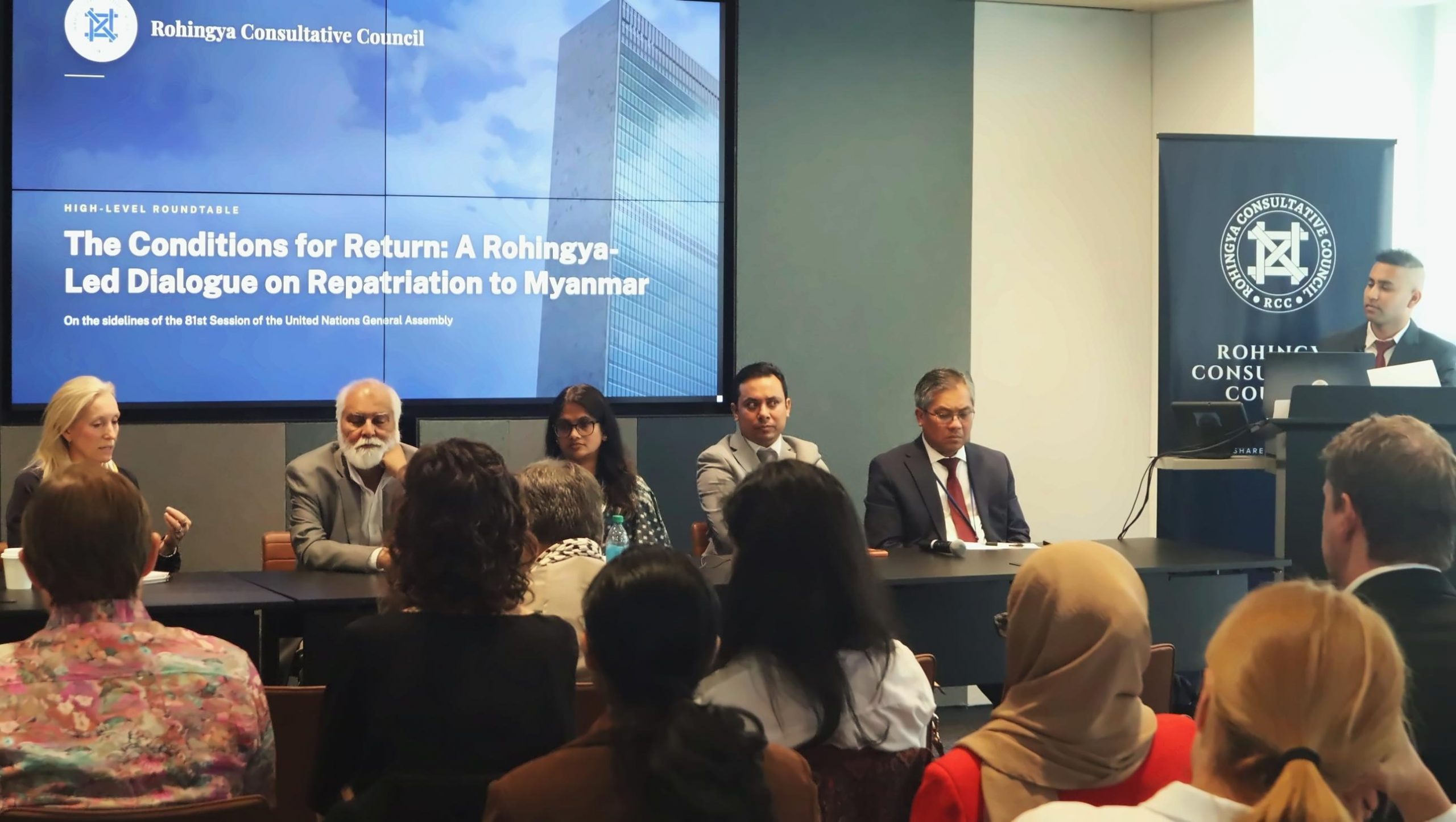
Guest contributor Jaivet Ealom Last week, Malaysia’s Prime Minister Anwar Ibrahim rolled out the red carpet in Kuala Lumpur for Min Aung Hlaing, the general who oversaw the military’s 2017 atrocities against the Rohingya, seized power in the 2021 coup, and now calls himself president after an election widely dismissed as a sham. Anwar presented the visit as the price of sending the Rohingya home. Malaysia has already returned over 10,000 people to Myanmar this year, despite warnings from the United Nations that they face grave danger.Anwar argues that direct engagement with Myanmar’s military leadership is essential to a lasting solution. But the visit produced no agreement on Rohingya repatriation. Min Aung Hlaing even insisted that the word “Rohingya,” which the military refuses to recognize, not be used. What the visit did deliver was legitimacy: another capital treating the general as the indispensable gatekeeper to Myanmar’s future, even though his forces no longer control much of the country. Two weeks earlier, on the sidelines of the U.N. General Assembly in New York, the Rohingya Consultative Council (RCC) convened Rohingya political leaders, representatives of the Government of Bangladesh, the Permanent Representative of Myanmar to the U.N. Ambassador Kyaw Moe Tun, and the newly-appointed U.N. Special Rapporteur on Human Rights in Myanmar Kelley Currie, to ask what it would take for Rohingya refugees to go home safely, voluntarily and with dignity. We reached a very different conclusion: The Rohingya crisis cannot be resolved through humanitarian assistance and repatriation arrangements alone. It requires a political solution. Get the politics of the Rohingya crisis wrong, and you will get Myanmar wrong too. Repatriation, Not Relocation For decades, international responses to the Rohingya crisis have focused on humanitarian assistance, refugee management and negotiations for repatriation. These efforts are necessary, but they do not address the underlying political problem. Rohingya were systematically deprived of citizenship, excluded from political life, subjected to discrimination and violence, and ultimately driven from their homes. Their displacement was the consequence of a political and legal system that denied them equal membership in Myanmar. A sustainable return must therefore involve more than an agreement to receive refugees. It requires security, citizenship, ethnic recognition, political participation, access to ancestral lands, freedom of movement and protection against renewed persecution. Simply moving Rohingya from refugee camps in Bangladesh or detention centers in Malaysia into new camps or controlled settlements inside Myanmar cannot meaningfully be described as repatriation. Nor can returning people to a country where the conditions that forced their displacement remain intact. These are fundamentally political questions. Who governs the territories to which Rohingya would return? Who guarantees their safety?
Read up to 3 eligible full articles per Japan day (JST) for free
Create a free account to open up to 3 eligible full articles per Japan calendar day (JST). Headlines and summaries remain available across ASEAN 7.
Related articles
- Order No. 78/2026: Appointment of Deputy Ministers
The President’s Office issued Order No. 78/2026 on October 10, concerning the appointment of Deputy Ministers. In accordance with Sections 234(a) and 234(d) of the Constitution and Section 16(b), Subsection (9) of the Un
- Order No. 79/2026: Appointment of Regional Minister
The President’s Office issued Order No. 79/2026 on October 10, concerning the appointment of Regional Minister.,In accordance with Section262(e) and (f) of the Constitution, Section 19(c) and Section 82(c) of the Union G
- Order No.80/2026: Appointment of the judge of Shan State High Court
The President’s Office issued an Order No.80/2026 on October 10, regarding the appointment of Daw Aye Aye Hlaing as the judge of Shan State High Court. The appointment was made in line with Section 308(b), Sub-section-4
- Law Amendment: Amyotha Hluttaw & Region/State Hluttaw Election Law
The Law for Seventh Amendment on the Amyotha Hluttaw Election Law was enacted on October 10, as Pyidaungsu Hluttaw Law No. 5 of 2026. Likewise, the Law for Seventh Amendment on the Region or State Hluttaw Election Law wa