Protest at Chinese Consulate in Chiang Mai turns chaotic over Myanmar mining pollution
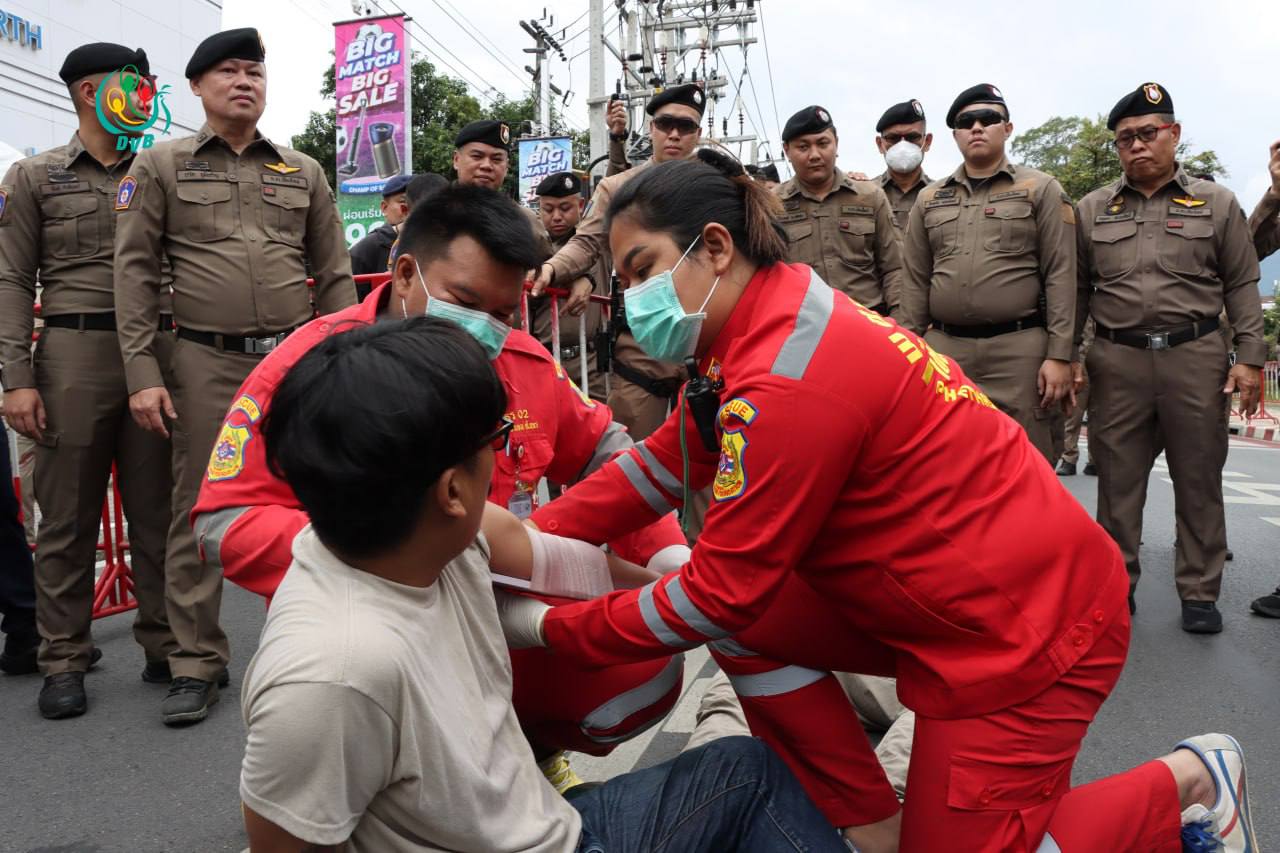
A peaceful demonstration outside the Chinese Consulate General in Chiang Mai descended into chaos on July 6 after Thai police physically blocked protesters from approaching the building. The rally, driven by mounting pub
A peaceful demonstration outside the Chinese Consulate General in Chiang Mai descended into chaos on July 6 after Thai police physically blocked protesters from approaching the building. The rally, driven by mounting public health and environmental anxieties, was organized to demand accountability from Beijing regarding toxic heavy metal contamination linked to Chinese-backed mining operations in neighboring Myanmar. Organized by the People’s Network for the Protection of the Kok, Sai, Ruak, and Mekong Rivers, the demonstration sought to draw international attention to the devastating transboundary impacts of unregulated rare earth and gold mining in Myanmar’s conflict-ridden border regions. Confrontation and casualties The demonstration was abruptly disrupted when Thai police deployed officers and barricades to prevent the crowd from reaching the front of the consulate. Authorities cited traffic management and security concerns as the primary reasons for the restrictions. A physical confrontation quickly ensued between officers and demonstrators attempting to push forward. At least two protesters were severely injured during the clash, with medics confirming that one individual suffered a broken arm and another a dislocated shoulder. Despite the scuffle, Chiang Mai provincial officials eventually intervened to de-escalate the situation, accepting the group’s petition and promising to forward it directly to the Chinese Consulate. Demands for accountability The environmental coalition has laid out a series of stringent demands for the Chinese government and President Xi Jinping. The group is explicitly calling on Beijing to: “We ask President Xi Jinping and the Chinese government to instruct the Chinese companies operating these mines to stop their mining activities and to establish measures to provide assistance and compensation for those affected,” stated Chatchai Thammo, a representative of the Northern Coordination Committee on Development (NGO-COD). A public health emergency Activists argue that the pollution is no longer just an environmental issue, but a severe public health crisis threatening millions of livelihoods, food security, and access to safe drinking water across the region. To visually emphasize the immediate danger, demonstrators arrived carrying contaminated water samples taken from the Kok, Sai, Ruak, and Mekong rivers. In a powerful symbolic act, they also prepared a traditional northern Thai dish, Larb Pla Nam Kok (spicy minced fish salad), to highlight that local aquatic food sources are rapidly becoming unsafe for human consumption. The contamination is spreading far beyond the border, impacting drinking water supplies, agricultural irrigation, and local fisheries across Thailand’s Chiang Mai and Chiang Rai provinces, and extending as far south as Loei province in the northeastern Isaan region. “Children going down to play in the Kok River developed severe rashes and itching all over their bodies,” warned Chatchai Thammo from NGO-COD, underscoring the immediate, physical toll the toxic runoff is taking on local communities who have relied on the waterways for generations.
多角的分析
直接の経済ニュースではありませんが、治安と司法の信頼は地域経済の土台です。職場での暴力や未成年者保護への不安が強まると、夜間営業、観光、雇用、地域サービス業のリスク認識が高まります。
投資家目線では、個別事件よりも法執行の予見可能性が焦点です。加害者への対応が曖昧になれば、ローカルビジネスの統治リスクや従業員保護の弱さとして評価されやすくなります。
ミャンマー鉱山で問われるのは、加害者個人だけでなく、雇用主、警察、近隣社会が被害のサインをどう扱ったかです。警察が声を上げたことで、事件は噂話ではなく、記録され検証される公共問題に変わります。
市民にとっては、自分や家族が被害に遭った時に公正な手続きへアクセスできるのかが最大の関心です。地域団体が声を上げることで、事件の風化を防ぎ、被害者側の孤立を和らげる意味があります。
背景・歴史的文脈
このニュースは、ミャンマーの地域社会で法の支配と弱者保護がどこまで機能しているかを映す事案です。暴力事件そのものに加え、女性団体や市民社会が司法手続きを求めて声を上げている点が重要です。軍政下では警察・司法への信頼が揺らぎやすく、個別事件が地域の不安や統治への不信に直結します。
原文ソース
DVB