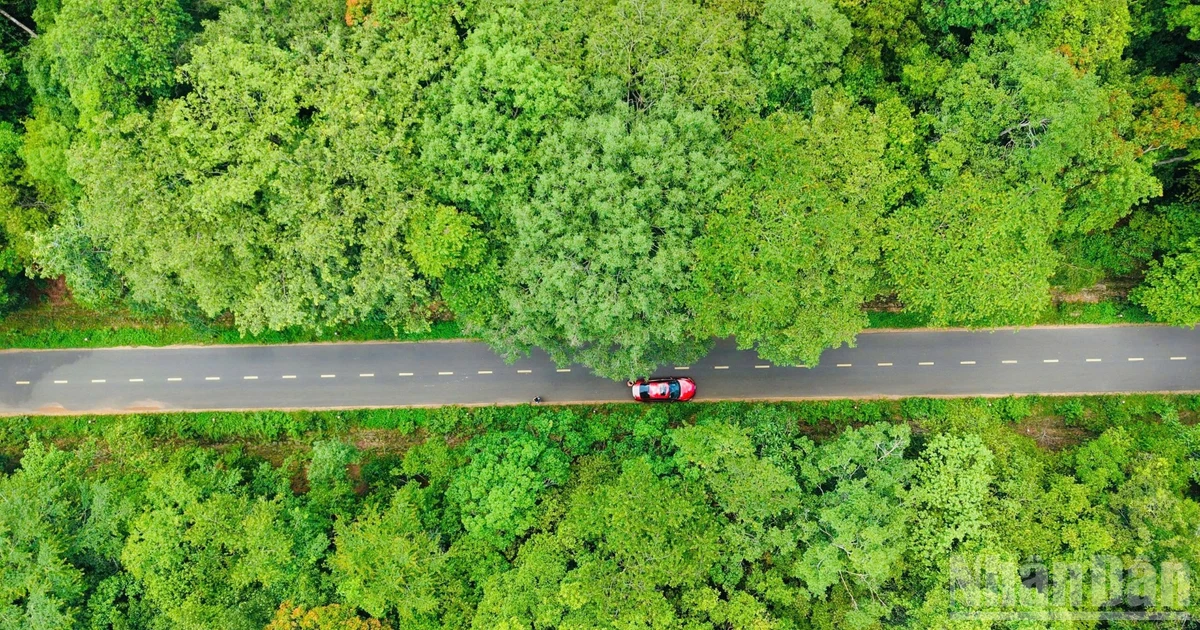
Vietnam to Build Elevated Road Through Forest, Prioritizing Ecosystem Protection
Dong Nai province in Vietnam is commencing the construction of a 13km elevated road that will traverse the Ma Da forest. Designed with eight lanes, the project incorporates measures to minimize impact on the forest ecosystem and wildlife. This segment is part of a larger 44.5km initiative aimed at boosting regional economic development.
Dong Nai province in southern Vietnam is set to commence the construction of a 13km elevated road that will traverse the Ma Da Forest Protected Area. This project, a part of broader efforts to enhance regional connectivity and economic development, aims to improve transportation access between Dong Nai province and Ho Chi Minh City. The plan, approved by the Provincial Party Standing Committee, will see its groundbreaking ceremony on June 30th, organized by the Provincial People's Committee. The elevated road will span 13km from the Ma Da Bridge to the Ba Hao intersection, built at a height of up to 12 meters with eight lanes and a design speed of 80 km/h. Three interchanges are planned along the route: one with DT 761 road, one leading to the Central Office of the Southern Vietnam NLF (Nam Bộ) historical site, and another connecting to the Eastern Southern Vietnam Regional Party Committee base historical site. Given that the road passes through a protected natural and cultural reserve, special measures are being implemented to minimize its impact on the forest ecosystem and wildlife. These include constructing the road on elevated pillars to avoid fragmenting habitats, installing a 4-meter-high sound and light barrier, and building a 45-meter observation tower for forest fire monitoring and wildlife observation. This elevated segment is part of a larger 44.5km project connecting the Ma Da Bridge to Ring Road 4 of Ho Chi Minh City, with an estimated total investment of nearly 30 trillion Vietnamese Dong (approximately USD 1.2 billion). The project will utilize approximately 54.49 hectares of land, with construction scheduled from 2026 to 2028. Specifically, component project 2, from Ba Hao intersection to Ring Road 4, will be approximately 31.5km long with eight lanes and a road surface width of 33.5 meters. Currently, there is no direct transportation link between Dong Nai and the former Binh Phuoc province. Dong Nai city leaders are prioritizing local and regional transportation development to eliminate geographical barriers and shorten travel times between the city center and its northern areas. Following its consolidation, Dong Nai city initiated the construction of the Ma Da Bridge at a cost of over 192 billion VND, facilitating smoother traffic flow for residents and businesses. To swiftly address traffic bottlenecks, a long-term vision and decisive action are required. In early April 2026, the Provincial Party Standing Committee agreed to invest in the project connecting Ma Da Bridge to Ring Road 4, designed with eight lanes. This project is crucial for completing the inter-regional transportation network, enhancing connectivity between Dong Nai city and Ho Chi Minh City, and driving socio-economic development in Dong Nai's northern region. It will also help form a transportation axis connecting the Central Highlands, northern Dong Nai, Long Thanh International Airport, and Cai Mep-Thi Vai Port.
多角的分析
この高架道路建設は、ドンナイ省および周辺地域の経済成長に大きく貢献すると考えられる。特に、ホーチミン市との接続強化は、物流コストの削減、産業集積の促進、観光客の増加につながる可能性がある。総事業費約30兆ベトナムドンの巨額投資は、地域経済への直接的な刺激となるだけでなく、関連産業への波及効果も期待できる。ベトナム政府が進めるインフラ投資戦略の一環として、経済成長の持続的な推進力となるだろう。
このインフラプロジェクトは、長期的な視点を持つ投資家にとって魅力的である。道路建設自体が公共事業であり、安定した収益が見込める可能性がある。さらに、道路が開通することで、沿線地域の不動産開発や工業団地の発展が加速し、新たな投資機会が生まれることが予想される。ただし、建設期間中の環境への影響や、地域住民との調整など、潜在的なリスクも考慮する必要がある。
マダー川森林保護区を通過する高架道路建設は、地域住民の生活に大きな変化をもたらす。移動時間の短縮は、通勤や物流の効率化に貢献する一方、開発による環境への影響や、地域社会の生活様式の変化に対する懸念も生じうる。特に、森林保護区に隣接する地域では、野生動物との共存や、自然環境の保全が重要な課題となる。高架構造や防音壁の設置は、これらの懸念に対応する試みであるが、その実効性が問われることになる。
この高架道路建設は、ドンナイ省の住民、特に北部地域に住む人々の生活に直接的な影響を与える。移動時間の短縮は歓迎されるだろう。しかし、開発に伴う騒音や環境の変化、そして森林保護区への影響に対する懸念も無視できない。高架構造が生態系への影響を軽減するとしても、開発そのものが地域住民の生活環境に変化をもたらす可能性は高い。住民は、インフラ整備の恩恵と、環境保全のバランスを注視することになるだろう。
背景・歴史的文脈
ベトナム政府は、経済成長の鈍化に対処し、国際競争力を高めるため、インフラ投資を国家戦略の柱としている。特に、ホーチミン市を中心とする南部経済圏の連携強化は、経済発展の鍵と見なされている。マダー川を越える高架道路建設は、2020年代後半のベトナムのインフラ開発計画の一環であり、地域間の物流網を整備し、経済活動を活性化させることを目的としている。過去のベトナムにおける大規模インフラプロジェクトでは、環境への影響や用地取得に関する課題がしばしば指摘されており、本プロジェクトでも同様の点が注目される。
原文ソース
Nhan Dan