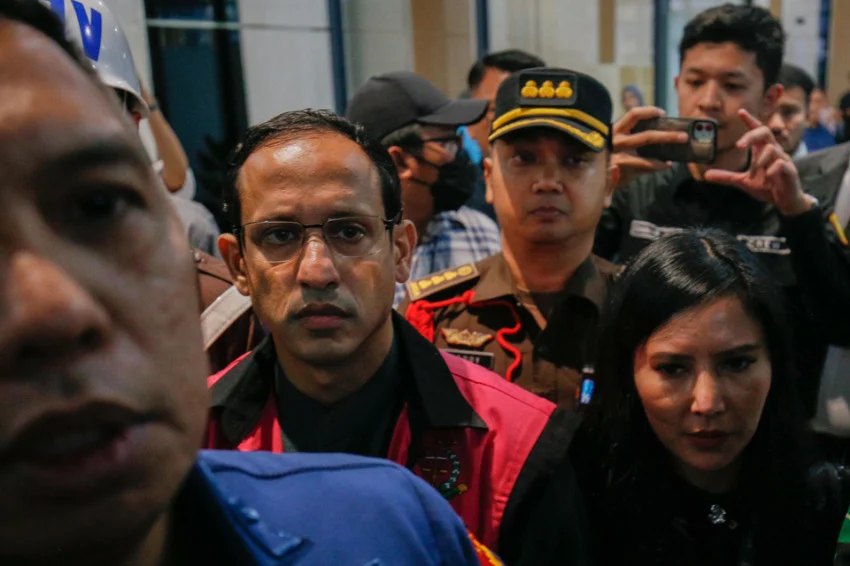
Court Rejects State Prosecutor's Demand for Rp4.8 Trillion Compensation from Nadiem, Recommends Money Laundering Route
An Indonesian court has rejected a demand from state prosecutors for Rp4.8 trillion in compensation from Nadiem Makarim, recommending an alternative money laundering (TPPU) legal route. This decision raises questions about compensation recovery in corruption cases.
This article requires PRO
This article is outside the free access window or is a special report. PRO unlocks it and the full archive.
Related articles
- Chromebook Policy Corruption Allegations: Prosecutors' 'Wise' Verdict Under Scrutiny
Prosecutors' verdict in the alleged corruption case related to the Chromebook policy involving Indonesian Minister of Education, Culture, Research, and Technology, Nadiem Makarim, is being deemed 'wise.' The case highlights the importance of transparency and accountability in policy-making processes.
- Chromebook Case Linked to Nadiem: State Losses Estimated at Rp1.5 Trillion
A corruption case involving the procurement of Chromebooks in Indonesia's education sector has potentially implicated Minister of Education, Culture, Research, and Technology Nadiem Makarim. A judge stated state losses could reach Rp1.5 trillion (approximately $90 million USD). The full scope of the case is under scrutiny.
- Nadiem Makarim's Chromebook Case Verdict Reaches 1,146 Pages
The verdict document in the alleged Chromebook purchase case involving Indonesia's Minister of Education, Culture, Research, and Technology, Nadiem Makarim, has reached a staggering 1,146 pages. The case appears to relate to his conduct in a previous position.