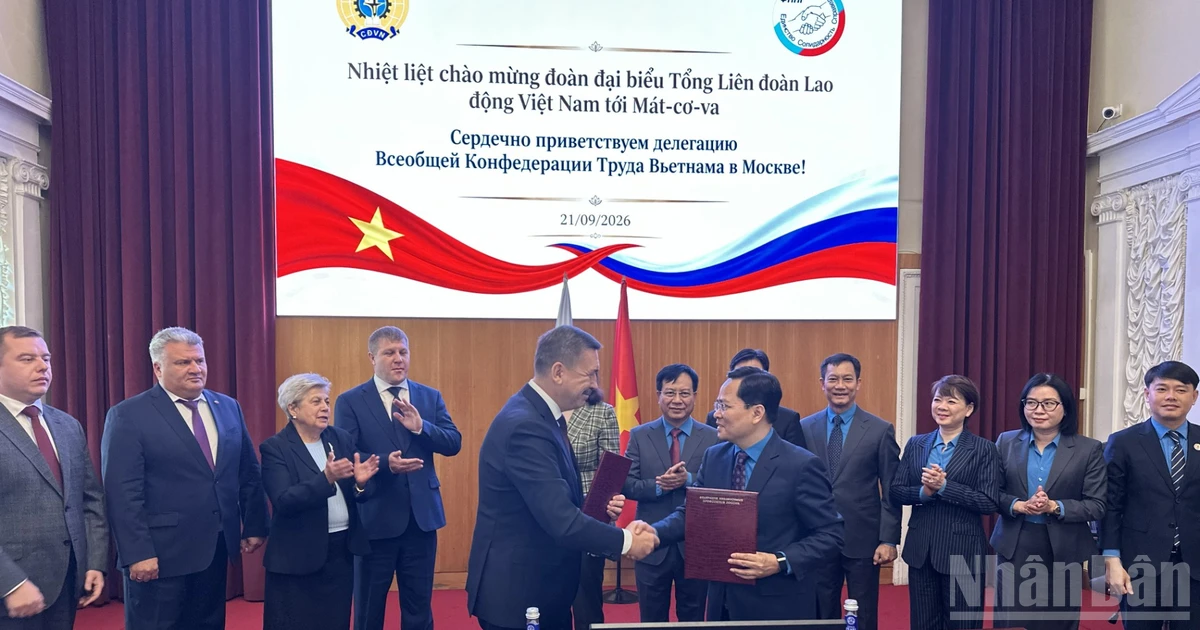
Vietnam, Russia Labor Unions Sign MoU to Enhance Bilateral Cooperation
The Vietnam General Confederation of Labor and the Federation of Independent Trade Unions of Russia (FNPR) signed a Memorandum of Understanding in Moscow. This aims to strengthen the comprehensive strategic partnership between the two countries, focusing on worker protection and addressing new challenges like digitalization.
This article requires PRO
This article is outside the free access window or is a special report. PRO unlocks it and the full archive.
Related articles
- Vietnam Table Tennis Federation Focuses on Youth Training, Communication, and Digital Transformation for 2027 Goals
The Vietnam Table Tennis Federation has set youth development, enhanced communication, and digital transformation as key objectives through 2027. The federation reviewed its activities over the past nine months and discussed specific strategies for future development.
- Vietnam Advances Cooperation Initiatives Ahead of APEC 2027
Vietnam has achieved significant progress in economic and diplomatic spheres, including signing an FTA with EFTA, establishing a Comprehensive Strategic Partnership with Denmark, and hosting a state visit from the King of Thailand. Domestically, efforts are underway to identify the remains of fallen soldiers and preserve traditional culture.
- Japan to Back Vietnam's Small Reactor Push in Revived Nuclear Cooperation
Japan plans to support Vietnam's small nuclear reactor development, offering technical and financial backing. This marks a revival of bilateral nuclear cooperation, aiming to bolster Vietnam's energy security and economic growth, with potential implications for regional dynamics.
- President To Lam Embarks on Official Visit to Japan to Strengthen Economic and Strategic Partnership
Vietnamese President To Lam is making an official visit to Japan. The two nations aim to further deepen economic cooperation, trade, and human resource exchange, building on their comprehensive strategic partnership. This visit is seen as a move to enhance the influence and stability of both countries in the Asia-Pacific region.