Vietnam's Manufacturing Sector: Divergent Requirements for Domestic vs. Export Products
Business
2026年8月3日
4
Vietnam Insider

General articles are free for 24 hours after publish.

Vietnam's Manufacturing Sector: Divergent Requirements for Domestic vs. Export Products

Share
AI Summary

Vietnam's manufacturing sector sees significant divergence in product requirements between domestic and export markets. Export products demand stricter regulations, quality control, and documentation, leading to distinct production processes.

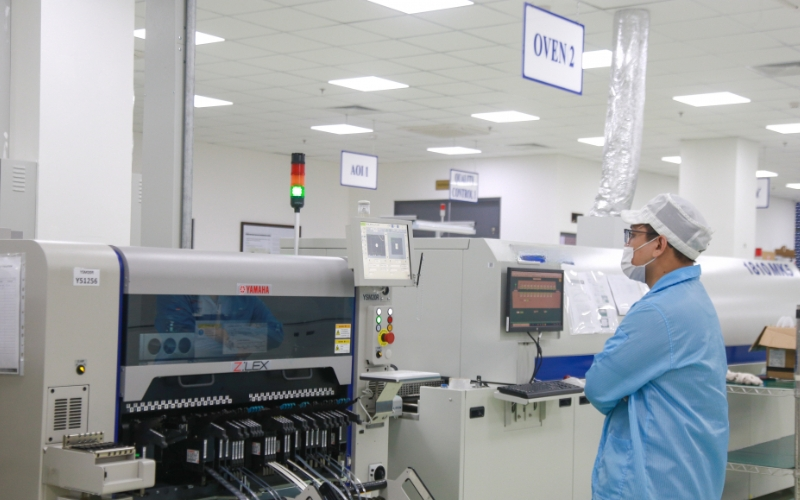
Vietnam has emerged as a leading global manufacturing destination, supplying products to both its domestic market and international consumers. However, a common observation is that products manufactured in the same factory often adhere to vastly different requirements depending on whether they are intended for local consumption or for export. The fundamental reason for this disparity lies not in the location of manufacturing, but in the destination market. Products destined for Vietnam's domestic consumers and those produced for export are typically developed under distinct regulatory frameworks, customer expectations, production systems, and supply chain demands. For international buyers, grasping these nuances is crucial. It offers a clearer insight into the operational intricacies of Vietnamese manufacturers and enables a more comprehensive supplier evaluation beyond mere price, production capacity, or lead times. Many factories in Vietnam specialize in either the domestic market or have built their business models around supplying international brands, distributors, or OEM clients across Europe, North America, Japan, and other regions. Export-oriented manufacturers tend to invest more heavily in engineering support, process control, traceability, documentation, and quality management to meet both regulatory mandates and the expectations of global clientele. This distinction is particularly pronounced in industries where precision, consistency, and traceability are paramount, such as electronics manufacturing. For instance, a factory producing printed circuit board assemblies (PCBAs) for overseas clients engages in far more than simple component assembly. Export production often incorporates engineering validation, automated surface-mount technology (SMT) assembly, automated optical inspection (AOI), functional testing, component traceability, and meticulous production documentation before products are shipped. This principle extends across numerous manufacturing sectors in Vietnam, including furniture, garments, machinery, consumer goods, and industrial equipment. While many buyers assume the primary difference between domestic and export products is quality, in reality, quality is just one facet. Export products are engineered to satisfy a broader spectrum of requirements. Depending on the target market and the specific customer, manufacturers may need to adapt product specifications, materials, testing protocols, documentation, packaging, labeling, and production controls. For example, a company manufacturing electrical equipment for domestic retailers in Vietnam might only need to comply with local technical regulations. However, if the same product is exported to European Union (EU) countries, it may require adherence to CE marking, extensive technical documentation, electromagnetic compatibility (EMC) testing, restrictions on hazardous substances, and product information in multiple languages. Products destined for the United States may necessitate compliance with FCC regulations and different electrical specifications. Export shipments frequently demand a suite of accompanying documents, including technical files, declarations of conformity, test reports, bills of materials, product manuals, supplier declarations, and traceability records. These are vital for demonstrating that the exported product aligns with the version that has undergone rigorous testing, approval, and controlled manufacturing processes. Furthermore, export logistics present a distinct challenge compared to domestic distribution. Products manufactured in Vietnam may endure lengthy sea voyages, requiring robust packaging solutions, moisture protection, palletization, and compliance with international labeling standards to withstand the rigors of transit. As Vietnamese manufacturers continue to solidify their position in the global supply chain, for international buyers, the depth of export experience—encompassing sophisticated documentation, certification, and customer-specific requirements—is as critical as production capacity or pricing.

0

Original source

Vietnam Insider

原文を読む