El Niño Phenomenon Fuels Dengue Fever Surge in Cambodia, Health Minister Warns
Cambodia's Minister of Health stated that the El Niño phenomenon is causing a rise in dengue fever cases due to increased temperatures facilitating mosquito breeding. Authorities are urging community collaboration for mosquito control and timely medical intervention.
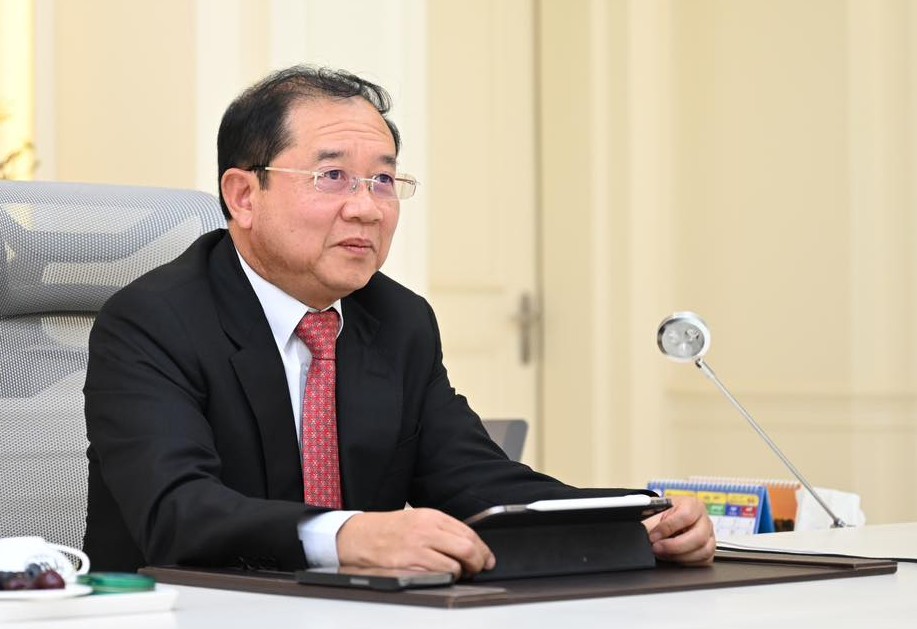
Professor Chheang Ra, Minister of Health, stated that climate change caused by the El Niño phenomenon is the primary driver behind the increase in dengue fever cases during this rainy season. During the 122nd leadership and innovation training session held via video conference on the afternoon of July 7th, with the participation of 3,100 health officials at all levels, the Minister explained that the El Niño phenomenon has led to rising temperatures, creating favorable conditions for the breeding of mosquitoes, particularly Aedes aegypti, which transmit dengue fever. The Ministry of Health has instructed all health bases to focus on health education and to be prepared to provide effective and timely preventive and curative services. Furthermore, it urges health bases to collaborate with communities and local authorities to eliminate mosquito breeding sites within communities and to promptly refer suspected dengue fever patients to the nearest public health facilities. According to Dr. Huy Rekol, Director of the National Center for Parasitology, Entomology and Tropical Diseases, the number of dengue fever cases recorded so far this year is approximately 12,000, a figure comparable to the same six-month period last year. He added that the Ministry of Health is closely monitoring and strictly controlling the dengue fever situation to prevent its timely spread. Dr. Li Sovann, spokesperson for the Ministry of Health and Director of the Communicable Disease Control Department, stated that dengue fever is currently occurring throughout the country, especially in densely populated urban areas with abundant water accumulation that fosters the breeding of Aedes mosquitoes, the vector for dengue fever. He also noted that this year falls within the typical 4-to-5-year cycle of dengue fever outbreaks. Dr. Sovann advised parents and guardians, along with local authorities, to actively participate in eliminating mosquito larvae in places where water collects, such as jars, water tanks, vases, and plant pot saucers, by changing water and cleaning them at least once a week, or by covering them securely. He also recommended collaborating with local health networks to apply larvicides in water storage containers, tanks, or areas where fish are raised, if feasible. Other water-collecting items left unused, such as old tires, bottles, cans, coconut shells, plastic bowls, and plastic containers, should be buried, burned, crushed, or stored properly to prevent water stagnation. He also urged individuals experiencing sudden high fever (39-40°C) to seek immediate consultation and treatment at the nearest health center or hospital for timely and appropriate medical care. For cases of fever in children or a high incidence of dengue fever in a village or community, people are advised to call 115.
多角的分析
エルニーニョ現象による異常気象は、農業生産への影響だけでなく、公衆衛生コストの増加という形で経済に負担をかける。デング熱の蔓延は、医療費の増加、労働生産性の低下、観光業への影響といった複合的な経済的損失をもたらす可能性がある。特に、医療インフラが脆弱な地域では、その影響はより深刻になることが予想される。
デング熱の流行は、カンボジアへの旅行やビジネス渡航に影響を与える可能性がある。観光客の減少や、現地での活動制限は、ホテル、レストラン、航空会社などの関連産業にとって直接的なリスクとなる。また、公衆衛生への懸念は、長期的な対カンボジア投資に対するリスク要因として、投資家の慎重な判断を促す可能性がある。
デング熱の感染拡大は、特に子供たちや高齢者など、抵抗力の弱い層に深刻な健康被害をもたらす。地域社会における蚊の駆除活動への参加は、住民間の協力と連帯感を育む機会となる一方で、衛生知識の普及や、水たまりとなりやすい生活環境の改善が、公衆衛生上の課題として浮き彫りになる。感染者増加は、医療機関への負担増大にもつながる。
エルニーニョ現象による気候変動は、カンボジア市民の日常生活に直接的な影響を与えている。特に、デング熱の流行は、子供を持つ家庭にとって深刻な懸念材料であり、感染予防のための対策が日常的な課題となっている。水たまりをなくすための努力は、住環境の改善にもつながるが、継続的な取り組みと地域社会の協力が不可欠である。
背景・歴史的文脈
デング熱は、カンボジアにおいて常に公衆衛生上の課題であり、特に雨季に流行が拡大する傾向にある。過去数十年、カンボジアは気候変動の影響を受けやすく、エルニーニョ現象のような異常気象は、蚊の繁殖サイクルを変化させ、感染拡大のリスクを高めてきた。2019年には、過去数十年で最悪とされるデング熱の大流行が発生し、多数の死者を出した。この経験から、政府は予防策の強化と迅速な対応体制の構築に努めているが、人口増加や都市化に伴う環境変化、そして気候変動の進行により、デング熱の脅威は依然として深刻なままである。
原文ソース
Kampuchea Thmey Local