Malaysian Army Chief Praises Cambodian Military's Restraint Amid Tense Border Situation
The Malaysian Army Chief has lauded the Cambodian military for demonstrating high restraint and refraining from using force despite the sensitive situation along the Cambodia-Thailand border. Both military chiefs agreed to further strengthen bilateral military cooperation to contribute to regional peace.
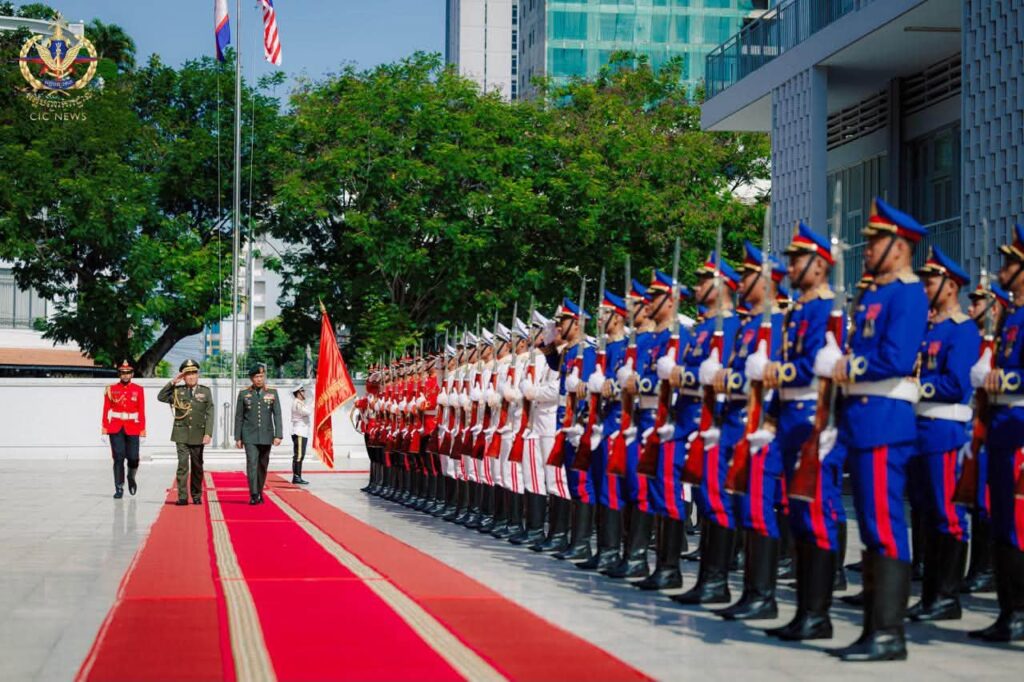
The Malaysian Army Chief of Staff, General Tan Sri Dato' Seri Haji Malek Rasak bin Sulaiman, has praised the Cambodian military for demonstrating high restraint and refraining from using force, despite the sensitive situation along the Cambodia-Thailand border. This commendation was made during a bilateral meeting between General Vong Pisen, Commander-in-Chief of the Royal Cambodian Armed Forces (RCAF), and General Malek Rasak, held on the morning of July 9, 2026, as reported by the official Facebook page of the RCAF General Department of Information. General Malek Rasak stated that his visit aimed to strengthen the long-standing relationship between the armed forces of both countries. He specifically lauded the Cambodian military for its high level of patience and its decision not to resort to armed conflict, even with the ongoing border sensitivities. The Malaysian side also affirmed its strong support for resolving the Cambodia-Thailand border dispute through dialogue, emphasizing the use of ASEAN mechanisms like the Joint Border Committee (JBC) or Cambodia-Thailand Border Committee (GBC), and upholding ASEAN centrality. He asserted that the use of force is not a viable option for resolving issues. In response, General Vong Pisen highly valued the Malaysian Army Chief's visit, viewing it as a continuation of strengthening the friendly relations between the two armies, especially as 2026 marks the 69th anniversary of diplomatic relations between Cambodia and Malaysia. He expressed gratitude for Malaysia's role in maintaining peace in Cambodia during the UNTAC mission in 1993, its mediation efforts in the Cambodia-Thailand border conflict in 2025, and its initiative in establishing the ASEAN Observers Team (AOT). General Vong Pisen reiterated Cambodia's firm commitment to resolving border issues peacefully, based on international law and relevant agreements, and stated that Cambodia would not accept the use of force to alter borders. During the meeting, Cambodia proposed that Malaysia expedite the signing of a Memorandum of Understanding (MoU) in the defense sector, expand cooperation between all branches of the armed forces, increase joint training exercises and information sharing, collaborate on combating cross-border crime, and continue supporting the mission of the ASEAN Observers Team (AOT). In response, the Malaysian Army Chief of Staff announced his support for Cambodia's proposals to enhance military cooperation and affirmed Malaysia's continued backing for the AOT mission to ensure the implementation of ceasefires and contribute to maintaining peace and stability along the Cambodia-Thailand border and within the entire ASEAN region.
多角的分析
This news has limited direct economic implications in the short term. However, sustained regional stability, fostered by such diplomatic engagements, is crucial for Cambodia's long-term economic development, particularly in attracting foreign investment and promoting trade. The mention of combating cross-border crime also indirectly supports economic activity by reducing illicit trade and enhancing security for businesses operating near the border.
For investors, the news signals a commitment to de-escalation and peaceful conflict resolution, which is a positive indicator for regional stability. While the direct economic impact is minimal, the underlying message of military restraint and strengthened diplomatic ties contributes to a more predictable investment environment in Southeast Asia. Investors prioritize countries that demonstrate a commitment to peace and rule of law, and this event aligns with those expectations.
The news highlights the importance of de-escalation and peaceful conflict resolution for the well-being of communities living near border areas. The Cambodian military's restraint, praised by Malaysia, suggests a prioritization of civilian safety over immediate military action. This approach, if consistently applied, can prevent displacement and disruption to local livelihoods. The collaboration on combating cross-border crime also addresses social concerns related to security and illicit activities that can affect daily life.
For Cambodian citizens, particularly those residing near the border with Thailand, the emphasis on restraint and peaceful resolution is a significant reassurance. It indicates that their safety and livelihoods are being prioritized over potential military confrontations. The strengthened military cooperation with Malaysia, a fellow ASEAN member, can also be seen as a positive step towards regional security, which indirectly benefits citizens through greater stability and predictability.
背景・歴史的文脈
カンボジアとタイの間には、歴史的に国境線に関する未確定地域が存在し、過去には武力衝突も発生している。特に2008年のプレア・ビヒア寺院周辺での紛争は、両国関係を一時的に悪化させた。ASEANは、加盟国間の紛争解決メカニズムとして、GBC(カンボジア・タイ国境委員会)やJBC(合同国境委員会)などを通じて、両国の対話と平和的解決を支援してきた。マレーシアはASEANの主要メンバーとして、地域内の平和と安定維持に積極的な役割を果たしており、過去にはカンボジアの平和維持活動(UNTAC)にも貢献している。本件は、こうしたASEANによる紛争調停の枠組みと、カンボジア軍の自制的な対応、そしてマレーシアとの軍事協力強化という文脈で理解される。
原文ソース
Kampuchea Thmey Local