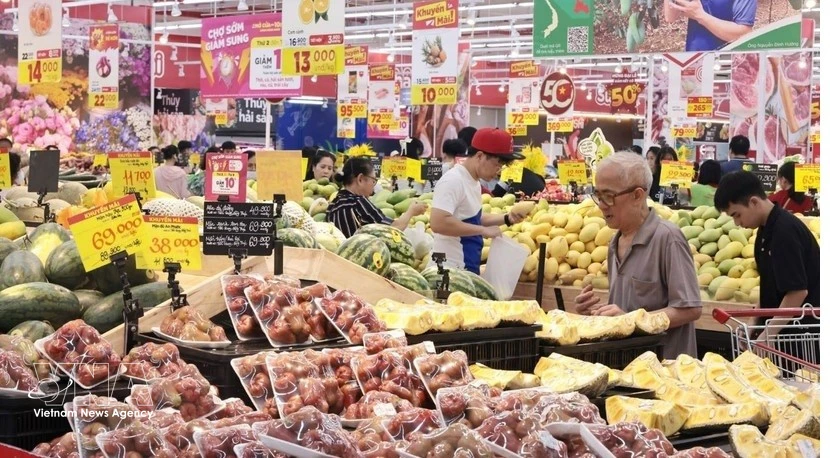
US Highlights Potential in Vietnam’s Fruit Market Amidst EUDR Compliance
The US is showing interest in Vietnam's fruit market, with compliance to the EU's sustainability requirements (EUDR) being crucial for export expansion. Meanwhile, Vietnam's GDP growth remains top in ASEAN, though upgrading the manufacturing sector poses a challenge.
Vietnam's fruit market is attracting attention from the United States, with compliance to the European Union's (EU) environmental and sustainability regulations (EUDR) expected to be a crucial factor for future export expansion. The EUDR mandates that exporters provide data proving their agricultural products are not involved in deforestation or environmental pollution, ensuring market access only for compliant goods. Reports suggest that Vietnamese coffee, already compliant with EUDR standards, is being traded at a premium of around $50 per tonne, with opportunities for the coffee industry expected to grow further upon full enforcement of the regulation. Vietnam continues to maintain high growth rates within the ASEAN economic bloc. In the second quarter of 2026, its Gross Domestic Product (GDP) grew by 8.39%, surpassing the 8.14% recorded in the same period last year. For the first half of the year, growth reached 8.18%, keeping Vietnam at the top among ASEAN economies. This performance is supported by broad-based contributions from both the supply and demand sides. The manufacturing and processing sector remains a principal driver of economic growth, though it faces mounting pressure to move beyond a development model based on inexpensive labor, intensive energy consumption, and high emissions. However, the Vietnamese economy also faces external challenges, including the effects of the Middle East conflict, making the restructuring of domestic capital mobilization channels an urgent task. The tightening of international regulations like the EUDR may accelerate Vietnam's export strategy shift towards increasing added value. Furthermore, tax revenue from overseas is also growing with the development of the digital economy, with 259 foreign suppliers registered and paying taxes through the tax portal. Tax revenue from this group reached 78.1% of the full-year target, surging 119% year-on-year. Vietnam is one of the world's leading producers and exporters of agricultural products, including rice, coffee, and a wide range of fruits. However, key export markets such as the US, EU, and Japan are tightening sustainability requirements, making the transition to low-emission farming increasingly important. This presents a structural challenge for Vietnam to maintain its competitiveness in international markets and achieve sustainable economic growth. Vietnam's competitive advantages are evolving; in the future, structural and long-term factors such as transparent institutions, policy predictability, and an investment environment capable of supporting long-term strategic investors are expected to become more critical than low labor costs and tax incentives. Source: VietnamPlus English
多角的分析
ベトナム経済は、製造業と加工業が引き続き成長の原動力となっているものの、国際的な環境規制強化(EUDRなど)への対応が輸出産業、特に農業分野にとって新たな課題となっている。GDP成長率はASEANトップレベルを維持しているが、これは国内需要の堅調さや、デジタル経済における海外からの税収増加といった要因にも支えられている。しかし、製造業が低コスト労働力依存から脱却し、より付加価値の高い生産へと移行する必要性に迫られている点は、構造的な課題である。
ベトナム市場への投資家は、EUDRのような国際的な規制動向を注視する必要がある。これに対応できる企業やセクターは、EU市場へのアクセスを確保し、プレミアム価格での取引が見込めるため、有利な投資機会となりうる。一方、規制への対応が遅れる企業や、環境負荷の高い生産モデルに依存する企業は、リスクにさらされる可能性がある。ベトナム政府が目指す、透明性の高い制度や政策の予見可能性の向上は、長期的な投資環境の安定化に寄与すると期待される。
EUDRのような国際的な環境規制は、ベトナムの農村地域における小規模農家の生活に直接的な影響を与える可能性がある。これらの農家が、必要な技術や資金へのアクセスを持たない場合、EU市場への出荷が困難になり、収入の減少につながりかねない。また、製造業が低排出モデルへの移行を迫られる中で、労働者のスキルアップや、環境に配慮した新たな雇用機会の創出が社会的な課題となる。ハノイやホーチミン市といった大都市圏では、インフラ整備や都市化に伴う環境問題への対応も引き続き重要である。
ベトナム国民、特に農村部の生産者は、EUDRのような国際的な環境規制の動向を注視する必要がある。これらの規制は、輸出される農産物の品質や生産方法に影響を与え、最終的には彼らの収入に直結する可能性がある。製造業で働く人々は、産業構造の変化に伴い、新たなスキル習得の必要性に直面するかもしれない。一方で、GDP成長率の維持は、全体的な生活水準の向上に寄与すると期待されるが、物価変動やインフレへの懸念も依然として存在する。
背景・歴史的文脈
ベトナムは、ドイモイ政策以降、輸出主導型の経済成長を遂げてきた。特に農産物、衣料品、電子機器などが主要輸出品目である。近年、米国やEUなどの主要市場では、環境保護や人権、労働条件に関する規制が強化される傾向にある。EUDRはその一例であり、ベトナムの伝統的な輸出産業、特に農業分野は、これらの新たな国際基準への適応を迫られている。これは、ベトナムが単なる生産拠点から、より持続可能で付加価値の高い経済へと移行するための構造改革の必要性を示唆している。
原文ソース
VietnamPlus English