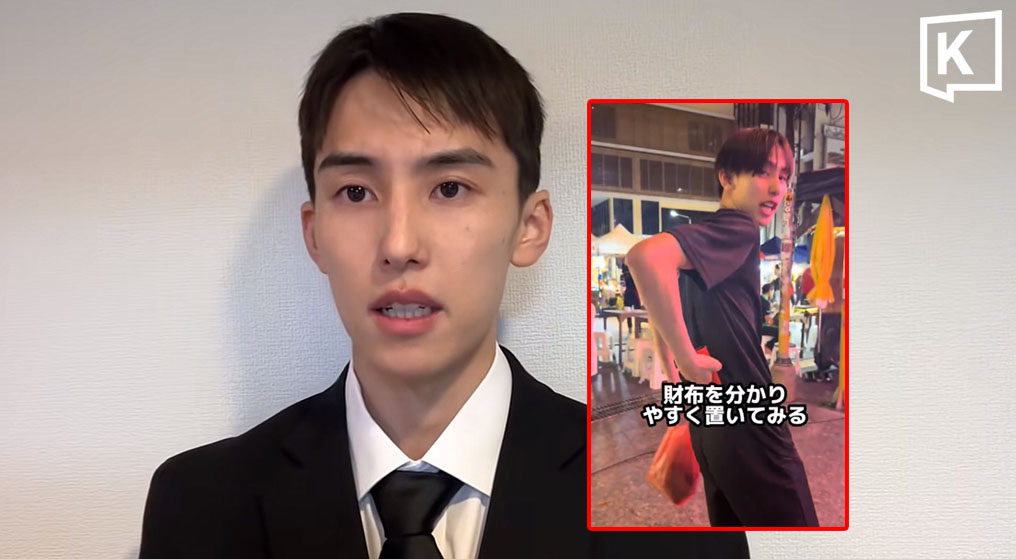
Japanese TikToker Apologizes for Staged Khao San Pickpocket Video
A staged pickpocketing experiment video by a Japanese TikToker on Bangkok's Khao San Road has caused controversy. The incident has affected the employment of the man featured in the video and drawn criticism for potentially damaging Thailand's tourism image.
A Japanese TikToker with around 600,000 followers has publicly apologized after staging a social experiment pickpocketing video on Bangkok’s Khao San Road. The video falsely portrayed a man involved as a criminal, disrupting his employment and drawing criticism for damaging Thailand’s tourism image. The video posed the question: “If you walk with your wallet sticking out of your pocket, will it be stolen?” It was initially presented as though the creator had fallen victim to pickpocketing before later revealing that the incident had been staged. The channel owner later admitted asking a local man to pretend to remove a wallet from his pocket for the shoot in exchange for in-game items or money. However, the man was unaware that the footage would be edited and presented in a way that led viewers to believe he was an actual thief. After the video went viral, the man who participated in the staged scene was reportedly viewed with suspicion by tourists and people in the area, affecting his work on Khao San Road. According to images of official documents circulating online, the victim filed a police complaint at Chanasongkhram Police Station, alleging that the video had damaged his reputation and negatively affected the tourism image of Khao San Road. Additionally, a woman identifying herself as the victim’s younger sister posted on social media, claiming her brother had no idea he was being filmed for content that would later be edited and published in a way that misled viewers into believing he was a thief. She said the incident put him at risk of losing his job and called on the creator to take responsibility and explain the facts to her brother’s employer. The video also sparked backlash in Japanese online communities, where many social media users criticized the channel owner’s actions. Some argued that safety in Thailand is not as poor as the video portrayed, while others called for legal action or for the channel to be banned. Others said the participant’s face should have been blurred from the very beginning. The TikToker subsequently published an apology video, admitting that he had produced the content in pursuit of views and acknowledging that it had caused distress to Thailand, the victim, and the victim’s family. He further revealed that after being contacted by the victim’s younger sister, who informed him that her brother had lost his job and had not known the footage would be edited to portray him as a thief, he recorded a video apology addressed to the family and asked that it be shown to the employer to clarify the circumstances. According to the channel owner, the victim’s younger sister later informed him that her brother had been allowed to return to work. The TikToker bowed in apology and admitted that the entire incident was completely his own fault. There has been no disclosure regarding the progress of the legal proceedings initiated by the victim, and the relevant authorities have yet to release additional details about the case. The post Japanese TikToker apologises over staged Khao San pickpocket video appeared first on Khaosod English.
多角的分析
この事件は、短期的な視点ではタイの観光産業、特にカオサンロードのような観光客が多く集まるエリアに悪影響を与える可能性がある。観光客の安全に対する懸念を煽るようなコンテンツは、旅行者の心理に影響を与え、訪れる意欲を減退させる恐れがある。長期的には、このような誤解を招くコンテンツが蔓延すれば、タイ全体の観光ブランドイメージを損ない、経済的損失につながる可能性も否定できない。制作者の謝罪と出演者の職場復帰という事態の収束は、限定的な影響に留まる可能性を示唆しているが、同様の事例の再発防止策が重要となる。
この種のインフルエンサーによる偽情報拡散は、タイの観光セクターへの投資リスクを間接的に高める。特に、観光関連企業や不動産投資家は、観光客の動向に敏感であり、ネガティブなプロモーションは収益に直結する。今回の件は、個人の行動によるものだが、SNSの拡散力と影響力を考えると、投資家はタイの観光イメージを損なう可能性のあるリスク要因を注視する必要がある。幸い、迅速な謝罪と事態の収拾は、短期的な市場への影響を最小限に抑えるだろう。
この事件は、SNS上でのコンテンツ制作における倫理観と、その影響力について社会的な議論を提起している。カオサンロードで働く男性は、動画の演出のために「犯罪者」として誤解され、その結果、職を失いかけるという深刻な被害を受けた。これは、クリエイターの視聴回数獲得という目的のために、個人の生活や尊厳が軽視されうる現実を示している。また、タイの治安に対する誤った認識を広めることで、タイ国民やタイで働く外国人労働者にも間接的な影響を与える可能性がある。被害男性の妹のSNSでの訴えは、家族が直面した苦悩を浮き彫りにし、クリエイターの責任を追及する動きにつながった。
カオサンロードで働く男性は、クリエイターの「視聴回数稼ぎ」という自己中心的な動機によって、犯罪者扱いされ、職を失う危機に瀕した。これは、タイで働く多くの人々が、見知らぬ第三者の行動によって、予期せぬ不利益を被る可能性を示唆している。また、タイの治安について誤った印象を持たれたことで、タイ国民全体が不当な評価を受けることにもなりかねない。SNSの普及は、個人の生活に大きな影響を与える可能性があるという現実を、この事件は突きつけている。
背景・歴史的文脈
タイ、特にバンコクのカオサンロードは、バックパッカーの聖地として世界的に有名であり、多くの外国人観光客が訪れる。近年、SNS、特にTikTokの普及により、インフルエンサーが観光地での体験を共有する機会が増加。しかし、視聴回数や「バズ」を狙うあまり、演出や誇張、さらには虚偽の情報が含まれるコンテンツも散見されるようになった。2023年には、タイの観光地での安全性を巡る誤解を招く動画がSNSで拡散し、タイ政府が観光イメージ保護のための啓発活動を強化する動きもあった。今回の事件は、こうしたSNS時代のコンテンツ制作における倫理的課題が、依然としてタイの観光イメージに影響を与えうることを再認識させるものとなった。
原文ソース
Khaosod English