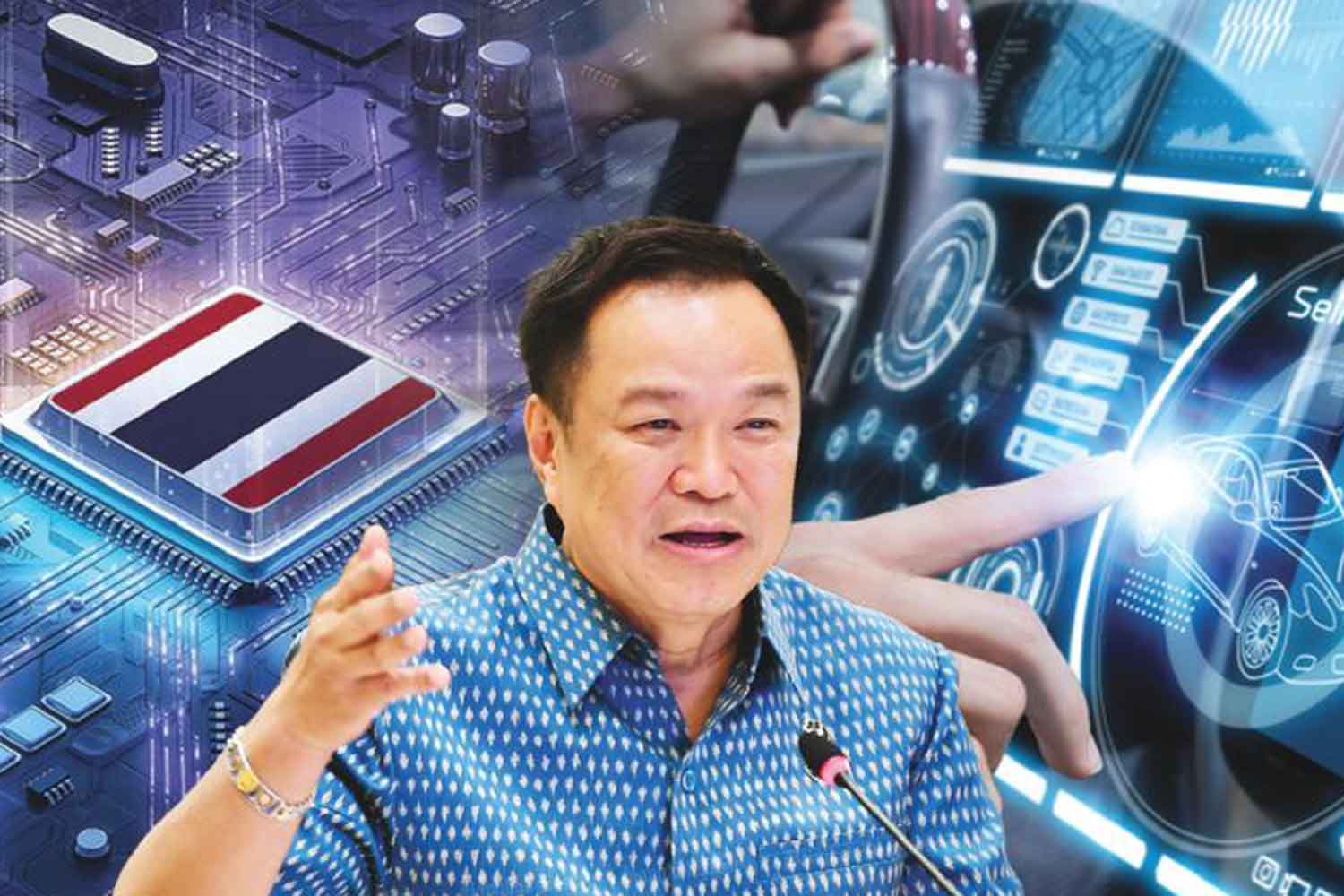
PM Anutin to Court Chinese Businesses for Tech Investment in China Trip
Technology
2026年7月14日
5
Bangkok Post
Relations
🇹🇭Thailand🇨🇳China🌐United Nations / ASEAN

PM Anutin to Court Chinese Businesses for Tech Investment in China Trip

AI サマリー

Prime Minister Anutin Charnvirakul will visit China this week to court investment in semiconductors, AI, and electric vehicles, aiming to boost economic ties and position Thailand as a hub for future industries.

Prime Minister Anutin Charnvirakul is set to embark on a crucial visit to China later this week, aiming to strengthen economic ties and attract investment in Thailand's future industries, notably semiconductors, artificial intelligence (AI), and electric vehicles (EVs). The trip, scheduled from July 16-20, will take Mr Anutin to Beijing and Shanghai, where he will meet with senior Chinese officials and business leaders. The mission is part of a broader government strategy to position Thailand as a hub for advanced technologies. Industry Minister Varawut Silpa-archa said the visit will serve as an investment roadshow in major Chinese cities, designed to boost GDP growth and raise gross national income. "The government expects these roadshow opportunities to help roll out fast-track approval for investment projects," he added. To support this initiative, authorities are implementing the Thailand Fast Pass investment facilitation programme, which aims to cut red tape and accelerate procedures for prospective investors. China has long been one of Thailand's most significant sources of foreign direct investment (FDI), particularly in clean energy, smart electronics, and digital industries. According to the Board of Investment, FDI expanded in the first quarter of this year, with 427 projects worth 965 billion baht. Singapore led the pack with 837 billion baht, followed by the UK at 47 billion baht, Japan at 22 billion baht, and China at 17 billion baht. Mr Anutin earlier signed an order establishing the National Semiconductor and Advanced Electronics Policy Committee, underscoring the government's determination to expand the semiconductor industry. This move aligns with Thailand's long-term vision to strengthen competitiveness and develop future industries such as robotics, AI, and clean energy. The government considers semiconductors vital to sustainable economic growth and has set ambitious targets: attracting 2.5 trillion baht in investment, training over 230,000 highly skilled workers, and bringing "Made in Thailand" semiconductor products to market by 2050. Finance Minister Ekniti Nitithanprapas emphasised the importance of data centres in supporting AI development. If Thailand has data centres, it can expand its cloud services industry, he said. In the automotive sector, under the "30@30" policy, Thailand wants EVs to account for 30% of total auto production by 2030, including 725,000 zero-emission cars, 675,000 electric motorcycles, and 34,000 electric buses and trucks.

多角的分析

経済的影響

タイ政府が中国からの投資誘致に注力するのは、国内経済の持続的な成長と、特に先端技術分野における国際競争力の向上が喫緊の課題であるためだ。半導体、AI、EVといった分野は、グローバルサプライチェーンにおいて重要性が増しており、これらの分野への投資は、タイの産業構造を高度化し、付加価値の高い雇用を創出する可能性を秘めている。中国からの投資は、タイがASEAN地域における技術ハブとしての地位を確立する上で、重要な起爆剤となり得る。しかし、中国からの投資依存度が高まることによる経済安全保障上のリスクや、国内産業との競合といった側面も考慮する必要がある。

投資家心理

投資家にとって、タイ政府が半導体、AI、EVといった将来性のある分野に注力し、投資促進プログラムを導入している点は、新たな投資機会の出現を示唆している。特に中国からの投資誘致は、タイがグローバルな技術サプライチェーンにおける役割を拡大する可能性を示しており、関連企業にとっては事業拡大のチャンスとなり得る。しかし、投資家は、タイの政治的安定性、規制環境、そして中国との地政学的な関係性といったリスク要因も慎重に評価する必要がある。過去のFDIデータを見ると、中国からの投資額はまだ他の主要国に比べて小さいが、政府の積極的な働きかけにより、今後増加する可能性は十分にある。

社会的影響

タイ政府が先端技術産業への投資を推進する背景には、国民の生活水準向上と将来世代への希望という側面がある。半導体やAI、EV産業の発展は、高賃金の雇用機会を創出し、タイの若年層が国内外で活躍できる土壌を育むことが期待される。また、EV普及は都市部の大気汚染改善に貢献する可能性があり、これはバンコク市民の健康と生活の質に直接影響する。しかし、こうした先端産業へのシフトは、既存産業からの労働者のスキル転換や、地方と都市部の経済格差の拡大といった課題も生じうる。特に、地方の労働者が新たな産業の恩恵を受けられるような政策が求められる。

市民の声

タイ国民、特にバンコク市民にとっては、首相の訪中が直接的な生活の変化に繋がるかは、今後の政策実行にかかっている。もし、半導体やEV産業への投資が成功し、新たな雇用が創出されれば、若年層を中心に収入の増加やキャリアアップの機会が生まれる可能性がある。また、EVの普及が進めば、バンコクの慢性的な大気汚染問題の緩和に繋がることも期待できる。しかし、一方で、こうした先端産業への投資は、都市部への人口集中をさらに加速させ、不動産価格の上昇や交通渋滞の悪化といった新たな問題を引き起こす可能性も否定できない。地方からの労働者の流入がスムーズに行われず、経済格差が拡大する懸念もある。

背景・歴史的文脈

タイ政府が先端技術分野への投資誘致に注力する背景には、長期的な経済成長戦略と、ASEAN地域における競争力強化の意図がある。特に、中国はタイにとって重要な貿易相手国であり、近年ではクリーンエネルギーやデジタル分野での投資が増加傾向にある。2023年には、タイは「タイランド4.0」戦略を推進し、イノベーション主導型経済への転換を目指している。半導体産業の育成は、この戦略の核となる要素の一つであり、政府は過去にも同様の産業振興策を打ち出してきた。今回の訪中は、これらの戦略を具体化し、特に成長著しい中国の技術企業からの直接投資を呼び込むための重要な機会と位置づけられている。

原文ソース

Bangkok Post

原文を読む