General articles are free for 24 hours after publish.
Vietnam Lifts Rooftop Solar Resale Cap to 50%, Boosting Green Transition
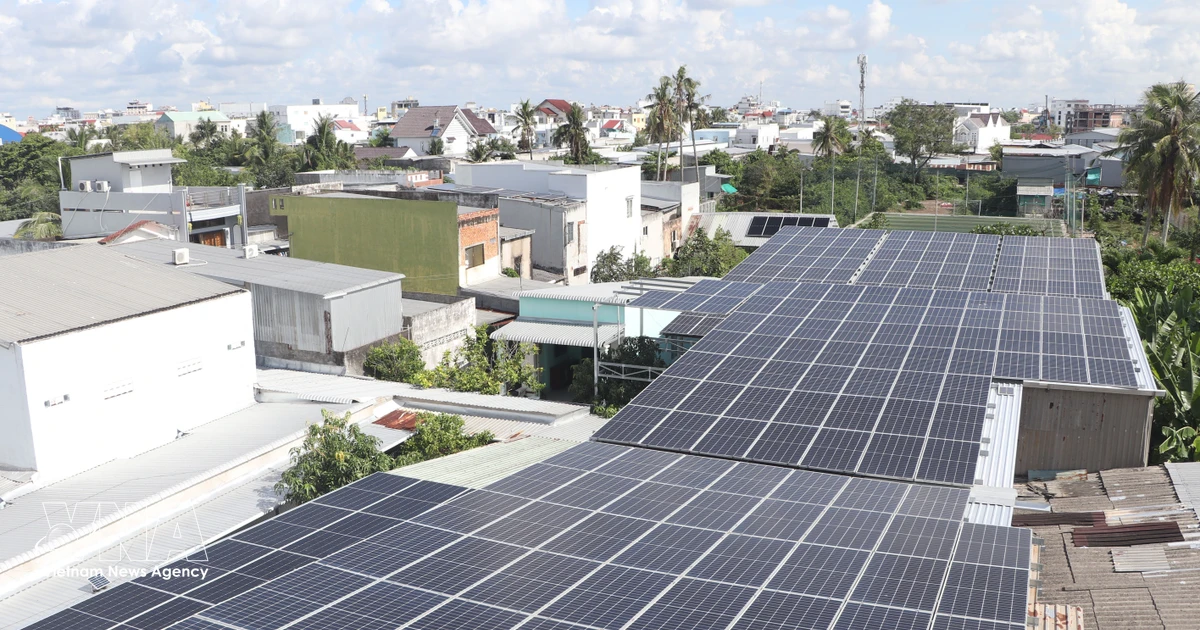
Vietnam has raised the resale cap for rooftop solar power to 50%, signaling a significant push towards renewable energy adoption and green economic growth. This move is expected to bolster energy security and alleviate pressure on the national grid.
Rooftop solar power is entering a new phase of development with a more solid foundation. When integrated with energy storage systems and direct power purchase mechanisms, it not only contributes to supplementing distributed energy sources and reducing pressure on the national power system, but also serves as a driving force for green growth, enhances the competitiveness of the economy, and ensures energy security. As electricity demand surges, particularly during the hot season, Vietnam is stepping up efforts to promote rooftop solar power as a practical solution to ensure energy security, improve efficiency, and ease pressure on the national grid. The directive underscores the top and urgent priority to ensure safe, stable and uninterrupted power supply for production and daily life is saying that these hold decisive importance for economic growth and national energy security. The installation of the world’s first Hypnosiz in Vietnam highlights the strong appeal and rapid development of the country’s amusement park market, while opening a new chapter in high-end entertainment technology cooperation between Vietnam and Italy. The participation of regulators, investment funds, financial institutions and businesses reflects growing interest among Austrian and European investors in the Vietnamese market and prospects for expanded bilateral collaboration, said Vietnamese Deputy Minister of Finance Nguyen Duc Chi. With deep-water ports, a prime spot on international shipping routes, and a growing production network, Vietnam is well-positioned to make its maritime economy a key engine of growth and boost the global competitiveness of its goods. The 32nd SLC meeting focused on macroeconomic and financial developments and key issues in ASEAN financial integration. According to the Ministry of Agriculture and Environment, Vietnam’s agro-forestry-fishery exports in August were estimated at 6.47 billion USD, down 3.5% from the previous month but up 3.6% year-on-year. The Ministry of Culture, Sports and Tourism has outlined three scenarios for 2027–2030. Under the high-growth scenario, international arrivals would rise 15–18 percent annually to reach 45–50 million, while domestic tourism would reach around 160 million trips. Total tourism revenue is projected at 80–90 billion USD. The experts stressed that success should not be measured by how much German technology is brought into Vietnam, but by whether the two sides can develop solutions that work in Vietnam and deliver lasting benefits for farmers, the economy and the environment. Ready-built factories attracted 73% of new manufacturing FDI in northern Vietnam over the past two quarters, as foreign investment continued to surge at the region's industrial hubs during the first eight months of 2026. The trend points to growing demand for premises that can be put into operation quickly. With the current trading band of +/- 5%, the ceiling rate applicable for commercial banks during the day is 26,898 VND/USD, and the floor rate 24,336 VND/USD. Durian has morphed from a high-value crop into a strategic Vietnamese export. But as output climbs and importing markets tighten rules on quality, food safety and traceability, the industry must pivot from volume growth to sustainable value chains, better quality and diversified markets. Industry insiders say competition is no longer just about the cake itself. Product quality, packaging, brand reputation, delivery services and personalisation are increasingly shaping consumer choices in a market crowded with both domestic and foreign players. Vietnam and India agreed to make better use of complementary strengths, ease market access difficulties and facilitate business activities toward achieving the 25 billion USD bilateral trade target. Vietnam currently has 223 investment projects in Cambodia with total registered capital of nearly 3.4 billion USD. Vietnamese companies operate in agriculture, particularly large-scale farming, finance and banking, telecommunications, aviation, processing, trade and services. Maintaining monthly deliveries above 20,000 units despite August coinciding with the seventh lunar month (traditionally a low season in Vietnam, as many people tend to avoid major undertakings) further underscores the strong appeal of electric vehicles and VinFast’s clear leadership in Vietnam’s automotive market for 24 consecutive months. VIFC development is seen as a strategic task to connect international capital flows with the economy’s development needs, develop modern financial services, and create favourable conditions for Vietnamese businesses to engage more deeply in global markets. A 2026 survey by Hoteljob.vn found that nearly 90% of tourism businesses planned to recruit. In Ho Chi Minh City alone, 89.7% of businesses were hiring, while 71.8% said recruitment was difficult or very difficult. The biggest shortages were among frontline workers, particularly in housekeeping, engineering, food service, front-office operations, and kitchens. Joli, a premium apple variety developed by New Zealand-based T&G, has been launched in the Vietnamese market, marking the first time it has been introduced to consumers anywhere in the world. The discussions come as the State Bank of Vietnam and Bank Indonesia near the end of their co-chairmanship term, marking another step in their cooperation to advance ASEAN's sustainable finance agenda. Vietjet and French technology group Thales have signed agreements covering aircraft maintenance, digital aviation, artificial intelligence and cybersecurity, as Vietnam seeks to deepen economic and technology ties with France. Great reliance on the state budget and conventional bank lending could put considerable pressure on the financial system, making it necessary to develop new and sustainable sources of funding from both domestic and international capital markets. Copyright, VietnamPlus, Vietnam News Agency (VNA) Editor-in-chief, Mr. Tran Tien Duan.
Original source
VietnamPlus English