General articles are free for 24 hours after publish.
Disinformation a 'Big Problem' for Over 70% of Filipinos, Survey Reveals
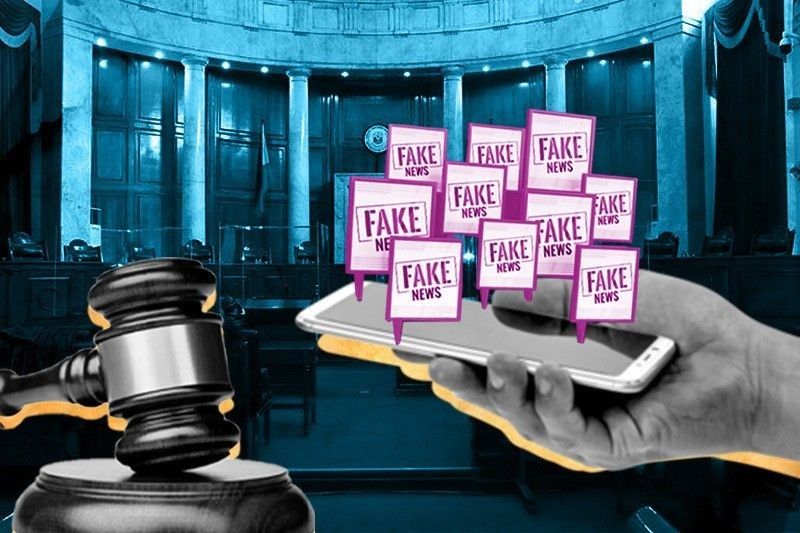
A recent survey reveals that 72% of Filipinos consider disinformation a 'big problem.' The data highlight a vulnerability where many citizens fail to verify online information, often swayed by popularity and personal beliefs.
Fake news? No longer just a nuisance. For most Filipinos, it has evolved into a national problem, and one that demands urgent attention and action. A recent Pulse Asia survey found that 72 percent of Filipinos consider disinformation, or the deliberate spread of false or misleading information, a “big” problem in the country today. Only four percent described it as a small problem, while the rest remained undecided. Amid concerns over fake news, many Filipinos still do not take the extra step to verify what they see online. The survey showed that only 56 percent of respondents said they would check conflicting information against another trustworthy source. Survey data become even more troubling when viewed alongside how Filipinos assess information circulating on the internet. According to the survey, 41 percent of Filipino internet users said they are likely to believe information online if it has been widely shared by other people. In an age when false narratives can spread at lightning speed, we can see that popularity is increasingly being mistaken for credibility. When asked what guides their judgment on what information to believe online, 35 percent cited the source of the news, while 33 percent said they rely on their personal beliefs about the issue. Meanwhile, nine percent said the number of shares or likes influences their trust in a piece of information, as do the opinions of relatives or friends. Another seven percent said they consider the views of a trusted government personality, while five percent put weight on the opinion of a trusted private sector personality. The survey was conducted from June 28 to July 3 and July 6, covering 2,400 respondents nationwide. A troubling reality for Filipinos indeed: we truly recognize disinformation as a serious threat and many remain vulnerable to the very system that allows falsehoods to spread, most especially on the tendency to equate popularity with truth. In this information overload era, the ability to tell truth from falsehood can have real-world consequences. Disinformation does more than mislead. It can spell the difference between a news report and propaganda, or between a right decision and a wrong one. In the context of politics, for example, disinformation can distort public opinion and erode trust in institutions. In health and safety, it can lead to choices that put people’s lives at risk. When information is filtered through popularity rather than accuracy, the result is an echo chamber that reinforces personal biases. Awareness is a start, but cross-checking and verifying remain our stronger safeguards. In today’s media landscape, where everyone has the power to become a source of information, credible and responsible journalism is more important than ever. Business leader Manuel V. Pangilinan, or MVP, emphasized this in an interview with The Philippine STAR: “If you are helping record history, then you must record the truth.” “Images can be altered, text can be revised, and misinformation can spread quickly. That’s why credible journalism continues to have an important role,” MVP added. Disinformation thrives and it weakens critical thinking. At this stage, fighting disinformation is no longer simply about fact-checking but more about cultivating a culture of critical thinking, where Filipinos value accuracy over virality. Truth over fiction and false or fake news is the order of the day. Many may ask, “Is it an uphill battle?” The answer is yes, but we need to keep fighting. We need to develop a collective habit where the first instinct of Filipinos when they see something online is to pause and think: “Is this true?” In my own personal capacity, I try to contribute to truth-finding by actively supporting the cause of media literacy through THINKaMuna Pilipinas – the media and information literacy advocacy of MediaQuest Holdings Inc. THINKaMuna aims to arm Filipinos with critical thinking skills necessary to navigate today’s information landscape so they can evaluate information, identify credible sources and engage responsibly in the digital space. It is no longer enough that people know how to use social media. Media and information literacy has become essential in today’s digital landscape. Schools should teach students how to distinguish fake news from actual journalism, and how to use social media responsibly. Companies should empower their employees with tools and training to spot disinformation and to be responsible netizens. Lastly, the government should strengthen institutional safeguards to ensure that truth is not drowned out by noise. The challenge is not simply to fact-check but to develop a nation of critical-thinking Filipinos. Fighting disinformation is everyone’s responsibility. Throughout my professional life as a media practitioner and communicator, I have seen how easily facts can be ignored when they are uncomfortable and how tempting it can be to embrace narratives that tell us only what we want to hear. But truth, however difficult, remains our most reliable guide. Truth anchors us to reality, demands accountability and challenges us to do better. Real progress begins when we choose facts over falsehoods and have the courage to face reality as it is and commit ourselves to the work of becoming better than we were.
Original source
Philstar Business