General articles are free for 24 hours after publish.
Vietnam Enhances Historical Experiences with VR and 3D Mapping
Vietnam is increasingly leveraging cutting-edge technologies like VR and 3D mapping to offer immersive historical experiences. These initiatives aim to foster patriotism and deepen understanding of the nation's past, particularly among younger generations, by bringing significant historical moments to life.
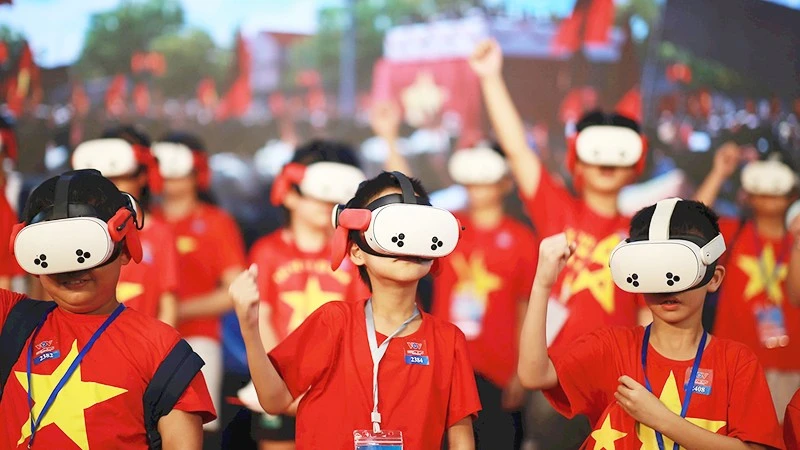
Vietnam is increasingly leveraging innovative technologies such as virtual reality (VR) and 3D mapping in its historical exhibitions, successfully sparking greater public interest in the nation's past. These initiatives are proving effective in fostering patriotism and a deeper connection to history, particularly among younger demographics. In Ho Chi Minh City, the "Return to Sacred Moments" program at the Reunification Palace offers participants an immersive journey through pivotal historical events. Using VR headsets, visitors can step back in time to witness key milestones, such as President Ho Chi Minh's Declaration of Independence on September 2, 1945, and experience the atmosphere of Ba Dinh Square. This technological integration allows attendees to feel the national pride and fervor of those significant times with remarkable realism. Ho Chi Minh City has been actively utilizing technology in historical reenactments, educational programs, and commemorative art performances. A recent 3D mapping art show, celebrating 50 years since Saigon-Gia Dinh was renamed in honor of President Ho Chi Minh, transformed the facade of the City People's Committee building into a grand stage. This blend of technology and visual arts, set against a backdrop of historical and cultural narratives, offers audiences a profound connection to specific moments in time. Furthermore, an artistic program titled "A Symphony of Peace" held at the Reunification Palace, commemorating 50 years since the liberation of the South and national reunification, effectively conveyed the event's meaningful message. This elaborate production combined news reports with a variety of artistic performances, including chamber music, contemporary dance, live performances, 3D mapping light shows, laser displays, pyrotechnics, and fireworks, vividly depicting the sacred moments of the Vietnamese revolution right at the Independence Palace historical site. Looking ahead, the "Digital Museum Platform and Digital Historical Space for the Saigon-Gia Dinh Special Forces" project is slated for official launch in June 2026. According to Mr. Tran Trong Nghia, Director of the Ho Chi Minh City Special Forces Museum Company Limited, this initiative aims to create a digital ecosystem for archiving and presenting historical documents, artifacts, and relics in accordance with modern standards. It also seeks to develop digital replicas for preservation purposes. In addition to incorporating advanced technologies at historical sites related to the special forces, an online museum will be established to provide the public with a more intuitive and engaging way to explore history. Mr. Huynh Minh Hiep, Deputy Head of the Office of the UNESCO Center for Research and Conservation of Vietnamese Antiquities, also champions the use of technology to bring historical and cultural exhibitions closer to young people. For many years, he has utilized digital media channels to share images and stories about artifacts before and after exhibitions, reaching a wide audience. Informative and unique content shared through articles and videos on various social platforms has proven effective in connecting collectors with history and culture enthusiasts nationwide. The "Return to Sacred Moments" program, directed by Voice of Vietnam and coordinated by VTC News Online in collaboration with the CDIT Institute of Information Technology and Communications, welcomed over 8,000 visitors in Ho Chi Minh City over three days. Participants also had the opportunity to write messages to the future, collect cards featuring leaders and generals from various eras, and receive commemorative gifts, such as restored prints of the Declaration of Independence. The program is scheduled to be presented in Da Nang from September 2nd to 4th. For the "Memory Culture" exhibition, organized to mark the 81st anniversary of Vietnam's National Day, Mr. Hiep also chose social media as a key platform for promotion. Nearly 100 artifacts, painstakingly collected over decades, are displayed chronologically to offer visitors a comprehensive perspective. "Although the exhibition runs from August 31st to September 5th, I have been carefully selecting and continuously sharing stories about special artifacts online beforehand. My aim is for visitors to have a basic understanding of the items when they arrive, enabling them to grasp the narrative more deeply," Mr. Hiep explained. Original special edition newspapers commemorating the August Revolution and National Day on September 2nd, some dating back nearly 50 years, including Nhan Dan, Quan Doi Nhan Dan, Saigon Giai Phong, and Tuoi Tre, are framed and prominently displayed at the exhibition's center. Alongside these are collections of the first coins and banknotes issued by the Democratic Republic of Vietnam in 1945. Notably, a rare collection of over 20 original black-and-white photographs, measuring 5x7cm, capturing the first meeting of the Provisional Government of the Democratic Republic of Vietnam, chaired by President Ho Chi Minh on September 3, 1945, is being revealed for the first time. These photographs are from the archival records of the Southern Administrative Resistance Committee's Working Group No. 8. Information Source: Nhan Dan
Original source
Nhan Dan