General articles are free for 24 hours after publish.
Cambodia Launches National Mine Action Policy 2026-2035, Emphasizing Land Redevelopment
The Cambodian government has officially launched its National Mine Action Policy for 2026-2035. This policy aims to free Cambodia from the impact of mines and explosive remnants of war, fostering sustainable livelihoods, peace, stability, and development.
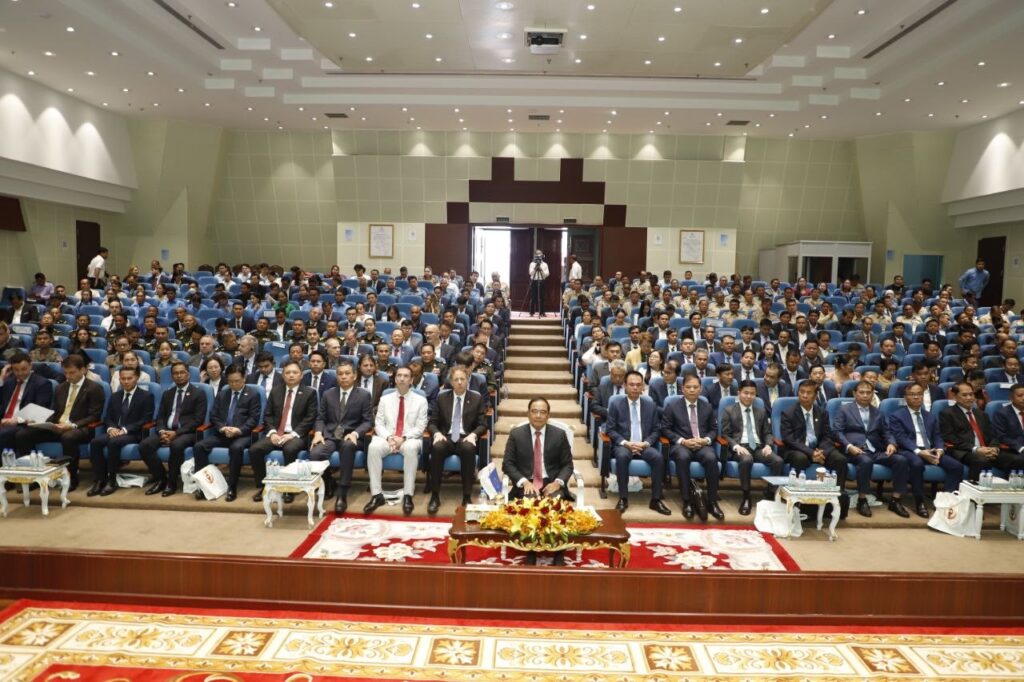
The Cambodian government has officially launched and implemented the National Mine Action Policy for 2026-2035. This policy aims to free Cambodia from the impact of explosive ordnance, fostering sustainable livelihoods for its people and promoting peace, stability, and development. The official launch ceremony took place on September 2nd at the Council of Ministers, presided over by Deputy Prime Minister and First Vice President of the Mine Action Authority, Ly Thuch, representing Prime Minister Hun Manet, who also chairs the Mine Action Authority. Numerous development partners also attended. During the event, Ly Thuch stated that the government never considers mine action a secondary program but rather a core element of national development, a commitment to the people, and a promise to future generations. He emphasized that Cambodia's achievements would not be possible without peace, and peace itself does not arise spontaneously. He recalled that for over three decades, Cambodia has been clearing land threatened by mines and explosive remnants of war. In the 1990s, over 4,000 people per year were victims of mines and explosive remnants of war, with many losing their lives. This issue prevented farmers from cultivating their land, children from attending school, and forced entire communities to live under the threat of dangerous land. Ly Thuch confirmed that the current rate of casualties has decreased to below 100 people per year, while thousands of kilometers of mined land have been cleared. Land that once instilled fear is now being used for farming, building schools, and welcoming investment. He noted that behind these achievements are the contributions of many men and women, including national and international operators, technicians, risk education personnel, and local authorities, who have carried out their missions with courage, discipline, and a spirit of responsibility. Ly Thuch affirmed that with the value of peace, Prime Minister Hun Manet has led the country through a historic process of transforming land once filled with mines and danger into land of hope, dignity, and opportunity for the Cambodian people, laying the foundation for future generations to continue development with hope and confidence. Under the continued leadership of the Prime Prime Minister, the government has integrated mine action into the "Pentagonal Strategy," linking this work to food security, rural development, poverty reduction, infrastructure development, and improving the quality of life for families living at risk from mines. By 2035, Cambodia is committed to being free from the impact of mines and explosive remnants of war, meaning a country where no community lives under the threat of explosive ordnance. He raised a significant question: what happens after land is cleared of mines? Will farmers cultivate it? Will it be used for school construction? And how will the lives of the people change? He stressed that from now on, the success of mine action will be measured by what is built on the cleared land, not just by the area cleared. Concurrently, the National Mine Action Policy 2026-2035 aims to complete the clearance of known mined and cluster munition areas, reduce the extent of other explosive remnants of war, and support sustainable and inclusive victim assistance, thereby contributing to economic and social development and enhancing Cambodia's international prestige. This national policy is considered a roadmap and a renewed commitment by the government to protect peace, stability, and the safety of its people, and to transform mine action into a catalyst that promotes poverty reduction, economic and social development, and sustainable and inclusive development.
Original source
Kampuchea Thmey Local