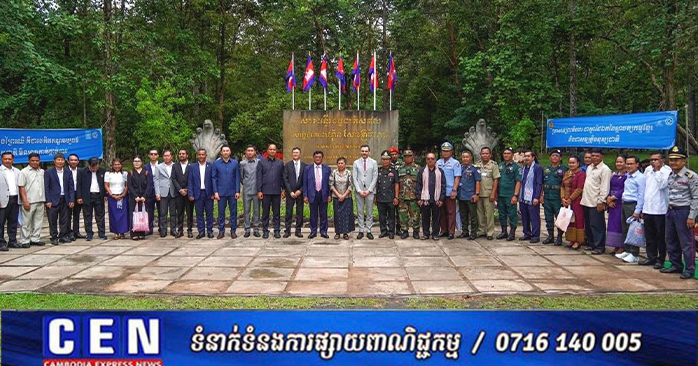
Preah Vihear Temple Marks 18th Anniversary of World Heritage Status with Renewed Commitment to Restoration
The National Authority for Preah Vihear Temple held a ceremony celebrating the 18th anniversary of its inscription on the UNESCO World Heritage List. The event highlighted restoration efforts following last year's destruction and reinforced international cooperation for heritage protection and regeneration.
The National Authority for Preah Vihear Temple announced that on July 7, 2026, a ceremony was held to celebrate the 18th anniversary of the inscription of Preah Vihear Temple on the UNESCO World Heritage List (July 7, 2008 – July 7, 2026). The event, under the theme "Conservation, Destruction, and Restoration," took place at the Samdech Techo Hun Sen Natural Heritage Museum in Preah Vihear Province. The ceremony was graced by the high presence of Her Excellency Dr. Prof. Phoung Sakona, Minister of Culture and Fine Arts. Also in attendance were His Excellency Kim Rithy, Governor of Preah Vihear Provincial Administration; His Excellency Kong Putthikar, Director-General of the National Authority for Preah Vihear; Mr. Flavio BONETTI, Head of the UNESCO Office in Cambodia; representatives of diplomatic missions from member states of the ICC-Preah Vihear Committee; leaders and officials from relevant provincial departments; commanders and deputy commanders of the Royal Cambodian Armed Forces and National Police; teachers, students; and local community members, with a total of approximately 500 participants. The attendees reiterated the outstanding universal value of Preah Vihear Temple and the achievements in conservation and development that the National Authority for Preah Vihear and all international partners have strived to accomplish over the past 18 years. Concurrently, the ceremony recalled the severe destruction that occurred last year (2025) to the World Heritage site, which completely annihilated the results of previous work. This resulted in severe damage to a total of 562 locations within Preah Vihear Temple and forced approximately 16,000 residents to evacuate their homes in the World Heritage area. Houses, schools, health centers, pagodas, and numerous public infrastructures were also damaged. The Governor of the province reiterated the diligent and responsible efforts in organizing safety centers and providing various services to the displaced residents, as well as arranging long-term accommodation for those who could not yet return to their villages. The National Authority for Preah Vihear also highlighted the implementation of the Preah Vihear Temple Emergency Recovery Plan in accordance with the recommendations of UNESCO and ICC-Preah Vihear experts. This plan includes: (1) clearing unexploded ordnance and cluster bombs; (2) installing temporary support structures to prevent further collapse of the temple's architecture; (3) collecting stone fragments and sculptures for conservation and repair; (4) 3D documentation of the entire temple; and (5) restoring the ancient water systems. These tasks received financial contributions from the Royal Government, UNESCO, the ALIPH organization, and the Permanent Delegation of France to UNESCO. In parallel, the National Authority for Preah Vihear has set forth priority future tasks, including continuing temple repairs, restoring forests and ecosystems within the heritage area, revitalizing the tourism sector, improving community livelihoods, and awakening the spirit of national solidarity among all officials, armed forces, and citizens to continue jointly protecting ancestral heritage for posterity. On this occasion, Her Excellency the Minister of Culture and Fine Arts addressed the attendees, emphasizing the Royal Government's commitment to protecting territorial integrity and various cultural assets in accordance with international law, particularly continuing the conservation and repair of Preah Vihear Temple to ensure its longevity for future generations. She also advised the National Authority for Preah Vihear to collaborate closely with relevant national and international partners to continue the mission of preservation, conservation, and repair, forest and ecosystem restoration in the heritage area, tourism revitalization, and community livelihood improvement. She further expressed her gratitude to the relevant authorities for ensuring the safety of the citizens, and especially to UNESCO and various international partners who have participated in the emergency rescue and repair of Preah Vihear Temple. She appealed to all national and international partners to continue joining the Royal Government in successfully implementing this mission. The entire assembly expressed their deepest gratitude to His Majesty the King Father of Khmer Independence, His Majesty Norodom Sihamoni, King of the Kingdom of Cambodia; His Excellency Samdech Akka Moha Sena Padei Techo Hun Sen, President of the Senate; and His Excellency Samdech Moha Borvor Thipadei Hun Manet, Prime Minister of the Kingdom of Cambodia, as well as national leaders and heroes of all generations who have led in defending and preserving territorial integrity and various cultural heritage assets, including Preah Vihear Temple. The celebration concluded in an atmosphere of joy and national pride, reflecting the spirit of solidarity and profound love for national culture. All rights reserved: Soth Ly
多角的分析
昨年の破壊行為によるインフラ被害(住居、学校、保健センター、公共インフラ)は、地域経済の回復に直接的な影響を与える。これらの復旧には多額の資金と時間がかかるため、地域住民の生計向上や観光業の再活性化といった長期的な経済目標の達成を遅らせる可能性がある。国際社会からの資金援助は重要だが、持続的な経済成長のためには、観光客誘致策の強化や地域産業の多角化といった国内主導の経済戦略が不可欠となる。
プレアビヒア寺院周辺のインフラ被害は、観光関連投資のリスク要因となる。しかし、世界遺産というブランド力は依然として高く、復旧・復興への国際的な支援と政府のコミットメントは、長期的な投資機会を示唆する。特に、観光インフラの再建や地域経済活性化に関連するプロジェクトへの投資は、復興の進展とともに魅力的になる可能性がある。ただし、治安やインフラの安定性に対する懸念は、短期的な投資判断において慎重な評価を要する。
昨年発生した破壊行為は、地域住民約1万6千人の避難を余儀なくさせ、生活基盤に深刻な影響を与えた。式典で言及された安全センターの設置や長期滞在用住居の提供は、当面の生活支援策であるが、住民が故郷に戻り、平穏な生活を取り戻すためには、住居、学校、保健センターといった生活インフラの再建が急務である。また、文化遺産の破壊は、地域住民のアイデンティティや精神的な支柱にも影響を与えうるため、文化復興とコミュニティの再生に向けた支援が重要となる。
昨年の破壊行為により、多くの住民が住む家を失い、避難生活を強いられた。式典で語られた復興への取り組みは、住民にとって希望の光となるが、具体的なインフラ復旧や生活再建が迅速に進むかどうかが、住民の生活実感に直結する。特に、失われた住居や学校、保健センターの再建は、住民が安心して暮らせるようになるための最重要課題である。また、文化遺産の保護は、住民が誇りとする地域のアイデンティティを守ることにもつながるため、住民参加型の復興プロセスが求められる。
背景・歴史的文脈
プレアビヒア寺院は、カンボジアとタイの国境付近に位置し、その領有権を巡っては両国間で長年対立があった。2008年にユネスコ世界遺産に登録されたことで、カンボジアの国家的な象徴としての地位を確立したが、登録後も国境紛争の火種となることがあった。特に2011年には、寺院周辺で両国軍が衝突し、緊張が高まった。昨年(2025年)に発生したとされる破壊行為は、この寺院が依然として地域情勢の不安定さや、文化遺産を巡る複雑な政治的・地政学的な文脈の中に置かれていることを示唆している。今回の式典は、こうした過去の経緯を踏まえ、復興と保護への国際的な協力を改めて訴える機会となった。
原文ソース
CEN Cambodia