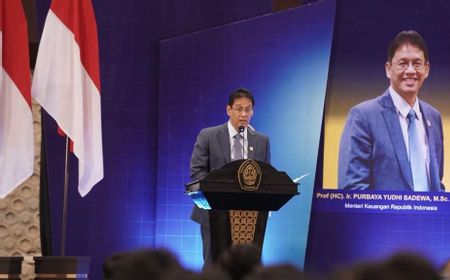
2026 State Budget to Allocate Over Rp769 Trillion for Education, Minister Purbaya Calls it Key to 'Indonesia's Gold 2045'
Indonesian Finance Minister Purbaya Yudhi Sadewa emphasized that the 2026 State Budget (APBN) is crucial for achieving 'Indonesia's Gold 2045.' The budget allocates over IDR 769.1 trillion for education, aiming to strengthen human capital and drive economic growth.
Minister of Finance Purbaya Yudhi Sadewa has emphasized that the State Budget (APBN) for 2026 is a key instrument for maintaining economic stability and strengthening investment in human resources, laying the foundation for 'Indonesia's Gold 2045.' According to him, the management of the State Budget is carried out based on the mandate of Article 33 of the 1945 Constitution to realize the prosperity of the people through healthy and sustainable fiscal policies. The government continues to optimize Indonesia's strategic potential, including its advantageous geographical position, natural resource wealth, and demographic bonus, as the main capital towards achieving the target of becoming one of the world's five largest economic powers by 2045, with a Gross Domestic Product (GDP) of around 5 trillion US dollars and a per capita income exceeding 15,000 US dollars. Purbaya highlighted that to achieve this goal, economic development must be supported by superior, productive, and adaptive human resources to technological developments. He stressed that talent is the core of national economic transformation, advocating for the integration of science, technology, engineering, and mathematics (STEM) with social sciences, humanities, arts, religion, and economics to boost productivity, competitiveness, and foster sustainable economic growth. The 2026 Budget will see an allocation of IDR 769.1 trillion for education. This funding is directed towards expanding access and improving the quality of education, revitalizing schools, supporting the Free Nutritious Meal Program, and strengthening scholarship financing through the Education Fund Management Institution (LPDP). Furthermore, the government is sharpening the LPDP scholarship policy to better align with national development needs. Scholarships are now focused on priority fields, particularly STEM and strategic industries such as food, energy, health, defense, digitization, artificial intelligence, semiconductors, downstream industries, maritime, advanced manufacturing and materials, and entrepreneurship. Amidst global economic uncertainty, Purbaya stated that Indonesia maintains strong economic fundamentals, with economic growth performance, inflation, fiscal deficit, and government debt ratio at well-managed levels compared to many other countries. This reflects prudent fiscal management and strengthens confidence in the national economy. The government also continues to enhance the synergy of fiscal and monetary policies to ensure the state budget functions as a shock absorber, maintains economic stability, protects people's purchasing power, and creates adequate fiscal space to support human development and economic transformation agendas. Purbaya concluded by reiterating that the State Budget is not merely an instrument for managing state finances but a long-term investment in producing superior Indonesian generations. By maintaining economic stability, strengthening structural transformation, and improving human resource quality, the government is optimistic about achieving inclusive, sustainable, and competitive economic growth towards Golden Indonesia 2045. Source: VOI English
多角的分析
2026年度国家予算における教育分野への巨額の投資は、インドネシアが掲げる「黄金期2045」達成に向けた長期的な経済成長戦略の中核をなす。人的資本の質的向上は、生産性向上、イノベーション促進、そして国際競争力の強化に直結する。特にSTEM分野や戦略的産業への重点投資は、産業構造の高度化と付加価値の増大を目指す政府の意図を反映している。グローバル経済の不確実性が続く中、財政規律を維持しつつ、教育への投資を通じて内需を刺激し、経済のレジリエンスを高める狙いがある。これは、単なる支出ではなく、将来の経済的リターンを見込んだ戦略的投資と位置づけられる。
教育分野への大規模な予算配分は、長期的な視点を持つ投資家にとって、インドネシアの将来的な経済成長ポテンシャルを示すポジティブなシグナルとなり得る。特に、STEM教育の強化や戦略的産業への投資は、ハイテク産業や高付加価値産業の発展を促し、新たな投資機会を生み出す可能性がある。LPDP奨学金政策の的を絞った変更は、政府が具体的な産業ニーズを把握し、人材育成を産業戦略と連動させていることを示唆する。ただし、これらの投資が具体的な成果に結びつくまでのタイムラグや、教育システムの質的改善が国際競争力にどの程度貢献するかは、今後の実行力にかかっている。投資家は、教育投資の効果が経済成長や企業収益の向上にどのように波及するかを注視する必要がある。
769兆ルピア超という教育予算の増額は、インドネシア国民、特に若年層にとって、より良い教育機会へのアクセス拡大と質の向上を期待させる。無料給食プログラムの拡充は、貧困層の子供たちの学習環境改善に直接的に貢献し、教育格差の是正に繋がる可能性がある。LPDP奨学金が特定の分野に絞られることは、学業成績優秀者や特定の専門分野を目指す学生にとって、より明確なキャリアパスと支援機会を提供する一方、それ以外の分野を志す学生にとっては競争が激化する可能性もある。教育の質的向上は、社会全体のスキルレベル向上、雇用機会の創出、そしてより公平な社会の実現に寄与することが期待される。しかし、予算の執行が地方や貧困地域にまで公平に行き渡るか、そして教育現場の教員の質や待遇改善といった課題への対応も重要となる。
プルバヤ財務相の発言は、国民、特に子供を持つ親や学生にとって、将来への希望を示すものと言える。769兆ルピアという巨額の教育予算は、子供たちの教育の質が向上し、より良い未来が開けるのではないかという期待感を生むだろう。特に、無料給食プログラムの拡充は、経済的に厳しい家庭にとっては大きな助けとなる。しかし、地方に住む市民や経済的に困難な状況にある家庭では、この予算が実際に自分たちの教育機会の改善にどう繋がるのか、具体的な恩恵を実感できるのかどうか、という点に不安を感じる声もあるだろう。また、奨学金が特定の分野に限定されることで、自分の子供が希望する進路を選べなくなるのではないか、という懸念も生じる可能性がある。教育への投資が、最終的に国民生活の向上にどう結びつくのか、その実効性が問われることになる。
背景・歴史的文脈
インドネシアは、2045年の建国100周年に向け「インドネシアの黄金期2045」という国家目標を掲げている。これは、経済大国化、一人当たり所得の向上、そして国民生活の質の向上を目指す長期ビジョンである。この目標達成のために、政府は人的資本の強化を最重要課題の一つと位置づけている。特に、人口ボーナス期にある若年層の教育への投資は、将来の経済成長の原動力となると考えられている。過去の経済開発においては、天然資源への依存度が高かったが、持続的な成長のためには、知識集約型経済への転換が不可欠であり、そのための教育改革と人材育成が急務となっている。今回の2026年度国家予算における教育分野への大規模な予算配分は、この長期目標達成に向けた具体的な一歩と位置づけられる。
原文ソース
VOI English