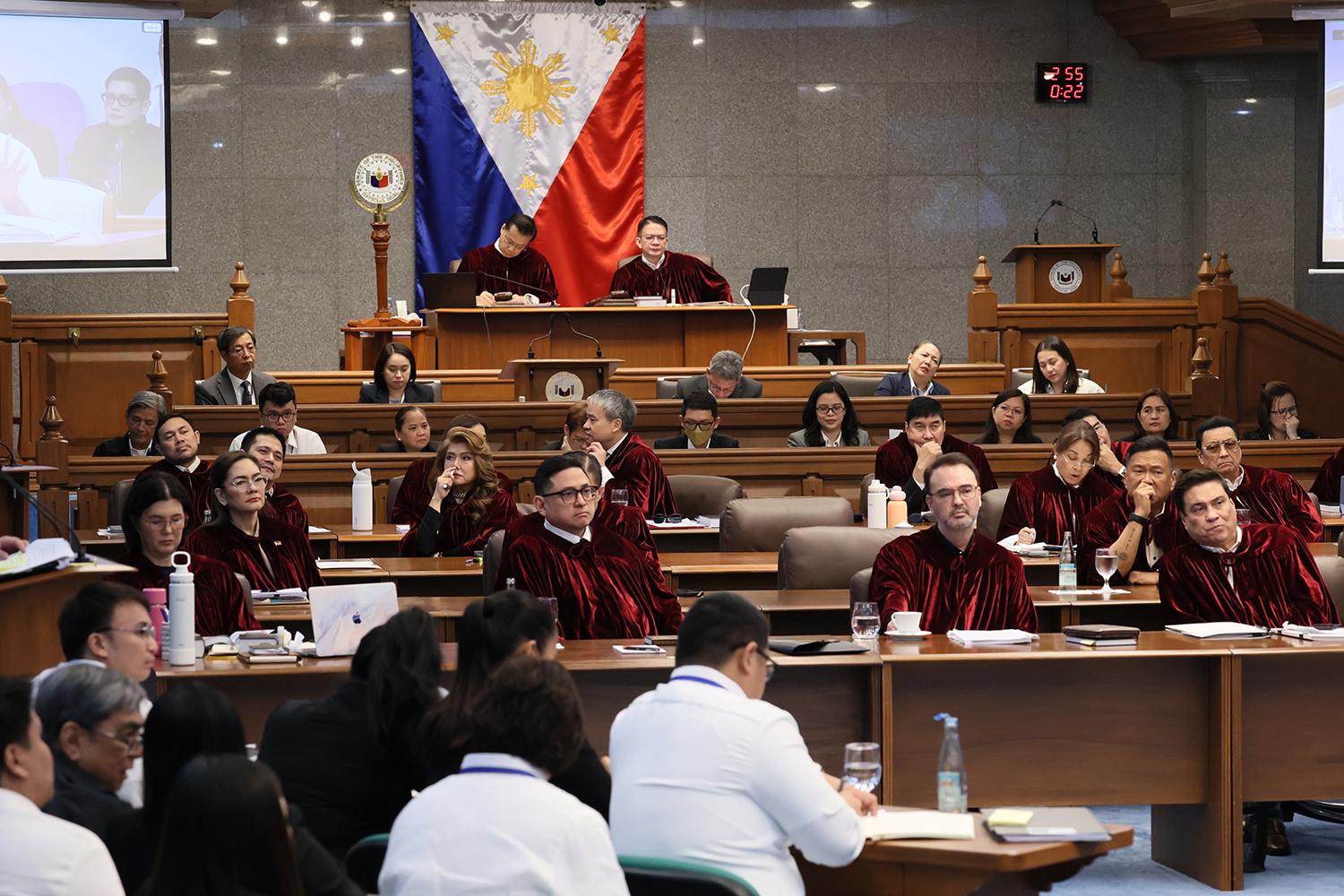
Impeachment court bars parties from explaining witness withdrawal
The Senate impeachment court in the Philippines has ordered both parties in the impeachment trial of Vice President Sara Duterte to refrain from explaining their decisions to withdraw witnesses, citing concerns that such discourse could prejudice the proceedings.
MANILA, Philippines — The Senate impeachment court on Wednesday has ordered all parties in Vice President Sara Duterte’s trial to no longer explain their decision to withdraw witnesses. Senator-judge and presiding officer Francis “Chiz” Escudero made the ruling after lead defense counsel Sheila Sison raised this plea in a manifestation. Sison told the court that the prosecution’s withdrawal of witnesses were “almost always accompanied by lengthy discourse containing conclusions of law and facts” that only the impeachment court can determine. READ: LIVE UPDATES: Impeachment trial of VP Sara Duterte According to the defense counsel, this added discourse affects the fairness and balance of the proceedings, as well as the way the impeachment court can perceive such. “… So I’m just expressing a concern on behalf of the defense, and just for the guidance of both parties – If the only message, if the only intent, really, is just to withdraw witnesses, and, perhaps, it would better serve the purpose of aiding the disposition of this case, if that fact alone will be the only thing mentioned, without factual assertions, or conclusions of facts, or even interpretation of the law,” she explained. “I think that would be more fair for everyone, and for the guidance of the public,” she added. Sison was referring to Lead Prosecutor Rep. Gerville Luistro’s withdrawal of six witnesses, as well as private prosecutor Lorna Kapunan’s withdrawal of two witnesses on Tuesday. Escudero then responded that he, as the presiding officer, took the prosecution’s pronouncements as “akin to a tender offer of excluded evidence.” He then gave the defense team the option to either practice the same “privilege” to make explanations on withdrawing witnesses, or simply have the court remind the parties to stop doing this. Sison, however, clarified that the defense panel is not asking for “special privilege” or the same amount of time given to the prosecution for its counsels’ “lengthy manifestations and discourses.” “All I’m asking is if the parties may be guided from making conclusions of law that, in fact, really advocate their position,” she said. “… If the intent truly is to aid this court in a speedy disposition of this case in a fair and balanced manner, and considering we are being watched by the public… all I’m asking is – if the intent is just to say we’re withdrawing, then just state the intent,” she requested. Escudero granted Sison’s plea and told the parties to refrain from making unnecessary statements in their manifestations. “The court reminds both parties to kindly limit… limit any such manifestations on the withdrawal or change on their witnesses, to kindly limit it to the withdrawal of such witnesses, and that it applies to both sides,” he ordered. Meanwhile, while the ruling was already made, Luistro, in a separate manifestation, reminded the public during the trial that it is a constitutional process that is of “paramount importance.” “Therefore, providing the reasons for the withdrawal of these witnesses need to be communicated as well to the viewing public,” said Luistro. “Our countrymen need to understand the prosecution’s move to withdraw the names of other witnesses for Article 4. For the record only,” she told the senator-judges. The Senate impeachment court is currently tackling Article IV of the impeachment complaints against Duterte, which involve the alleged assassination threats she made against President Ferdinand Marcos Jr., First Lady Liza Araneta-Marcos and former House Speaker Martin Romualdez. The prosecution has already presented two witnesses against Duterte so far. It has also withdrawn a total of eight witnesses as the panel believes their testimonies will no longer be necessary. /apl
多角的分析
このニュースは直接的な経済的影響を及ぼすものではないが、弾劾裁判という政治的不安定要因は、投資家の信頼感や国内経済への投資意欲に間接的な影響を与える可能性がある。特に、副大統領という要職にある人物の弾劾手続きは、政権の安定性に対する懸念を高め、為替レートや株式市場に一時的な変動をもたらすことも考えられる。
投資家にとっては、政治的リスクの増大は警戒材料となる。弾劾裁判の長期化や、その結果によっては、フィリピンの政治的安定性に対する懸念が高まり、新規投資の判断を慎重にさせる可能性がある。ただし、今回の証人撤回に関する説明禁止という裁定は、手続きの迅速化を目指すものであり、一定の政治的安定化要因と見なされる可能性もある。
弾劾裁判のプロセスは、国民の政治への関心を高める一方で、証人撤回とその理由説明を巡る攻防は、裁判の公平性や透明性に対する国民の疑問を招く可能性がある。弁護側の主張通り、説明が長引けば、論点がぼやけ、国民の理解を妨げる恐れがある。今回の裁定は、手続きの簡潔化を目指すものだが、国民への説明責任という観点からは、さらなる議論を呼ぶかもしれない。
市民、特に政治に関心のある層は、弾劾裁判の進行に注目している。証人撤回の理由が十分に説明されないまま手続きが進むことに対し、納得できないと感じる市民もいるだろう。一方で、裁判が迅速に進むことを望む声もあり、今回の裁定はそうした期待に応える側面もある。しかし、裁判の透明性や、なぜ証人が撤回されるのかという根本的な疑問が解消されないままであることは、市民の政治不信を招く可能性も否定できない。
背景・歴史的文脈
フィリピンにおける弾劾裁判は、大統領や副大統領、最高裁判所判事などの高官に対する国民の信頼を維持するための重要な制度である。過去にも、ジョセフ・エストラーダ元大統領やレナト・コロナ元最高裁判所長官などが弾劾手続きに直面している。これらの裁判は、しばしば政治的な対立を伴い、長期化する傾向がある。証人撤回やその理由説明を巡る争いは、裁判の公平性、透明性、そして最終的な結論の正当性に対する国民の認識に影響を与えるため、裁判の進行において常に注目される点である。
原文ソース
Inquirer NewsInfo