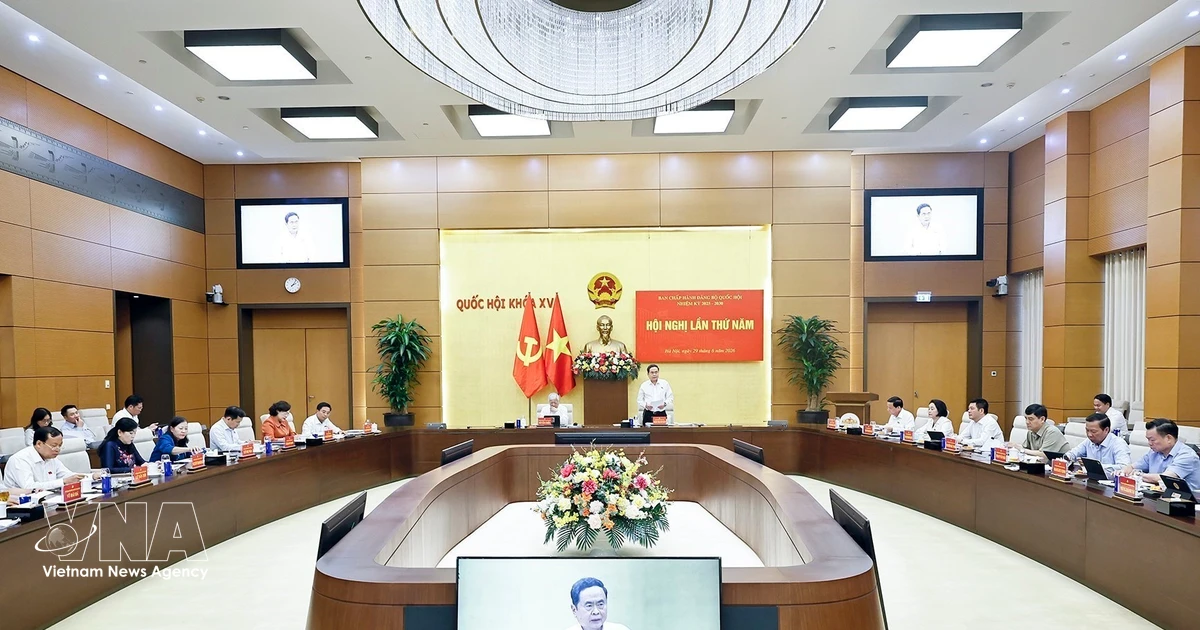
National Assembly to Continue Central Role in Institutionalizing Party Guidelines
Politics
2026年6月29日
5
VietnamPlus English

National Assembly to Continue Central Role in Institutionalizing Party Guidelines

AI サマリー

Vietnam's National Assembly (NA) is emphasized to continue its central role in translating the Communist Party's guidelines into law. Through legislative reforms and the review of government reports on socio-economics, budgets, and environmental protection, the NA is tasked with actualizing Party resolutions, highlighting a key policy implementation mechanism within Vietnam's one-party system.

Vietnam's National Assembly (NA) is urged to continue playing a central role in institutionalizing the Communist Party's guidelines. Vuong Dinh Hue, Chairman of the NA Standing Committee, noted that in recent years, the NA has significantly reformed its legislative approach, ensuring that laws regulate only matters within the legislature’s authority, while delegating more detailed provisions to the Government and ministries to enhance flexibility and responsiveness. The NA's Committee for Cultural and Social Affairs has rapidly reorganized following the 14th National Party Congress and the election of deputies to the 16th NA. Its work agenda has been updated to align with new directives from the 14th National Party Congress resolutions and the first Congress of the NA Party Organization for the 2025–2030 term. During its third session, the 16th legislature will review a wide range of government reports, including supplementary assessments of socio-economic and state budget performance in 2026 and early 2027, thrift and wastefulness prevention, gender equality, anti-corruption, crime prevention, law enforcement, detention management, environmental protection, and drug prevention. Prime Minister Le Minh Hung stated that Vietnam is ready to offer all possible support to foreign investors, including those from Australia, for long-term business operations. He also stressed the necessity of strictly adhering to implementation schedules for key national transport projects, emphasizing that deadlines must not be extended without objective reasons. Furthermore, Hung reiterated Party General Secretary and State President To Lam’s view that Vietnam must achieve a new breakthrough in its institutional framework and legislation, turning them into a growth driver. In diplomacy, a member of the Standing Board of the Vietnam–Cambodia Friendship Association Central Committee highlighted the need to strengthen coordination among Party diplomacy, State diplomacy, and people-to-people diplomacy. This integration with national defense and security safeguarding is crucial for building comprehensive diplomacy and creating synergy. Diplomacy is increasingly expected to directly create new opportunities, conditions, and drivers for development, rather than merely expanding relations or attracting external resources. Every diplomatic activity aims to enhance national competitiveness, innovation capacity, international integration, and Vietnam’s position in global value chains. Regarding infrastructure development, Prime Minister Hung stressed the importance of adhering to implementation schedules for key national transport projects. Vietnam's representation at the International Tribunal for the Law of the Sea (ITLOS) for the 2026-2035 term holds particular significance given the complex situation in the East Sea, marked by overlapping maritime claims and disputes. Vietnam's commitment to international solidarity and humanitarian responsibility is demonstrated through its participation in UN peacekeeping missions, with the recent awarding of the UN peacekeeping medal to all 63 members of a hospital unit being a source of great pride. Within Vietnam's one-party system, the NA serves as a crucial body for legislating the Party's directives and overseeing policy implementation. In driving economic growth, attracting foreign investment, and fostering international relations, the NA plays an indispensable role in achieving the Party's strategic objectives through legislation and oversight.

多角的分析

経済的影響

ベトナム国会が党方針の制度化で中心的な役割を果たすことは、経済政策の安定性と予測可能性を高める要因となる。党の指示が法制度に迅速かつ正確に反映されることは、国内投資家および外国投資家双方にとって、事業環境の明確化に寄与する。特に、首相が強調したように、法制度の「新たな飛躍」は、規制緩和や投資インセンティブの強化を通じて、経済成長をさらに加速させる可能性を秘めている。しかし、その一方で、党の指導方針への過度な依存は、市場原理に基づく柔軟な経済運営を阻害するリスクも内包しており、制度化のプロセスにおける透明性と独立性が問われる。

投資家心理

ベトナム国会が党方針の制度化で主導的な役割を担うことは、投資家にとって、政策の方向性が明確になるという点で安心材料となる。特に、第16期国会が社会経済、予算、環境保護など多岐にわたる政府報告を審査する姿勢は、投資判断に必要な情報を提供する。しかし、党の指導方針が法制度に直接反映される構造は、政策変更のリスクを孕んでおり、投資家は常に最新の党の方針や国会での議論を注視する必要がある。長期的には、制度化のプロセスが透明性を増し、予見可能性が高まることが、さらなる外国投資の呼び込みに繋がるだろう。

社会的影響

国会が党方針の制度化で中心的な役割を担うことは、国民生活に直接的な影響を与える。例えば、環境保護やジェンダー平等に関する法制度の整備は、国民の権利や生活の質の向上に繋がる可能性がある。また、汚職対策や法執行の強化は、社会の公平性と信頼性を高める上で重要である。しかし、党の指導方針が法制度に反映される過程で、国民の多様な意見やニーズが十分に反映されるかどうかが鍵となる。特に、地方の意見や、社会的に弱い立場にある人々の声が、制度化のプロセスでどのように取り込まれるかが、社会的な包摂性を確保する上で重要である。

市民の声

国会が党の方針を法律にする役割を担うことは、国民生活に直接的な影響を与えます。例えば、環境保護やジェンダー平等に関する法整備が進めば、私たちの生活環境や社会における立場が改善される可能性があります。また、汚職対策や犯罪防止の強化は、より安全で公正な社会への期待を高めます。しかし、国会での議論が党の方針に沿ったものとなる場合、国民一人ひとりの多様な意見や、現場の具体的な声がどこまで反映されるのか、という点も気になります。特に、地方に住む人々の声や、日々の生活で直面する課題が、法制度にどのように活かされていくのかが重要です。

背景・歴史的文脈

ベトナムの政治システムは、共産党による一党支配を基盤としている。1986年のドイモイ(刷新)政策以降、経済は市場経済化を進めたが、政治体制は共産党の指導下に留まっている。国会は、党の指導方針を法制化し、政府の活動を監督する機関として位置づけられている。党大会で決定された方針は、国会を通じて法制度に落とし込まれ、政策実行の根幹となる。このプロセスは、党のイデオロギーと国家運営の整合性を保つための重要なメカニズムであり、ベトナムの政治・経済・社会のあらゆる側面に影響を与えている。

原文ソース

VietnamPlus English

原文を読む