General articles are free for 24 hours after publish.
US Slaps New Tariffs on Philippine Goods Over Forced Labor Concerns
The US has imposed new tariffs on 60 economies, including the Philippines, citing insufficient enforcement of bans on goods produced with forced labor. Philippine exports will face a 12.5% tariff, potentially impacting trade with its largest export market.
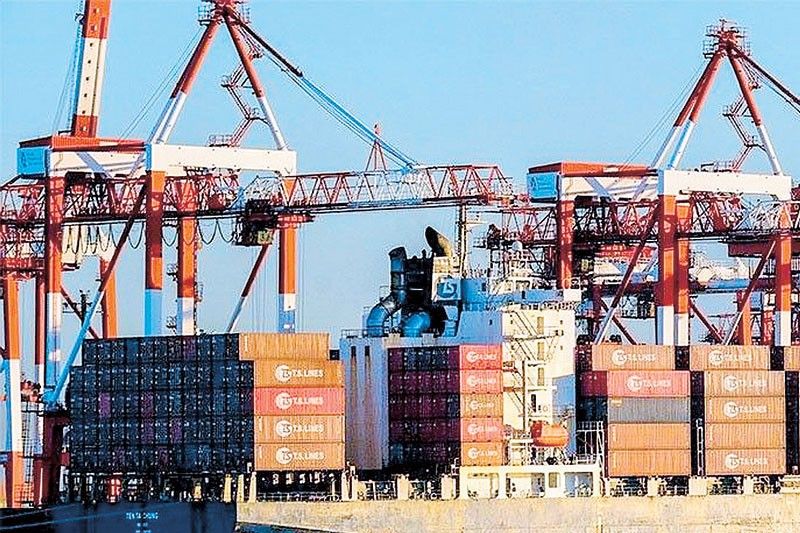
MANILA, Philippines — Philippine exports to the United States are set to face a new 12.5-percent tariff after the Trump administration imposed duties on trading partners accused of failing to block goods made with forced labor. The Office of the US Trade Representative (USTR) announced yesterday (Manila time) new tariffs of 10 percent and 12.5 percent on 60 economies, including the Philippines, after a months-long probe into alleged gaps in enforcing forced labor bans. In its findings, the USTR determined that the Philippines “failed to impose and effectively enforce a prohibition on the importation of goods produced with forced labor.” “The United States has had a forced labor import ban for nearly a century, and rigorously enforces it; it’s well past time for our trading partners to do the same,” US Trade Representative Jamieson Greer said in a statement. “Today’s action will begin to correct what is both a human rights abuse and distortive trade practice to improve the welfare of workers everywhere,” Greer added. The new duty replaces the 10-percent baseline tariff on Philippine goods that had been in effect since February following the US Supreme Court’s decision to strike down President Donald Trump’s previous reciprocal tariffs. The temporary global tariff expired yesterday after 150 days. Under the new tariff regime, economies that have implemented or committed to implementing a ban on imports made with forced labor will face the lower 10-percent tariff. These include Canada, the European Union, India and the United Kingdom. The Philippines, meanwhile, joins China, Japan, South Korea and dozens of other economies subject to the higher 12.5-percent duty. The higher tariff threatens to put further pressure on Philippine exporters, given that Washington remains Manila’s largest export market. Philippine Ambassador to Washington Jose Manuel Romualdez said the country is planning to negotiate with the US the new tariff slapped on Philippine goods. “We are going to negotiate on the basis of how we can remove the supposedly forced child labor goods from our list of US bound exports if it in fact proven to be so,” Romualdez said in a text message. Romualdez said Trade Undersecretary Allan Gepty would head the negotiation team to Washington. Philippines exports to the US reached $13.46 billion in 2025, accounting for around 15.9 percent of the country’s total exports, Philippine Statistics Authority data showed. Philippine Exporters Confederation Inc. (Philexport) president Sergio Ortiz-Luis Jr. said the forced labor duties are a reworking of the US reciprocal tariffs, noting that Trump weaponizes the measure against countries, particularly China. “I think the government should, for whatever it’s worth, continue negotiating, especially on the exemptions that we may be able to retain,” Ortiz-Luis told The STAR in a phone interview. With the exemptions under the new tariff regime still unclear, he said Philippine exporters are likely to hold back on production and defer orders until there is greater clarity. While Philexport supports efforts to eliminate unfair labor practices, Ortiz-Luis said imposing blanket tariffs on a country’s exports “may unfairly penalize legitimate exporters.” “Many Philippine exporters already undergo rigorous social compliance audits and adhere to internationally recognized labor and environmental standards demanded by global brands and buyers,” Ortiz-Luiz said. “These companies should not be placed at a competitive disadvantage because of a measure that broadly applies across nearly all Philippine exports,” he added. On Thursday, the country’s trade, finance and labor agencies signed a joint administrative order (JAO) creating a mechanism to investigate and block imports linked to abusive labor practices. Under JAO, an inter-agency committee will be established to receive, evaluate and investigate complaints relating to imports suspected of having been produced through forced labor. The Department of Trade of Industry will chair the inter-agency committee, with the Department of Labor and Employment serving as the vice chair. Committee members will include the Department of Finance, Bureau of Customs, Board of Investments and Philippine Economic Zone Authority. “Goods produced through forced labor have no place in our market. They undermine our domestic workforce, penalize law-abiding businesses and allow unfair competition,” Finance Secretary Frederick Go said. — Pia Lee-Brago, AFP
Original source
Philstar Business