Hun Manet's China Visit: AI Aspirations Meet Economic Realities
Diplomacy
2026年7月15日
5
Phnom Penh Post
Relations
🇰🇭Cambodia🇨🇳China🌐United Nations / ASEAN

Hun Manet's China Visit: AI Aspirations Meet Economic Realities

AI サマリー

Cambodian Prime Minister Hun Manet visits China to explore AI cooperation and economic ties. However, anticipated technology transfers and investments face challenges related to Cambodia's domestic capacity and its reliance on China.

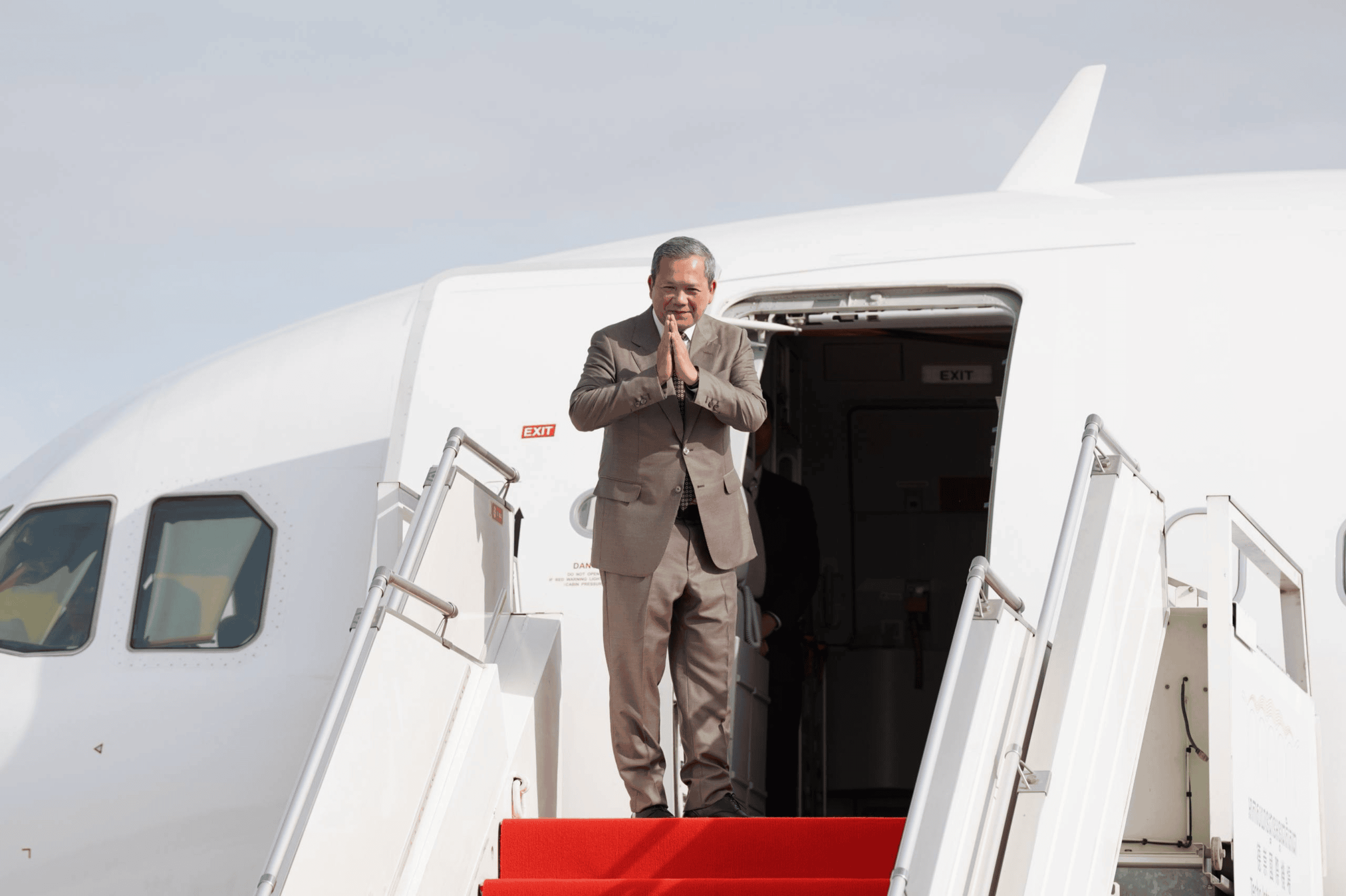
From July 15 to 17, Cambodian Prime Minister Hun Manet is undertaking a working visit to China. The trip will culminate in his participation in the opening ceremony of the 2026 World AI Conference in Shanghai on July 17, themed “AI Partnership for a Brighter Future.” Accompanied by senior ministers and business leaders, he is scheduled to meet Chinese President Xi Jinping and Premier Li Qiang. The visit occurs against a backdrop of deep historical ties, recent gestures like Cambodia’s visa-free pilot for Chinese tourists, and persistent questions about translating diplomatic warmth into tangible, sustainable development for both nations. High expectations in the AI era The visit is framed as an opportunity for Cambodia to ride the wave of global AI advancement through partnership with China, a leader in AI infrastructure, applications and governance discussions. For a developing nation like Cambodia, AI holds promise in areas such as smart agriculture, digital governance, education, healthcare and tourism management. Cambodian officials likely anticipate technology transfers, joint ventures, training programmes and investment in digital infrastructure that could help leapfrog traditional development stages. This aligns with broader economic hopes. In June, Cambodia launched a four-month visa-free pilot program for Chinese tourists, allowing stays of up to 14 days. The move aims to boost the post-pandemic tourism recovery, with Chinese visitors historically forming a major market. Phnom Penh clearly hopes for reciprocity or expanded Chinese facilitation for Cambodian travellers and businesses, signalling a desire for more balanced people-to-people exchanges. Bilateral trade and investment are already significant. China is Cambodia’s top trading partner and investor, with substantial involvement in infrastructure, energy and real estate. The visit is expected to yield new agreements that deepen this cooperation under frameworks like the Comprehensive Strategic Partnership and the “Diamond Cooperation” model. Historical context, geopolitical realities Cambodia-China relations extend far beyond the current leaders. Successive Cambodian monarchs, including the late King Norodom Sihanouk and current King Norodom Sihamoni, along with former prime minister Hun Sen and now his son Hun Manet, have cultivated strong ties with Beijing. China has been a consistent provider of aid, investment and political support when Western donors applied pressure. A notable episode was Cambodia’s 2012 ASEAN Chairmanship. As chair, Cambodia blocked efforts to include strong language on South China Sea disputes in ASEAN statements, preventing unified criticism of China’s claims. This decision was widely seen as prioritising relations with Beijing over ASEAN consensus, especially amid tensions involving the Philippines and Vietnam. Cambodia’s rationale centred on protecting its own sovereignty and avoiding entanglement in disputes that could undermine its bilateral partnerships. Phnom Penh continues to look to China for diplomatic backing on border and sovereignty issues. While this loyalty has secured economic benefits, it has also drawn criticism. Cambodia’s heavy reliance on Chinese financing raises concerns about debt sustainability, transparency and strategic autonomy. As of recent data, a substantial portion of Cambodia’s external debt is owed to China (around 36-41%, according to various estimates). Projects like roads, ports and energy facilities have modernised the country but sometimes face questions regarding debt servicing, local employment benefits, environmental impact and “debt-trap” risks — though Cambodia maintains these are manageable concessional loans. In the AI context, expectations must confront realities. China excels in AI deployment at scale, but technology transfer is often selective, tied to commercial interests, data governance aligned with Chinese standards and geopolitical alignment. Cambodia’s capacity to absorb advanced AI — lacking in skilled human capital, regulatory frameworks and supporting infrastructure — limits immediate gains. Grand announcements at conferences risk remaining performative without deep domestic reforms in education, digital literacy and innovation ecosystems. What real mutual development looks like The core challenge is moving from symbolic summits and historical goodwill to concrete, mutually beneficial outcomes that prioritise long-term national development over short-term political optics. For Cambodia, priorities should include: • Diversification: Reducing over-reliance on any single partner. Balancing Chinese investment with engagement from Japan, France, South Korea, the EU, US and ASEAN neighbours to enhance bargaining power. Cambodia should provide visa-free for tourists from those countries, not only China. • Capacity Building: Insisting on technology transfer clauses, joint R&D centres, vocational training in AI and digital skills, and local content requirements in projects. • Sustainable Tourism and Trade: Using the visa-free pilot to gather data and push for reciprocal easing. Focus on high-value tourism and Cambodian exports (agriculture, garments, light manufacturing) to narrow trade imbalances. • Debt and Transparency: Ensuring new loans include clear terms, feasibility studies and anti-corruption safeguards. Prioritising projects with high multiplier effects on employment and SMEs. • Sovereignty: While seeking Chinese support on borders, Cambodia must carefully navigate ASEAN unity and its own strategic interests to avoid isolation. For China, genuine partnership means: • Equitable Investment: Moving beyond resource extraction or enclave projects to sectors that build Cambodian resilience, such as agro-processing, green technology and inclusive digital economy. • Knowledge Sharing: Providing accessible AI tools, open-source contributions where possible and scholarships tailored to Cambodian needs rather than primarily commercial exports. • Reciprocity: Easing barriers for Cambodian goods, services and people, recognising Cambodia’s gestures like visa liberalisation. Both nations could collaborate on regional public goods: Mekong River management, climate resilience, health security and connectivity corridors that benefit broader Southeast Asia. True “All-Weather” friendship, as referenced in official rhetoric, requires addressing asymmetries rather than glossing over them. Critically, over-romanticising the relationship risks policy blind spots. Cambodia’s development

多角的分析

経済的影響

フン・マネ首相の訪中は、カンボジアの経済発展、特にAI分野での技術革新と投資獲得を目指すものだが、その実現には課題が伴う。中国はAIインフラと応用分野で先行しており、カンボジアはスマート農業やデジタルガバナンスへの応用を期待している。しかし、中国からの技術移転はしばしば商業的利益や中国の基準に制約されるため、カンボジアが期待するような広範な技術移転が実現するかは不透明だ。また、カンボジアは中国からの投資に大きく依存しており、貿易不均衡の是正や、中国以外の国々との経済関係の多様化が、持続可能な発展のためには不可欠となる。

投資家心理

投資家にとって、カンボジアと中国の間のAI分野での協力強化は、潜在的なビジネスチャンスとリスクの両方をもたらす。中国のAI技術へのアクセス向上は、カンボジア国内での新たなデジタルサービスやインフラ開発を促進する可能性がある。しかし、カンボジアのAI分野における人材不足や規制枠組みの未整備は、投資回収の遅延や予期せぬコスト増につながるリスク要因となる。また、中国への過度な経済依存は、地政学的な変動や政策変更による影響を受けやすく、投資環境の不安定化を招く可能性もある。投資判断においては、技術移転の具体的な内容、現地での人材育成計画、そしてカンボジアの多様な国際関係が鍵となる。

社会的影響

フン・マネ首相の訪中がカンボジア国民の生活に与える影響は、AI技術の普及と経済発展の進展に左右される。AIがスマート農業や医療、教育分野で活用されれば、国民生活の質の向上に貢献する可能性がある。しかし、技術移転が限定的であったり、恩恵が一部の層に偏ったりすれば、期待先行で終わるリスクもある。また、中国への経済的依存の深化は、カンボジアの国内産業や雇用に影響を与える可能性があり、国民の生活基盤の安定性に関わる問題となりうる。特に、AI分野での人材育成が進まなければ、デジタルデバイドの拡大や、国際競争における不利につながる懸念もある。

市民の声

カンボジア市民、特に若年層は、AI技術の進歩がもたらす雇用機会や生活の利便性向上に期待を寄せている。中国とのAI分野での連携強化は、最新技術へのアクセスを容易にし、教育や就職の機会を広げる可能性を秘めている。しかし、同時に、中国への経済的依存の深化が、国内産業の発展を阻害したり、労働市場にどのような影響を与えるかといった不安も抱えている。また、AI技術の普及が、社会全体のデジタルリテラシー向上や、情報格差の解消にどれだけ貢献するか、という点も注目されている。

背景・歴史的文脈

カンボジアと中国の関係は、冷戦時代から続く長期的かつ強固なものだ。中国は、西側諸国からの圧力がかかる中で、カンボジアに経済的支援、投資、政治的支持を一貫して提供してきた。特に、2012年のASEAN議長国時代にカンボジアが南シナ海問題に関するASEAN声明で中国に配慮したことは、両国の緊密な関係を示す象徴的な出来事であった。この関係は、カンボジアのインフラ開発に大きく貢献する一方で、中国への経済的依存度を高め、債務問題や戦略的自律性への懸念も生じさせている。フン・マネ首相の訪中は、この歴史的文脈の中で、AIという新たなフロンティアにおける協力関係を深化させる試みと言える。

原文ソース

Phnom Penh Post

原文を読む