Thailand Urged to Reform 'People, Capital, Energy' for New World Order
Business
2026年8月1日
7
INN News
Relations
🇹🇭Thailand🌐United Nations / ASEAN

General articles are free for 24 hours after publish.

Thailand Urged to Reform 'People, Capital, Energy' for New World Order

Share
AI Summary

Thai government, finance, and private sectors at the INTANIA Forum proposed reforms in 'people, capital, and energy' to address the new world order. Discussions focused on optimizing resource allocation, reducing zombie businesses, investing in future industries, ASEAN cooperation, and human capital development to achieve high-income status.

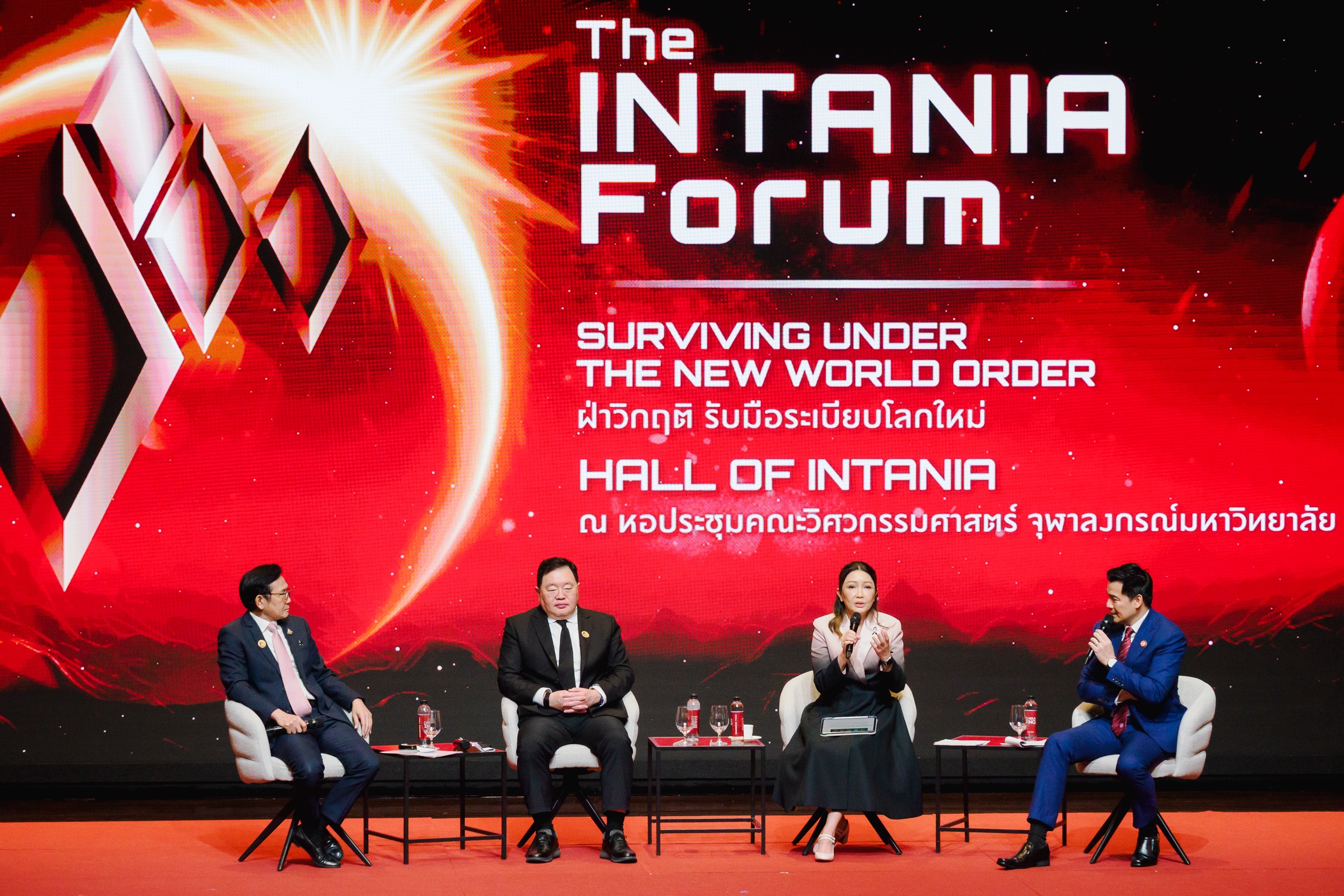
Bangkok, Thailand – Government, finance, and private sector leaders convened at the INTANIA Forum, organized by the Chulalongkorn University Engineering Alumni Association, to discuss critical reforms needed for Thailand to navigate the new world order and achieve high-income status. Key proposals centered on overhauling 'people, capital, and energy' resources. Vuttipong Vuttayatorn, Governor of the Bank of Thailand (BOT), emphasized the need for long-term planning and efficient resource allocation in response to global shifts from the COVID-19 pandemic, geopolitical conflicts, and economic volatility. He highlighted the importance of channeling capital to promising businesses and integrating informal economic resources to reduce losses from corruption and boost national growth potential. Addressing the issue of "Resource Misallocation," where capital is concentrated in large corporations while SMEs struggle to access funding, the BOT plans to develop a financial credit assessment system using data analytics and information from a data bureau. This aims to facilitate loan access for potentially successful entrepreneurs, even without traditional collateral or credit history. Thammasak Sethanadum, President and CEO of SCG (Siam Cement Group), urged Thailand to restructure its economy to align with the new global order, advocating for the bold reduction or termination of "Zombie Businesses" and reinvestment in future-oriented industries. He also proposed strengthening ASEAN as a business partnership, leveraging each nation's strengths to build shared value chains. Thailand, he suggested, should focus on producing high-value products driven by innovation and promoting "Made in Thailand" goods to create multiplier effects on income and employment. The development of regional financial mechanisms, such as ASEAN-based Loans, was also recommended to expand funding sources and enhance ASEAN's global competitiveness. Kattiya Indaravijaya, CEO of Kasikornbank, stated that under the "New World Order," businesses, especially SMEs, must accelerate productivity improvements to reduce costs and boost competitiveness amidst a K-shaped economy that favors adaptable businesses. She proposed that Thailand focus on developing seven key industries: agriculture and food, next-generation automotive, AI, electronics and digital, medical and wellness, tourism, retail, and creative economy, to propel the country into high-income status within 12 years. Attapol Rerkpiboon, Advisor to the Prime Minister, noted that geopolitical and geo-economic factors will shape Thailand's economic and energy future. In the short term, securing energy stability, increasing self-reliance, and promoting biodiesel use are crucial. For the medium term, he stressed the need for infrastructure development to support data centers and AI, alongside enhancing energy efficiency through measures like AI Training Academies and setting Power Usage Effectiveness (PUE) standards. He also proposed accelerating investment in solar energy and the electricity grid, and pushing forward the PDP 2026 plan to increase electricity generation capacity from Small Modular Reactors (SMRs) by 2,400 MW by 2045, with the Electricity Generating Authority of Thailand (EGAT) leading the pilot initiative. In conclusion, all speakers agreed that "people" are the most crucial factor for national development. They called for accelerating lifelong learning, reforming the education system, utilizing AI for personalized learning, adjusting evaluation systems to reflect essential skills, and fostering skills that AI cannot replace, such as critical thinking, communication, collaboration, and EQ. Learning Chinese and the languages of key trading partners was also encouraged to enhance the competitiveness of Thai people globally. The speakers expressed confidence that if Thailand can develop its people, equip them with future skills, and instill a lifelong learning culture, it can transform global challenges into opportunities and achieve sustainable growth. The INTANIA Forum was seen as a vital platform for connecting the visions of the government, finance sector, and businesses to chart the nation's future development path. Source: INN News

0

Original source

INN News

原文を読む