General articles are free for 24 hours after publish.
Vietnam Unveils Strategy to Leverage Overseas Talent as 'Strategic Resource'
Vietnam's government has announced a new policy to position overseas Vietnamese as a 'strategic resource,' leveraging their knowledge and networks for domestic science, technology, innovation, and digital transformation. Specific measures include building expert networks and AI-powered talent matching platforms.
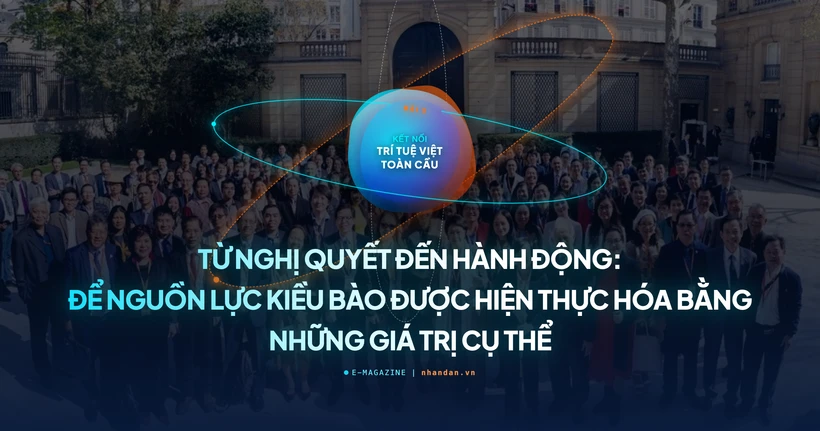
The Politburo of the Communist Party of Vietnam issued Resolution No. 23-NQ/TW on August 2, 2026, for the first time officially designating overseas Vietnamese as a "crucial strategic resource" contributing to the enhancement of national comprehensive strength. This marks a significant step towards achieving the national objectives set forth in Resolution No. 57-NQ/TW, often dubbed "Khoán 10" in science and technology, which emphasizes the development and utilization of high-quality human resources and talents to meet the demands of scientific, technological, innovation, and national digital transformation. In line with this resolution, Vietnam plans to implement special mechanisms to attract highly skilled overseas Vietnamese to live and work in the country. Furthermore, it aims to leverage top-tier scientists, experts, and "chief engineers" capable of organizing and directing key national tasks in science, technology, innovation, and digital transformation. Experts emphasize that achieving Vietnam's development aspirations by 2045 will require more than just domestic resources; the creativity and success of Vietnamese residing worldwide can bolster Vietnam's strength. The overseas Vietnamese community is recognized as an integral part of the Vietnamese nation and a vital resource for national construction and defense. Particularly in an era where science, technology, and innovation are increasingly transnational, harnessing overseas talent does not necessarily mean requiring long-term residency or employment within Vietnam. The crucial aspect is to establish mechanisms that enable the knowledge, technology, experience, and networks of Vietnamese abroad to connect consistently with domestic development needs. Associate Professor Duong Minh Hai from the National University of Singapore stated, "The question is not whether overseas Vietnamese must choose between their international careers and contributing to their homeland, but rather how to build mechanisms where these two processes can mutually support each other." From this perspective, the global Vietnamese expert community can be viewed as a form of distributed national capacity. An expert not only brings individual professional capabilities but can also open up networks with international research institutions, universities, businesses, investors, and partners. A scientist can participate in research, training, co-supervision, and technology transfer; a technology expert can connect Vietnam with innovation ecosystems; an entrepreneur can expand markets and partnerships; and an investor can bring capital and management experience. Therefore, when connecting with an overseas Vietnamese expert, one must also consider the networks that individual can link Vietnam to. Associate Professor Duong Minh Hai suggests that instead of solely asking how to bring talented individuals back, Vietnam should focus on how to enable Vietnamese people anywhere in the world to become part of the national science, technology, and innovation ecosystem. This also necessitates a sufficiently trustworthy environment to ensure that contributions can be sustained long-term. Beyond support policies, experts, scientists, and entrepreneurs require clear mechanisms regarding coordination points, responsibilities, procedures, and implementation methods. Trust, in this approach, is not merely a spiritual factor but also a component of policy execution capacity. An example illustrating the approach of connecting resources to generate concrete products is V-S.T.I.D, developed by the Vietnam Digital Transformation Association in Japan. This is not merely a specialized expert database but is envisioned as a digital infrastructure that effectively connects the intellectual network of overseas Vietnamese with domestic science-technology, innovation, and development challenges, in the spirit of Resolution No. 57-NQ/TW, aiming to build, connect, and develop a network of domestic and international experts and scientists. On May 30, 2025, in Tokyo, Deputy Prime Minister Nguyen Chi Dung attended and delivered a directive speech at VADX Innovation Day 2025. The following day, during a meeting with representatives of prominent Vietnamese scientists, experts, and intellectuals at the Vietnamese Embassy in Japan, the Deputy Prime Minister emphasized the need to build a comprehensive digital database to gather, classify, and effectively connect the intellectual resources of overseas Vietnamese with domestic needs. Dr. Do Van Khac, Chairman of VADX Japan and General Director of FPT Japan Holdings, representing the business community, accepted this task. According to information provided by the Vietnam Digital Transformation Association in Japan, this is not a commercial project but a community mission and a responsibility of Vietnamese digital technology enterprises in Japan. Immediately thereafter, the Vietnam Digital Transformation Association in Japan mobilized its member enterprises to form a dedicated project team. FPT took on the roles of management, coordination, and ecosystem architecture, while member enterprises contributed engineering teams, expertise, and product orientation consulting. From a given task, the enterprises jointly developed a common product. Approximately six months later, V-S.T.I.D was completed and entered trial operation. The notable aspect of this platform lies not only in digitizing expert profiles but also in its connection organization. V-S.T.I.D is designed to support semantic search, connecting the needs for problem-solving from domestic agencies and organizations with the expertise of individual specialists. Specifically, the development team has applied cutting-edge artificial intelligence technologies to address the core challenge: automatically extracting scientific profile data, intelligent semantic search, and accurate automatic matching of problem-solving needs from localities, ministries, and sectors with the in-depth expertise of each specialist. According to information provided by the Vietnam Digital Transformation Association in Japan, V-S.T.I.D currently holds profiles of over 60 Vietnamese scientists and experts researching and working at universities and technology corporations in Japan.
Original source
Nhan Dan