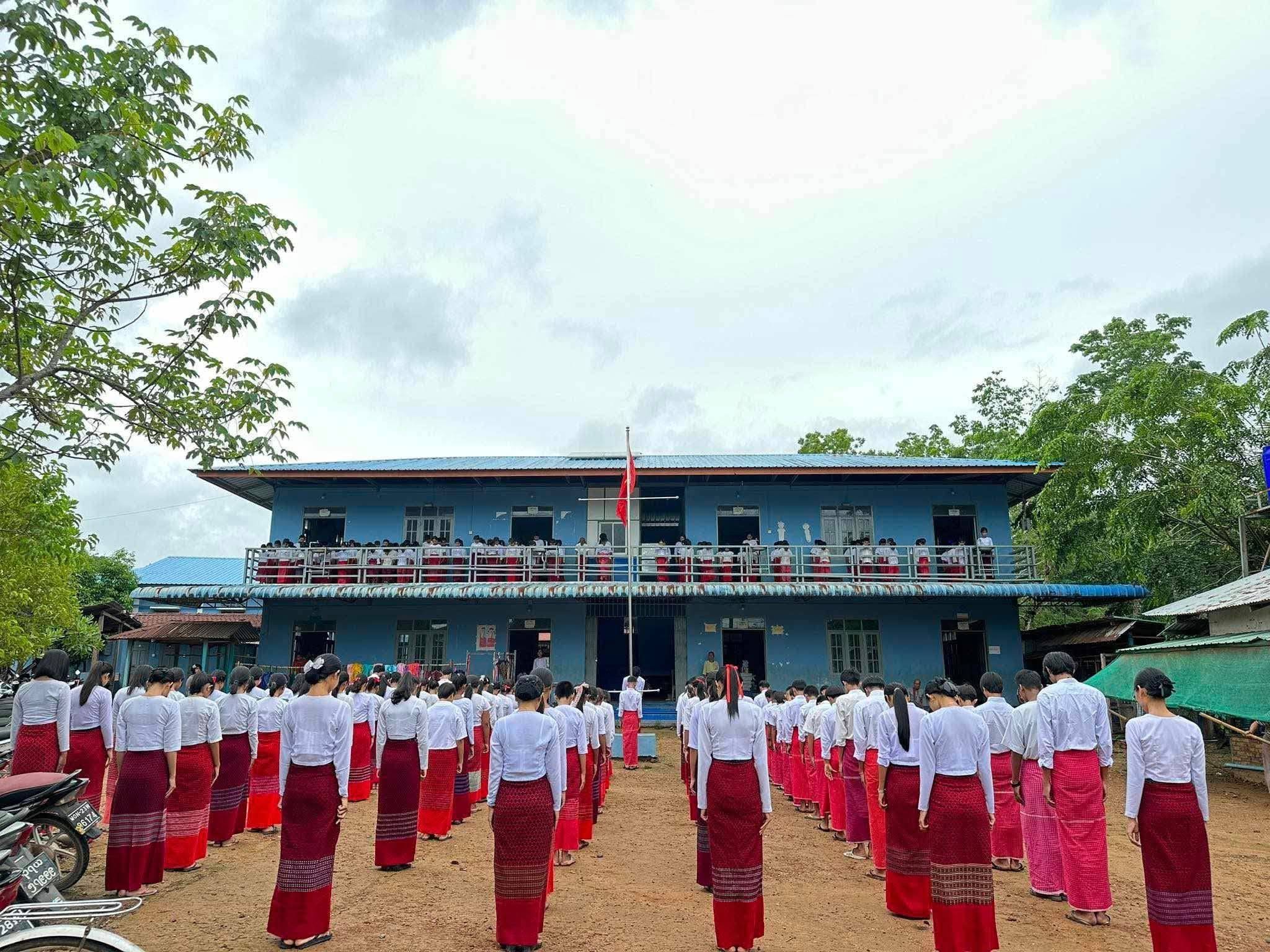
13 out of 76 students from Mon national schools passed the 2026 university entrance exam
It has been learned from the Mon National Education Committee that 13 out of 76 students who took the 2026 university entrance examination from Mon national schools passed. In the 2026 university entrance examination, a
This article requires PRO
This article is outside the free access window or is a special report. PRO unlocks it and the full archive.
Related articles
- Five female drivers to be assigned for the first time on DEMU and RBE trains running on Yangon City Circular Line
It is known that for the first time, five female drivers will be assigned to DEMU and RBE trains running on the Yangon City Circular Line. It is known that the Myanmar Railways, Department of Transportation, is making ar
- 3 out of 23 basic education schools temporarily closed due to river water receding reopened in Tanintharyi Township
It is reported that three out of 23 basic education schools that were temporarily closed in Tanintharyi Township, Myeik District, Tanintharyi Region, due to the receding water level of the Tanintharyi River have reopened
- Schools and offices reopened in flood-affected Hlaymyetnar Township, rehabilitation work still ongoing
Schools and offices have been reopened in Hlaymyetnar Township, which was affected by floods, and rehabilitation work is still ongoing, it is known. Rehabilitation activities have begun after facing flood hazards for abo
- Female drivers start duties on Yangon circular railway line
Five female drivers have started their duties on trains running on the Yangon circular railway line, according to Myanmar Railways. It is said that this is the first time in the history of Myanmar Railways to assign duti