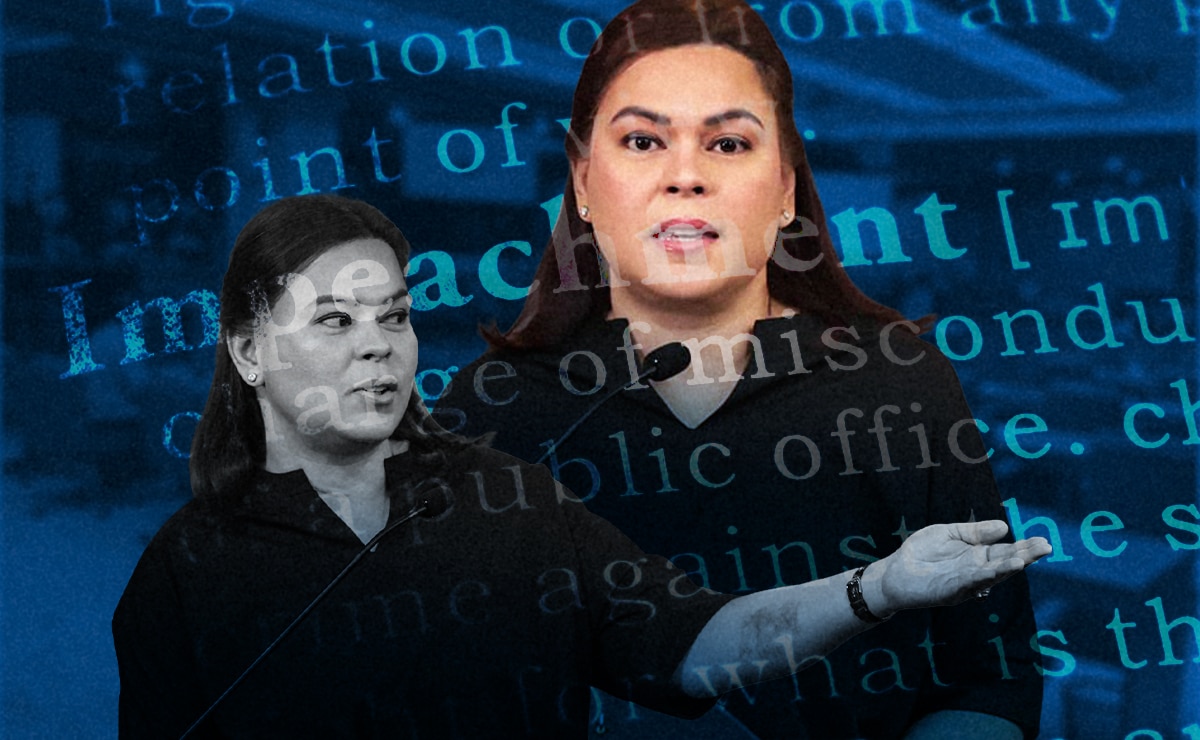
Sara Duterte Faces Impeachment Trial: What to Know
Philippine Vice President Sara Duterte is set to face an impeachment trial starting July 6, facing charges including alleged misuse of confidential funds, unexplained wealth, bribery, and assassination threats. Conviction could lead to her removal from office and disqualification from public service.
Vice President Sara Duterte is set to face trial before the Senate, which will convene as an impeachment court, following a second impeachment complaint filed against her by the House of Representatives. The trial is scheduled to commence on July 6 and is allocated 92 trial days. Duterte faces four Articles of Impeachment, accusing her of alleged misuse of P612.5 million in confidential funds from the Office of the Vice President and the Department of Education (DepEd), unexplained wealth and failure to truthfully disclose assets in her Statements of Assets, Liabilities and Net Worth (SALNs) from 2022 to 2024, alleged bribery and procurement irregularities involving DepEd officials, and alleged assassination threats against President Ferdinand Marcos Jr., First Lady Liza Araneta-Marcos, and former House Speaker Martin Romualdez. Under the Constitution, conviction requires the vote of at least two-thirds of all senator-judges. If convicted, Duterte faces possible removal from office and perpetual disqualification from holding any public office. Previously, the Commission on Audit (COA) in July 2023 flagged the Office of the Vice President's use of P125 million in confidential funds, which were fully spent within 11 days in late 2022. In December 2024, three impeachment complaints were filed, leading to an initial impeachment by the House in February 2025. However, in July 2025, the Supreme Court declared the impeachment complaint unconstitutional, citing the House's violation of the one-year bar rule by acting on multiple complaints within a year. In early 2026, new impeachment complaints were filed, incorporating similar allegations and an affidavit from a former aide identifying himself as Duterte's "bagman." On May 11, 2026, the House impeached Duterte for a second time and transmitted the Articles of Impeachment to the Senate. One of the key issues to watch in the impeachment trial is the so-called "BIR Green Box," purportedly containing tax records of Duterte, her husband, and their companies. The box was transmitted to the Senate unsealed from the House proceedings. During pretrial proceedings, the prosecution sought to have the box opened and marked as evidence, which the defense objected to. Just before the trial, senator-judges decided to return the unopened box to the Bureau of Internal Revenue (BIR), stating it was evidence that had not been formally offered or admitted. The box is among the evidence the prosecution seeks to present in relation to Article II of the Articles of Impeachment, which accuses Duterte of amassing unexplained wealth disproportionate to her lawful income and failing to truthfully disclose her assets. The prosecution is expected to present its case starting with Article IV, covering alleged assassination plots and grave threats against the President and his family, followed by Article I on alleged misuse of confidential funds, Article III on alleged bribery and procurement irregularities, and concluding with Article II concerning unexplained wealth. Information Source: Inquirer NewsInfo
多角的分析
副大統領府や教育省の機密費の使途は、透明性の観点から常に注目される。特に、短期間での巨額支出は、本来の目的外使用や不正流用の疑念を生みやすく、経済的説明責任を問う上で重要な論点となる。また、SALNの虚偽記載や未公開の事業利益は、公職者の資産形成における倫理的・経済的規律の欠如を示唆しており、国民の信頼を損なう要因となりうる。
弾劾裁判という政治的不確実性は、フィリピン経済全体への投資家心理に短期的な悪影響を与える可能性がある。特に、副大統領の職務遂行能力や政策遂行への影響が懸念される場合、国内および海外からの投資意欲が減退するリスクがある。ただし、裁判の結果が早期に確定すれば、不確実性は解消され、市場は落ち着きを取り戻す可能性もある。
副大統領の弾劾裁判は、国民の政治への関心を高める一方で、政治不信を増幅させる可能性もはらむ。機密費の不正流用や汚職疑惑は、税金が国民のために適切に使われていないという感覚を国民に与え、社会的な不満を高める。また、大統領夫妻への脅迫疑惑は、国家の安定性に対する懸念を生じさせ、市民の不安を煽る要因となりうる。
サラ・ドゥテルテ副大統領の弾劾裁判は、マニラ首都圏の市民にとって、日々の生活に直結する問題として受け止められている。特に、機密費の不正流用疑惑は、本来なら医療や教育、インフラ整備に充てられるべき公的資金が、不透明な形で使われているのではないかという疑念を生む。これは、市民が納める税金の使途に対する不信感につながり、公共サービスへの期待を低下させる可能性がある。また、治安や経済状況への不安も、こうした政治的混乱によって増幅されることが懸念される。
背景・歴史的文脈
フィリピンにおける弾劾制度は、1987年憲法第XI条に規定されており、大統領、副大統領、最高裁判所判事、憲法裁判所判事、オンブズマンなどの高官に対する罷免手続きとして設けられている。過去には、ジョセフ・エストラーダ元大統領やレナート・コロナ元最高裁判所長官などが弾劾裁判にかけられた事例がある。これらの事例は、フィリピン政治における権力闘争や、法の支配を確立しようとする試みと密接に関連している。副大統領サラ・ドゥテルテ氏に対する弾劾手続きは、過去の同様の事例を踏まえつつも、その政治的背景や疑惑の性質において、独自の文脈を持つ。
原文ソース
Inquirer NewsInfo