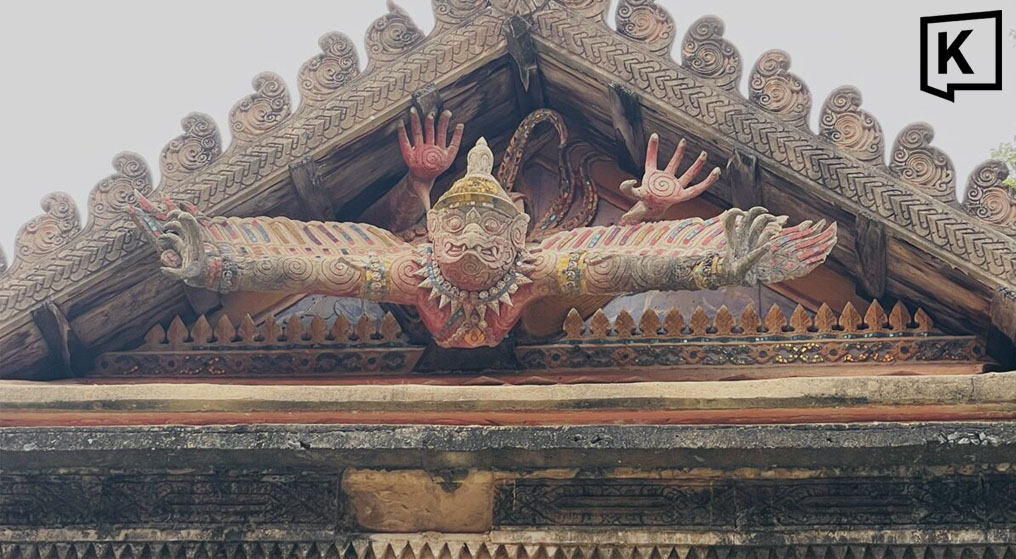
Unique 'Flying Garuda' Sculpture Discovered at Ang Thong Temple
Culture
2026年6月29日
3
Khaosod English

Unique 'Flying Garuda' Sculpture Discovered at Ang Thong Temple

AI サマリー

A rare 'Flying Garuda' sculpture, depicted in a soaring posture, has been discovered at a temple in Ang Thong, Thailand, drawing attention for its unusual design. Unlike traditional seated depictions, this dynamic representation is believed to be unique in Thai religious architecture.

ANG THONG — A rare Garuda sculpture in a flying posture has been discovered at a temple hall in Ang Thong, drawing attention for its unusual design. Unlike traditional depictions of the mythical figure in seated or standing poses, this soaring Garuda is believed to be one of a kind. On Monday, reporters visited Sri Maha Pho Temple in Rong Chang subdistrict, Pa Mok district, Ang Thong province, to inspect the striking stucco sculpture, estimated to be around 60 to 70 years old. The “Flying Garuda” is positioned on the pediment of the temple’s refectory and stands out from the more common seated or standing Garuda figures typically seen in Thai religious architecture. The temple’s abbot and Ecclesiastical Sub-district Head of Bang Sadet, Phra Kru Viboon Photharangkan, said the Garuda sculpture has been in place for many decades. According to historical records, it dates back to the tenure of a former abbot. While other parts of the temple have undergone renovations over the years, the refectory housing the Flying Garuda has remained unchanged. An 87-year-old lay administrator at the temple said the refectory featuring the Flying Garuda, also referred to as the “Swooping Garuda,” is likely at least 50 years old. He recalled watching the sculpture being created in his youth during the tenure of Abbot Phra Sansoen. According to him, it was crafted by an artisan named Krit, although the reason the craftsman chose to depict the Garuda in a flying posture remains unknown. Former Fine Arts Department director-general Anek Sihamat said the area surrounding Sri Maha Pho Temple was an ancient settlement dating from the late Ayutthaya period to the early Rattanakosin era. Traces of historic religious structures remain visible today, including an ancient chedi, or stupa, behind the temple and temple bases decorated with Ayutthaya-period stucco crown motifs. Regarding the refectory’s pediment, Anek explained that royal artisans traditionally depicted Garuda figures in either seated or standing postures, making flying depictions extremely rare. He believes the Flying Garuda was the work of a local folk artisan who wanted to create a unique interpretation. As seen on the pediment, the Garuda is portrayed soaring with both feet raised while holding a naga, a mythical serpent, between its legs. Garuda sculptures placed on temple pediments are traditionally believed to protect sacred buildings from harm, symbolise divine power and represent the official royal emblem of the Thai monarchy. The refectory also bears the inscription “Traimit Upatham.” The post The world’s only “Flying Garuda” sculpture found at Ang Thong temple hall appeared first on Khaosod English.

多角的分析

経済的影響

このニュースは直接的な経済活動とは無関係ですが、タイの文化遺産保護や観光資源としての潜在的可能性を示唆しています。このようなユニークな芸術作品の発見は、地域経済への波及効果、特に文化観光の振興に繋がる可能性があります。ただし、その効果は広範なプロモーション戦略やインフラ整備に依存します。

投資家心理

投資という観点からは、このニュースは直接的な影響を与えません。しかし、タイの豊かな文化遺産は、長期的な視点で見れば、観光産業への投資や関連文化財の保護・修復プロジェクトへの関心を高める可能性があります。短期的な市場への影響は皆無です。

社会的影響

この「飛翔ガルーダ」彫刻の発見は、タイの伝統芸術における職人の独創性や、地域に根差した信仰文化の一端を垣間見せます。一方で、その制作意図が不明であることは、過去の芸術家たちの思想や地域社会との関わりについて、さらなる探求を促す要素となります。また、このような地域固有の文化財が、地元住民のアイデンティティや誇りとしてどのように受け止められているか、という点も興味深いです。

市民の声

この彫刻は、アムパワー地域に住む人々にとって、長年親しんできた寺院の一部であり、地域文化の象徴となっていると考えられます。そのユニークな姿は、地元住民の誇りとなり、寺院への関心を高めるきっかけとなるでしょう。観光客の増加は、地域経済への恩恵をもたらす一方で、地域社会の生活様式や環境への影響も考慮されるべき点です。

背景・歴史的文脈

ガルーダはタイにおいて、王室の象徴であり、神聖な存在として崇拝されています。伝統的に、寺院の建築物、特にペディメント(破風)に描かれるガルーダは、建物を守護し、神聖な力を示す役割を担ってきました。しかし、その描写は通常、座っているか立っている姿に限定されていました。アユタヤ王朝後期からラタナコーシン初期にかけての地域は、タイの歴史において重要な文化・宗教的中心地であり、その時代の職人たちは、王室の意向や伝統的な様式を踏まえつつも、独自の解釈を作品に反映させてきたと考えられます。この「飛翔ガルーダ」は、そうした伝統と革新が融合した、地方の職人によるユニークな試みであった可能性が高いです。

原文ソース

Khaosod English

原文を読む