General articles are free for 24 hours after publish.
Urban Farming in Jakarta: The Ingenuity of Citizens Cultivating Small Spaces
Urban farming is expanding in densely populated Jakarta, with retirees and residents utilizing rooftops and small plots for food production, compost making, and even livelihoods. This demonstrates citizen ingenuity and adaptability in seeking sustainable living amidst urbanization.
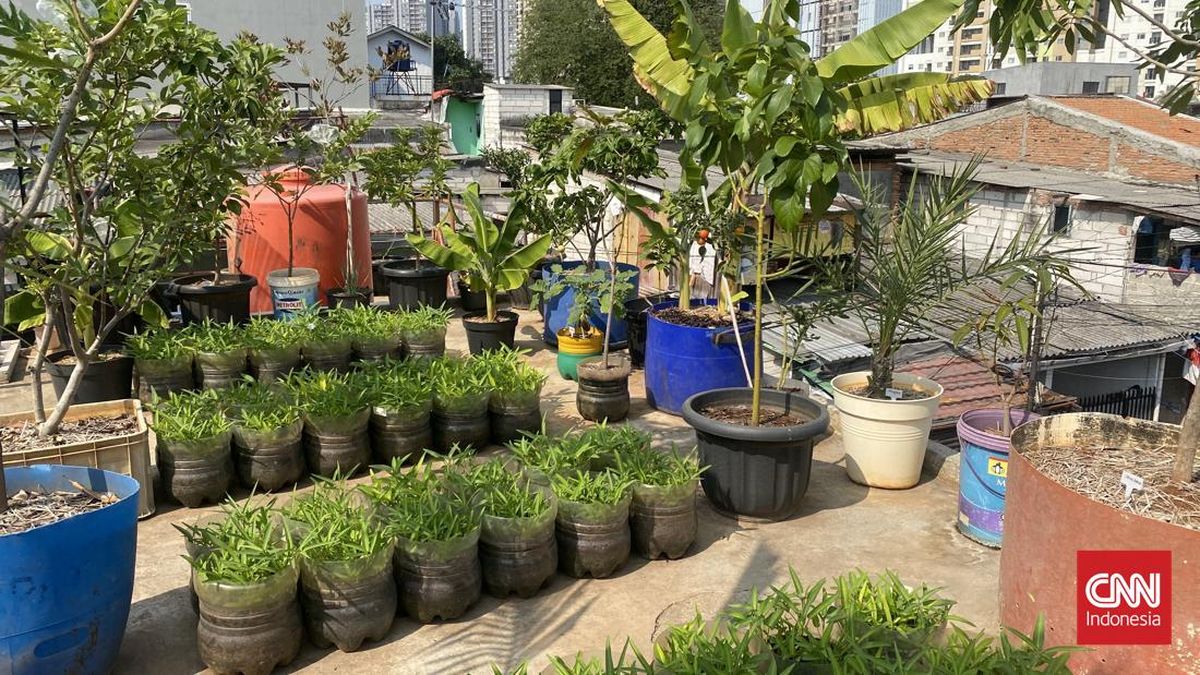
Jakarta, Indonesia's capital, long liberated from colonial rule, is increasingly dominated by towering buildings and dense settlements. Yet, amidst this urban sprawl, a growing number of creative individuals are transforming limited spaces into thriving farms. This practice, known as urban farming, showcases the resilience of city dwellers determined to cultivate horticultural products even in confined urban environments. Not all participants in urban farming come from agricultural backgrounds or hold degrees in agriculture. However, their passion and ingenuity have allowed them to persevere. For some, urban farming has become a primary source of livelihood. Every sprout that emerges is a testament to their dedication, a prayer planted in the city soil, as these small gardens flourish, refusing to yield to Jakarta's relentless pace. One such inspiring example is a couple in Sunter Jaya, North Jakarta. Sutarno and Yuliana, both 63 years old, have been deeply involved in urban farming since their younger days. Sutarno, who was a teacher, was the first to engage in urban cultivation. He took early retirement in 2015 to focus on agribusiness, and his wife Yuliana followed suit, retiring in 2023. Urban farming is more than just planting various crops in limited urban spaces. Sutarno, who has been active in environmental initiatives for years, has always opened his home to those interested in learning about urban farming or purchasing his homemade composters. Visitors are treated to a variety of culinary creations made from ingredients harvested from his own garden. During a visit by CNNIndonesia.com, the couple served dishes like Moringa leaf fritters and Centella asiatica pudding. The key ingredients, Moringa and Centella asiatica leaves, were not purchased but harvested from the urban farm on their rooftop. Sutarno explained that he has been indirectly involved in urban farming since around 2008. Initially, his focus was not on planting but on waste management and composting. "Initially, it was about how to utilize growing media. But where to plant? Then it evolved. Oh, it can be done on the roof, oh, it can be done on the walls. The technology also emerged. So what we did turned out to be making families able to meet their food needs from their own gardens," Sutarno told CNNIndonesia.com on Monday (7/9). Through his composting efforts, he and his wife now manage a micro, small, and medium enterprise (MSME) called Utama Composter. Over time, the urban farm at his home has expanded, particularly on the rooftop. The farm now includes food crops like cassava and leafy vegetables such as spinach and water spinach, as well as fruit trees in pots (Tabulampot) like apples and kedondong. He also cultivates medicinal plants (togamas). Sutarno shared that the produce from his urban farm is distributed in various ways. Some are marketed, both the raw produce and processed goods, through online and offline channels. Some are consumed by the family, and others are shared. Not in the outskirts or suburbs of Jakarta, but within a narrow alley in Setiabudi, South Jakarta, Suryana (56), also the head of his neighborhood (RT), utilizes the remaining space in his home for livestock and farming – urban farming. Creating an integrated farming system on a limited urban plot is not impossible for him, despite his home being in a small alley in Pasar Manggis Village, Setiabudi District, South Jakarta. He began gardening on his reinforced concrete roof in October 2024. The construction of the rooftop deck marked the beginning of his urban farming journey. "For vegetables, routinely, water spinach, chili, tomatoes, eggplant. And occasionally, shallots, spring onions. These are just for personal consumption. If there's a surplus, we share it by inviting people to harvest together, sometimes from the PKK (Family Welfare Movement) or the sub-district office also participates," said the man commonly known as Pak Nana, in a conversation with CNNIndonesia.com in early September. He learned urban farming and animal husbandry independently, without any prior background as a farmer, herder, or related academic. In addition to these vegetables, Suryana cultivates various other plants. Small signs indicating lychee and other fruit types are placed in pots lined up on his rooftop. He revealed that the fertilizer used is his own creation, made from the manure of the sheep he raises at home. "The waste from the manure, well, today, it's connected to integrated farming. This waste can be utilized as fertilizer. Both the manure and the urine. That's why we keep sheep," he explained. He currently raises a total of five sheep at his home. His routine of tending to the sheep goes hand in hand with managing his urban farm. So far, Suryana stated, the presence of the sheep pen on his property has not drawn any objections from neighbors or other residents. For Suryana and his family, the benefits of urban farming extend beyond reducing household expenses. He also experiences positive impacts on his health and spiritual life. According to Suryana, "Spiritually, yes, it's a bonus, considered charity because it has benefits for the environment, for humans, and for other creatures. Sometimes birds come here, insects, bees when the corn is fruiting, there are many bees here. So, it means we are creating a life cycle." Meanwhile, Sutarno, as he walked through the plants he cares for, expressed his hope that this movement would continue to expand and remain consistent, regardless of the technology used or the specific model of urban farming. This hope is particularly directed towards the people of DKI Jakarta. The Head of the DKI Jakarta KPKP Office, Hasudungan Sidabalok, stated that based on their data, there are currently an estimated 1,399 urban farming sites and over two thousand urban farming practitioners throughout the capital city. "The number of urban farming locations in DKI Jakarta is 1,399 sites with a total cultivated area for horticultural commodities in 2025 amounting to 138.38 hectares," he said during an interview with CNNIndonesia.com in mid-September. "The number of urban farming practitioners in DKI Jakarta is 2,814 people (DKPKP DKI Jakarta agricultural statistics data as of August 2026)," he added. Furthermore, he mentioned that urban farming activities in Jakarta are indeed enshrined in Governor's Instruction Number 14 of 2018 concerning the Implementation of Urban Agriculture. Through this instruction, he noted, urban farming has become part of the lifestyle. Source: CNN Indonesia
Original source
CNN Indonesia