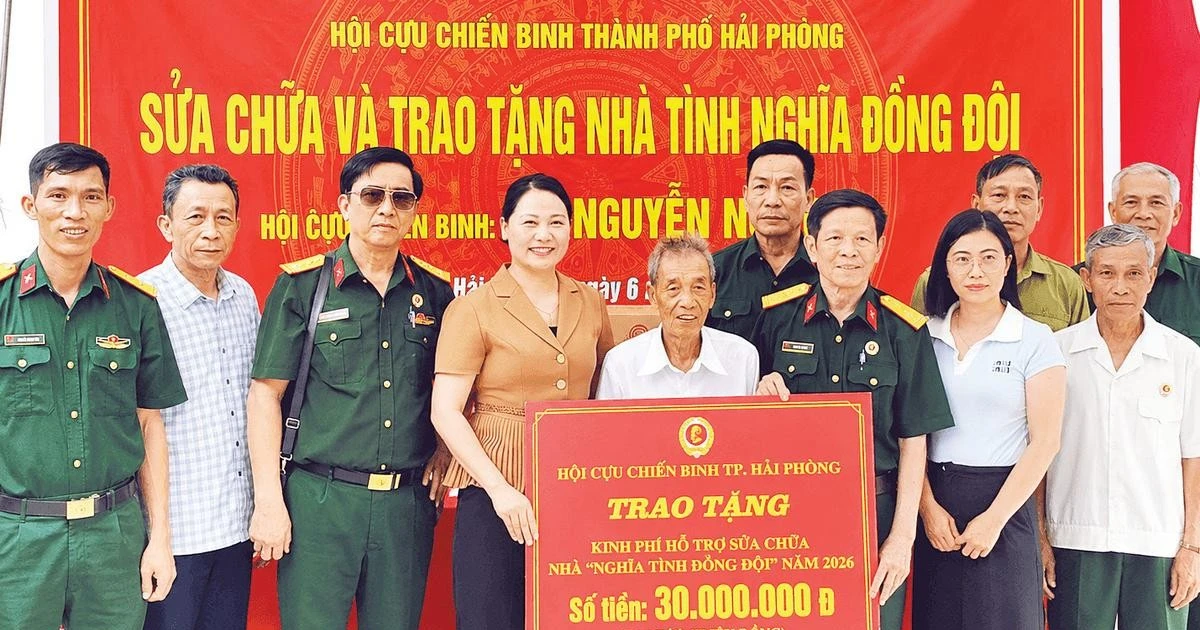
Haiphong City: "Comradeship Homes" Construction Movement Spreads
Infrastructure
2026年7月14日
4
Nhan Dan

Haiphong City: "Comradeship Homes" Construction Movement Spreads

AI サマリー

In Haiphong City, Vietnam, a movement to build and renovate "Comradeship Homes" supporting war veterans and their families is gaining momentum. Led by the Veterans Association, in collaboration with local government, businesses, and the community, this initiative provides housing for those facing economic hardship, contributing to social security and community cohesion.

In the northern Vietnamese port city of Haiphong, a movement to build and renovate "Comradeship Homes" (nhà nghĩa tình đồng đội) to support war veterans and their families is spreading as a symbol of community solidarity and strengthened social security. According to the Haiphong City Veterans Association, 98 "Comradeship Homes" were built with the association's support in 2025. Furthermore, from 2022 to June 2025, 328 homes were built or renovated for members facing economic difficulties, with a total investment exceeding 13 billion VND (approximately $650,000 USD). In addition to housing, tens of thousands of gifts have been distributed, and various social welfare activities such as free medical examinations, savings passbook donations, wheelchair provisions, and care for "Vietnamese Mothers" (Mẹ Việt Nam anh hùng) have been implemented. This movement has continued to accelerate in 2026. From January to June this year, the City Veterans Association, in coordination with the Haiphong Business Association and Veterans Entrepreneurs Association, raised funds for the construction and renovation of 27 "Comradeship Homes." The maximum support for new construction is 60 million VND per unit, and for renovations, it is 30-35 million VND. The remaining costs are covered by contributions from families, relatives, and social donations. As a specific example, Pham Van Doan, a veteran in Tran Phu commune, lived with his wife in a dilapidated house for many years. With support from the Veterans Association, local government, relatives, and community residents, he received 80 million VND in aid and construction materials, completing a new 80 square meter home in early 2026. In Hung Thang commune, the renovation of veteran Tran Van Thuy's house was completed in July 2026, with a total cost of over 112.2 million VND. This initiative is not only supported by the Veterans Association but also by veteran entrepreneurs, military personnel, general businesses, and numerous individuals and organizations. Notably, the Haiphong Business and Veterans Entrepreneurs Association has supported the construction and renovation of many "Comradeship Homes" in the first half of 2026, aiming to complete 20 units for the year. Community cooperation, in addition to financial support, is a driving force behind the success of these projects. This "Comradeship Homes" movement is a significant undertaking that demonstrates gratitude and support for veterans, serving as part of Vietnam's social welfare policy under its one-party system. In a continuously growing economy, such grassroots solidarity and support mechanisms play a vital role as a safety net for economically disadvantaged groups, strengthening community cohesion and aiming to improve the lives of its citizens. It can also be seen as an embodiment of Vietnam's emphasis on "universal conscription" and socialist values of community spirit. Source: Nhan Dan

多角的分析

経済的影響

この「絆の家」運動は、直接的な経済効果というよりは、社会保障と地域経済の安定化に寄与する側面が強い。帰還兵の生活基盤を安定させることで、彼らが地域経済で活動しやすくなり、消費や労働力の提供を通じて間接的に地域経済の活性化に繋がる。また、企業や個人からの寄付は、社会貢献活動への参加を促し、企業のCSR活動(企業の社会的責任)や地域社会への貢献意欲を高める効果も期待できる。これは、ベトナム経済が輸出主導型から内需拡大へとシフトしていく中で、国民生活の安定が経済成長の基盤となるという考え方とも合致する。

投資家心理

投資家にとって、このニュースは直接的な投資機会を示すものではないが、ベトナムにおける社会保障制度や地域社会の結束の強さを示す指標となり得る。ベトナム政府は、社会の安定を経済発展の前提と考えており、このような草の根の支援活動は、社会不安の軽減に貢献する。これは、政治的・社会的なリスクを重視する投資家にとって、ベトナム市場への信頼感を高める要因となり得る。特に、CSR活動に積極的な企業や、社会貢献に価値を見出す投資家にとっては、ベトナムの社会的な側面を理解する上で参考になるだろう。

社会的影響

海防市における「絆の家」運動は、ベトナム社会における「恩返し」と「共同体意識」の強さを如実に示している。ベトナム戦争の経験者である帰還兵への支援は、国家が重視する「戦没者・功労者への感謝」という価値観を反映している。また、地方政府、退役軍人会、企業、そして一般市民が一体となって資金や労力を提供する姿は、地域社会の連帯感を強め、経済的に困難な状況にある人々へのセーフティネットを形成している。特に、家屋の老朽化に苦しむ高齢者や障害を持つ家族にとって、安全で快適な住居の提供は、生活の質の向上に直結し、社会的な孤立を防ぐ上で極めて重要である。例えば、障害を持つ子供を抱える母親が、安全な住居を得て安心した生活を送れるようになることは、社会全体の福祉向上に繋がる。

市民の声

この運動は、経済的に困難な状況にある帰還兵とその家族の生活に直接的な恩恵をもたらす。長年、劣悪な住環境で生活していた人々が、安全で快適な住居を得ることで、健康状態の改善や精神的な安定が期待できる。また、家屋の改修や建設は、地域住民の連帯感を高め、互いに助け合う精神を育む。例えば、セメントを運んだり、壁を塗ったりする作業に地域住民が協力することで、地域社会の絆が深まる。これは、ベトナムが重視する「国民皆兵」の精神と、共同体意識を地域レベルで具現化したものと言える。

背景・歴史的文脈

ベトナム戦争(1955年~1975年)後、多くの帰還兵が社会復帰や経済的困難に直面した。ベトナム政府は、帰還兵やその家族への支援を社会福祉政策の重要な柱として位置づけてきた。特に、退役軍人会は、帰還兵の組織化と支援活動において中心的な役割を担ってきた。1990年代以降のドイモイ(刷新)政策による経済開放と成長に伴い、社会全体の福祉向上も進められているが、経済格差の拡大も課題となっている。このような背景から、帰還兵への支援は、単なる恩返しにとどまらず、社会の安定と国民統合を維持するための重要な政策手段となっている。

原文ソース

Nhan Dan

原文を読む