General articles are free for 24 hours after publish.
Vietnamese Youth in Japan Vow to Contribute to Homeland's Development
A dialogue organized by the Vietnamese Consulate General in Osaka brought together Vietnamese youth in Japan to discuss their contributions to the homeland and expanding roles internationally. Discussions focused on concrete actions aligned with the Party's new directive of 'accompanying and creating mechanisms'.
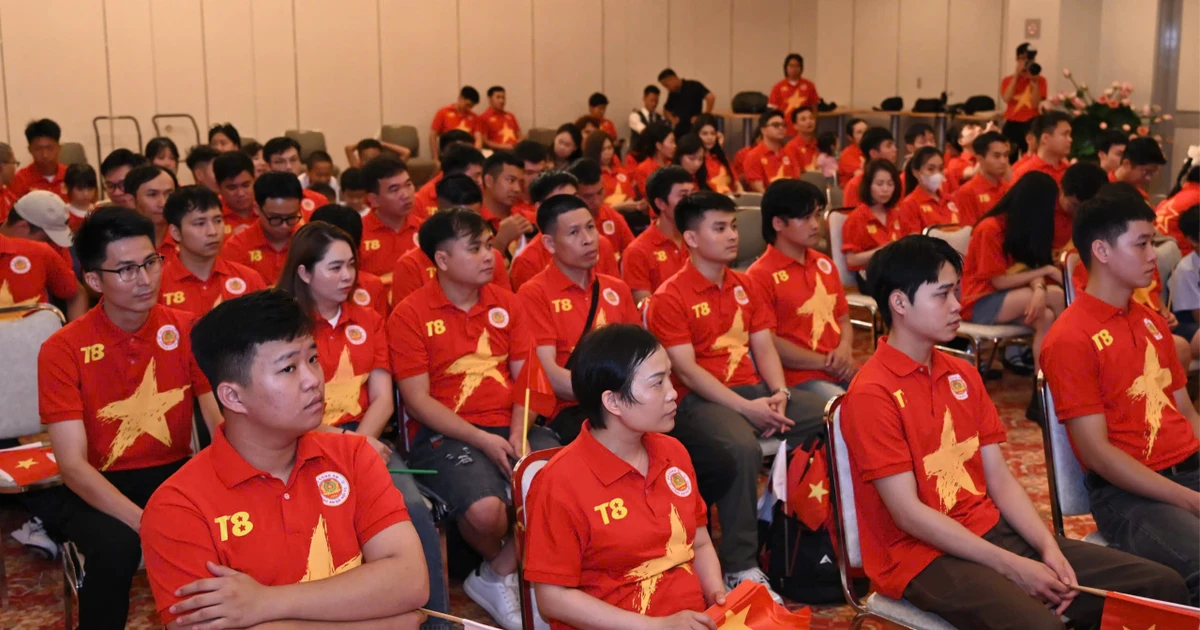
On September 13, in Osaka (Japan), the Vietnamese Consulate General, in coordination with the Vietnam-Japan Cultural and Educational Cooperation Promotion Center (VJCE), organized a dialogue themed “Vietnamese Youth in Japan - Resolution 23-NQ/TW, Promoting the Role of the Youth Generation.” The event drew over 100 delegates, including young Vietnamese individuals studying, researching, working, and doing business in Japan, along with intellectuals, entrepreneurs, and representatives of Vietnamese community organizations in Japan. Speaking at the dialogue, Vietnamese Consul General in Osaka Nguyen Truong Son introduced the background, significance, main contents, guiding viewpoints, tasks, and solutions of Resolution 23-NQ/TW on overseas Vietnamese affairs. He highlighted the strategic significance of recognizing overseas Vietnamese not only as an inseparable part of the Vietnamese ethnic community but also as a vital strategic resource and a bridge connecting Vietnam with the world, actively participating in the cause of national construction, development, and defense. The resolution marks a new stage in the Party's thinking, shifting from the motto of "mobilizing, gathering, and caring" to "accompanying and creating mechanisms" to facilitate deeper participation of overseas Vietnamese in the country's development process. The Consul General emphasized the goal of building a strong, well-integrated overseas Vietnamese community that preserves its national identity. Key focuses include enhancing legal status, supporting integration, stabilizing lives, maintaining the Vietnamese language and cultural identity, and leveraging the community's role as "ambassadors of Vietnamese culture, country, and people." He assessed the Vietnamese community in the Kansai region as young, dynamic, and continuously developing, contributing positively to both Vietnam and the host society. However, he also pointed out the existence of negative instances, such as individuals violating local laws and damaging Vietnam's image. According to Mr. Nguyen Truong Son, the youth generation plays a crucial role in the development of the Vietnamese community in Japan. Vietnamese youth studying, researching, working, and doing business in Japan have ample opportunities to access advanced knowledge, technology, and management methods, thereby directly, substantively, and effectively contributing to the country's development. Consul General Son also outlined upcoming activities by the Consulate General to support the community, including legal awareness campaigns, building a network of Vietnamese intellectuals in the region, and connecting overseas Vietnamese organizations and associations with domestic localities and businesses to create cooperation opportunities for national socio-economic development. He urged the community and its organizations to continue their efforts in implementing Resolution 23-NQ/TW. Ms. Le Thuong, a representative of the organizing committee, noted the necessity of creating spaces for young people to meet, exchange, and connect. "Our concern is how to translate the spirit of Resolution 23-NQ/TW into concrete actions. Vietnamese youth in Japan possess knowledge, experience, and many initiatives. If these resources can be connected, the community will have more practical activities," she stated. Participants discussed youth activities within the community, education, culture, business connections, innovation, and support for young people studying and building careers in Japan. Many also suggested strengthening inter-regional links among Vietnamese youth in Japan, building networks for young intellectuals and entrepreneurs, and thereby creating more channels for cooperation between the Vietnamese community and Japanese organizations and businesses. The dialogue also contributed to bringing the content of Resolution 23-NQ/TW closer to the Vietnamese community in Japan, especially the younger generation, encouraging them to actively integrate, contribute to the community, and maintain their connection with their homeland.
Original source
Nhan Dan