General articles are free for 24 hours after publish.
Cambodian Army Emphasizes Training as Core of Capability Building Amidst Defense Reforms
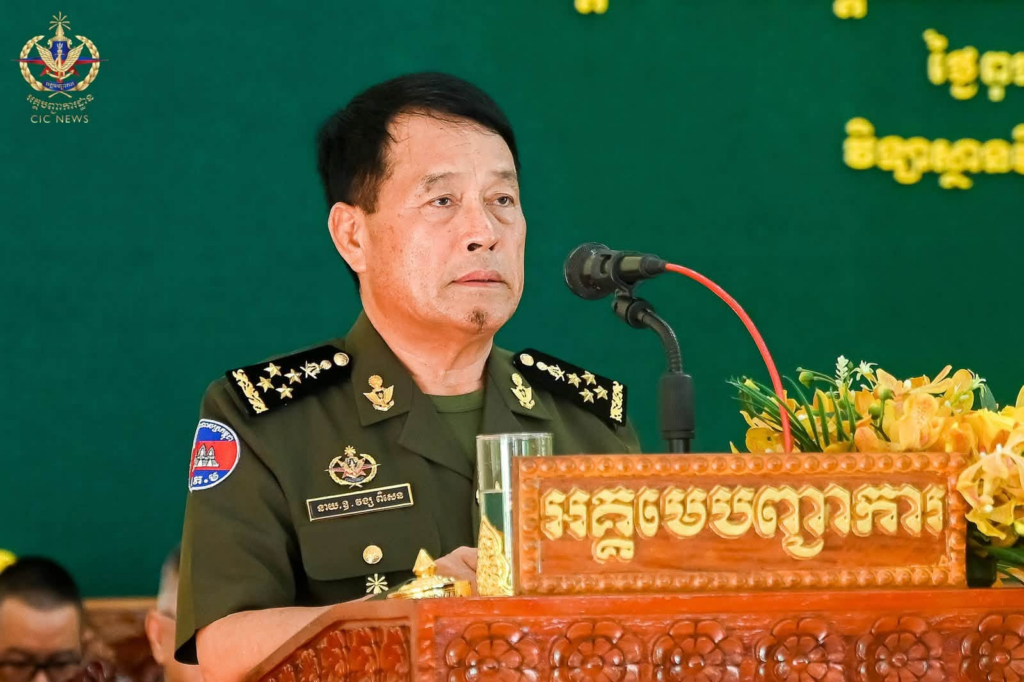
Cambodian Army Commander General Vong Pisen has emphasized training as the core of building a strong military force, as part of ongoing defense reforms. He stressed the need to enhance training quality, update facilities and materials, and strengthen cooperation with friendly nations.
General Vong Pisen, Commander-in-Chief of the Royal Cambodian Armed Forces, has reiterated the crucial role of training as the core of building a strong military force, emphasizing its significance within the ongoing reforms in the defense sector. He highlighted that training is the cornerstone for enhancing the capabilities of the Cambodian army. General Pisen urged for continuous improvement in the quality of training, the development of training schools and grounds, the strengthening of instructor capabilities, and the updating of training programs and materials. Furthermore, he stressed the importance of reinforcing cooperation with friendly nations to develop the human resources of the Royal Cambodian Armed Forces into a more modern and effective force. He also identified the modernization of the military's organizational structure and equipment as two other priority tasks, stating that these are integral parts of the defense sector reforms aimed at responding to the evolution of modern warfare tactics and technologies. These remarks were made during the closing ceremony of the 5th Command and Staff Engineering Cadre Training Course and the opening ceremony of five specialized engineering training courses, held at the Morotok Techo-Detya Engineering Institute in Kampong Cham province on September 9th. Addressing the trainees from the engineering corps, a vital branch of the military, General Pisen exhorted them to enhance their capabilities through diligent training, continuous research, and professional development. He commended the engineering corps for their solidarity, internal unity, competence, and adherence to orders, particularly acknowledging their contributions to establishing border markers and constructing ring border roads, which aim to transform border areas into zones of peace, friendship, cooperation, and development. The Commander-in-Chief underscored the strategic importance of infrastructure along the border corridors, not only for political, economic, and security reasons but also for military considerations. He noted that such development would encourage more citizens to settle in border regions, thereby strengthening the nation's defense foundation.
Original source
Kampuchea Thmey Local