Vietnam to Restrict Social Media Access for Under-16s
Technology
2026年7月27日
5
The Diplomat Indonesia
Relations
🇮🇩Indonesia🇻🇳Vietnam🇦🇺Australia🇲🇾Malaysia

General articles are free for 24 hours after publish.

Vietnam to Restrict Social Media Access for Under-16s

Share
AI Summary

Vietnam is planning to restrict children under 16 from posting, commenting, and sharing on social media platforms, aiming to enhance online safety. This move follows similar regulations implemented in Indonesia and Malaysia, reflecting a broader trend of tightening online protections for minors in Southeast Asia.

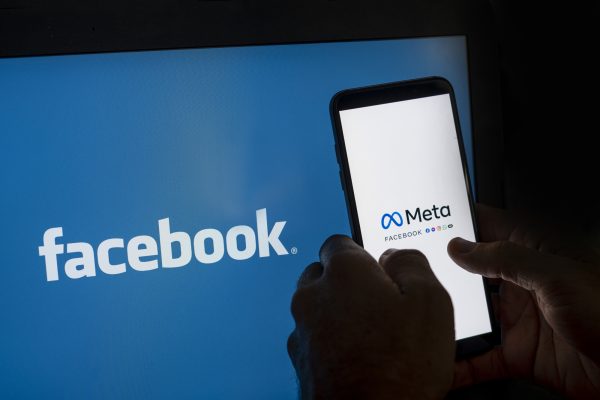
Vietnam is set to order social media platforms to limit the access of children under 16 to social media, becoming the latest nation and the third in Southeast Asia to tighten online safety provisions for minors. According to a draft amendment to a decree on internet management, the new rules would bar children under the age of 16 from posting, commenting, sharing, or reacting on social media, leaving them able only to view content, Vietnamese state media reported on Friday. At a meeting to discuss the new rules the day prior, Nguyen Thi Thanh Huyen, deputy director of the Authority of Broadcasting and Electronic Information, said that accounts belonging to under-16s would have to be registered using a parent’s or guardian’s information. That adult “would then be responsible for supervising the content the child sees and the time they spend on the platform,” the report stated. “A child’s account, under the supervision of parents or guardians, can only view content. It cannot post, interact, comment, or share,” Huyen said. At the same time, social media companies will also be tasked with identifying child users and ensure that they are exposed only to age-appropriate content, Reuters reported, citing copy of the draft amendment. Unlike in Australia, which introduced the world’s first social media ban for under 16s last year, the measures will stop short of a full prohibition. “The primary objective is not to ban or excessively restrict children’s access ​to social media, but rather to ensure that when children use social media services, they are placed in an age-appropriate environment and protected from inappropriate risks,” Deputy Culture Minister Phan Tam said ​at Thursday’s meeting. The measures align Vietnam with a growing effort to restrict minors’ access to social media platforms, in the interests of protecting them from cyberbullying, online fraud, and exposure to pornography, among other perceived threats. The draft decree also proposes new ​restrictions on ⁠online gaming, according to Reuters. These would require game operators to verify users’ ages, register under-16 accounts through a parent or guardian, and limit children ⁠to no more than 60 minutes of play ​per day. Vietnam has the seventh-largest pool of Facebook users in the world, with some 89 million accounts registered as of last month. It also has an estimated TikTok audience of approximately 80 million. These moves follow Australia’s introduction of the world’s first social media ban for under 16s. The policy, which took effect in December, forces social media firms to block users under 16 from having accounts on their platforms, rather than penalizing young people or their parents. A long list of countries, including India, China, Türkiye, the United Kingdom, the European Union, and several European nations (most recently France), have since announced the introduction of curbs of some kind. Within Southeast Asia, Indonesia on March 28 became the first nation to ban under 16s from having accounts on what it termed “high-risk” digital platforms, which include YouTube, TikTok, Facebook, Instagram, Threads, X, Bigo Live, and Roblox. Malaysia started enforcing a similar ban on June 1. In all of these cases, the efficacy of such restrictions remains to be seen. Recent evidence from Australia suggests that the social media ban has been undermined by “limited implementation, incomplete compliance, and substantial circumvention of social media restrictions.” Last month, the Australian government announced that it would double the penalty for breaches of the ban to A$99 million, after Prime Minister Anthony Albanese announced that “there are still too many children on social media.” While Vietnam’s proposed approach seems to strike a sensible balance between a full ban and a total lack of regulation, Facebook’s parent company Meta suggested that the technical challenges of enforcing this might be considerable. Nguyen Thu Thao, Meta’s public policy director for Vietnam, told VnExpress that platforms identify likely child accounts by identifying behavioral patterns in how they interact with the platform. “If children use social media only passively, platforms will no longer have the behavioral signals they need to identify a user as a child,” Thao said. This would then weaken Facebook’s ability to detect and protect children online.

0

Original source

The Diplomat Indonesia

原文を読む