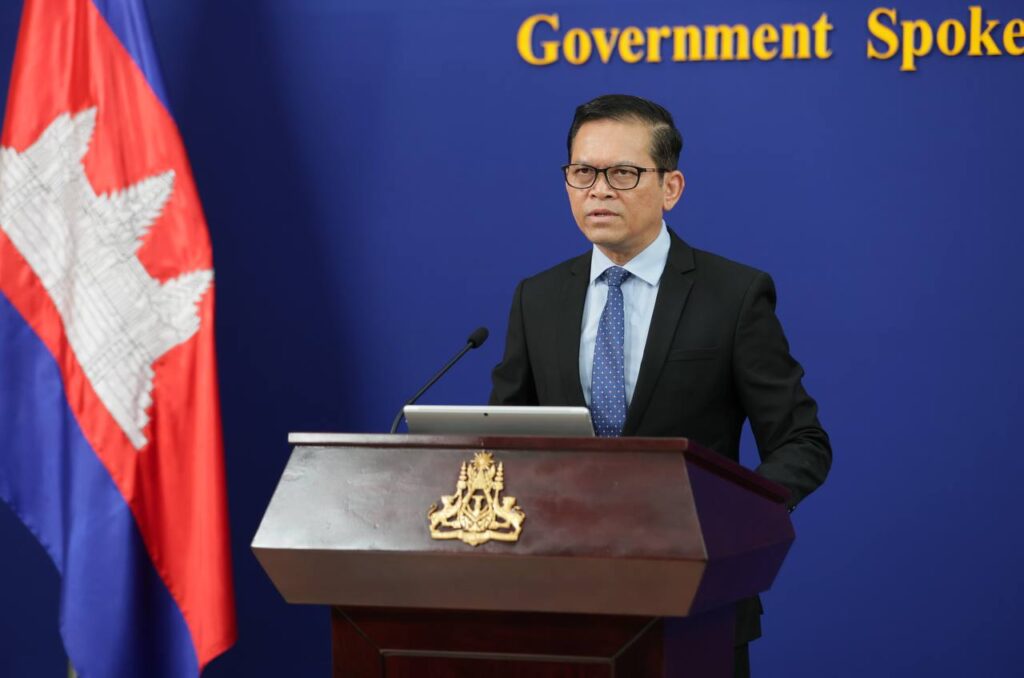
Cambodia Reaffirms Diplomacy Over Military Action in Border Disputes
Cambodia has reiterated its commitment to resolving border issues through peaceful negotiations and international law, avoiding military confrontation. A government spokesman emphasized 'maximum restraint' to prevent harm to border communities and macroeconomic stability.
This article requires PRO
This article is outside the free access window or is a special report. PRO unlocks it and the full archive.
Related articles
- Ministry of Tourism Visits Military Command, Expresses Respect and Support for Soldiers
A delegation from the Ministry of Tourism visited the 4th Military Region Command to pay respects and present aid to soldiers during the Pchum Ben festival. Minister of Tourism, H.E. Thong Khon, conveyed messages from Senate President Samdech Techo Hun Sen and Prime Minister Samdech Dr. Hun Manet.
- Cambodian Minister Praises Border Troops' Dedication
Cambodia's Minister of Cults and Religion, Chai Borin, lauded the immense dedication and sacrifices of border troops, donating food, funds, and four motorcycles. This marks the fourth such donation from the minister to the unit.
- Kratie Provincial Forces Crack Down on Illegal Fishing, Remove Illegal Gear, Release 150kg of Fish
Kratie provincial joint forces conducted an operation against illegal fishing in Snoul district on October 4-5, removing and destroying 8 sets of illegal fishing gear and releasing approximately 150kg of fish back into natural waters. The perpetrators fled before authorities arrived.
- Cambodia Distributes Aid to Military Families During Pchum Ben Festival
In Cambodia, aid including food and cash was distributed to 192 families of active and former military personnel facing hardship during the traditional Pchum Ben festival. The initiative highlights appreciation for soldiers serving on borders and in various domestic roles, as well as support for their families.