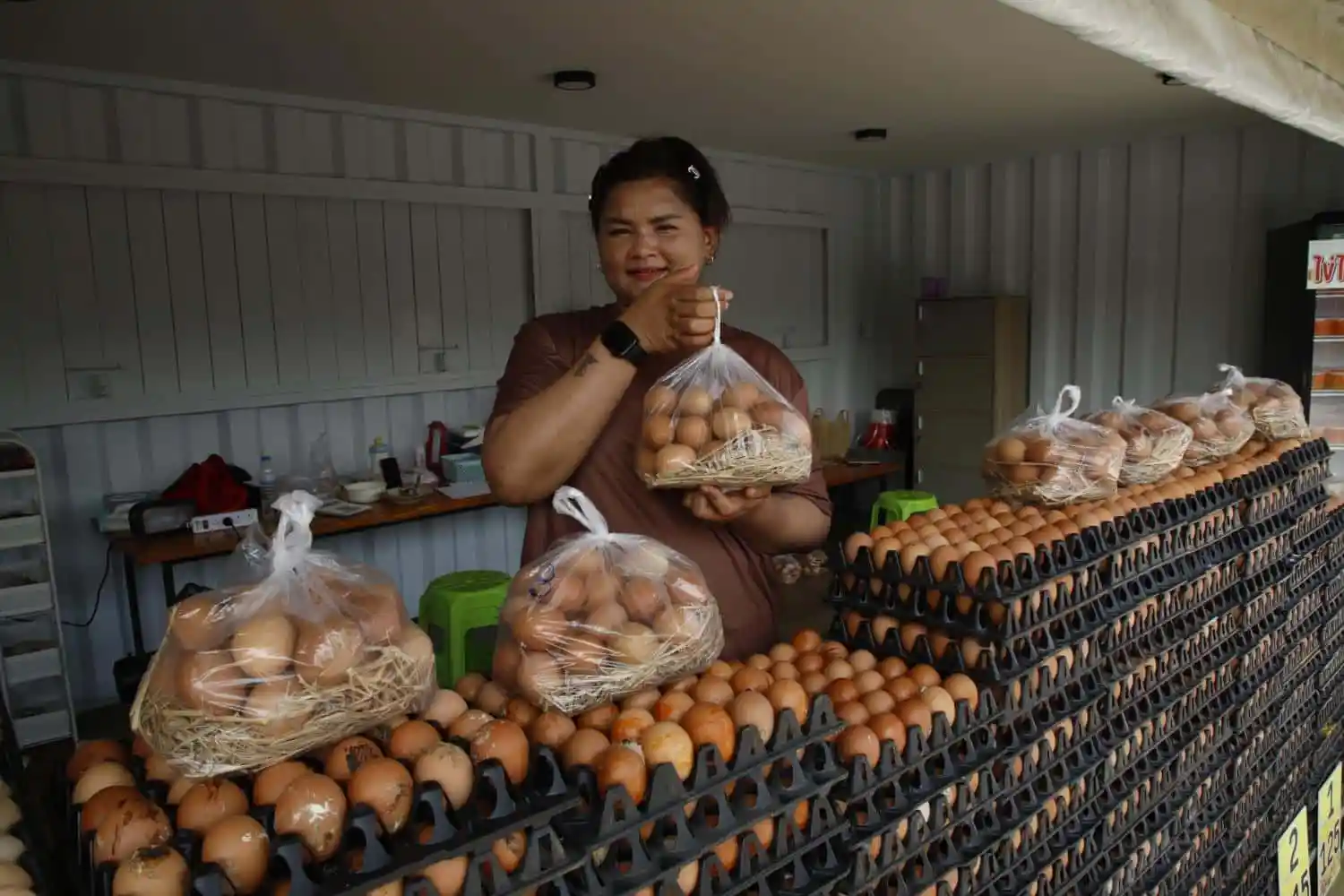
Thai Farm Egg Prices Hit Two-Year High Amid Rising Production Costs
Economy
2026年8月8日
7
Chiang Rai Times

General articles are free for 24 hours after publish.

Thai Farm Egg Prices Hit Two-Year High Amid Rising Production Costs

Share
AI Summary

Farm-gate prices for chicken eggs in Thailand have reached a two-year high due to reduced production from extreme weather and increased feed costs. The government is launching a "Thai Chuay Thai" campaign offering discounted eggs.

Shoppers across Thailand are facing a sharp increase in fresh farm chicken eggs, which have jumped to a two-year high. Many local buyers are questioning the reasons behind this sudden spike in daily food costs. A major network of local farm groups recently announced a new farm-gate price for mixed eggs. The recommended cost has officially climbed from 3.80 baht to exactly 4 baht per egg. This new pricing update took effect across the nation on Friday. Key Takeaways Understanding the reasons behind this price surge is important for both families and local business owners. Farm Egg producers are currently facing a series of tough challenges that directly impact daily egg production. These ongoing farming issues are making it much harder to keep local market prices perfectly stable. The primary cause of the current egg shortage is the severe and unpredictable weather in Thailand. Extreme summer heat and heavy rain storms have naturally reduced the overall daily production of eggs. Manoch Chootubtim, the president of the Layer Farmers Association, recently explained this difficult situation in detail. Changing weather patterns make laying hens much more vulnerable to a variety of serious seasonal illnesses. Because of this, farmers must purchase extra nutritional health supplements to protect their fragile bird flocks. Buying these essential health products adds a significant financial burden to the daily farm operating costs. Besides the medical expenses, the basic price of animal feed has also increased quite a lot. Earlier this year, standard poultry feed cost around 13 baht for a single kilogramme of food. Today, those same feed prices have quickly jumped to between 14 and 16 baht per kilogramme. These rising feed costs and medical bills are forcing local egg farmers to raise their prices. If farmers do not increase their selling prices, they will likely lose money on their businesses. Luckily, many farming experts believe this stressful financial situation is only a temporary problem for everyone. There is some good news for budget-conscious shoppers hoping for lower grocery bills in the future. Industry leaders strongly expect the price of eggs to begin falling sometime in the coming October. By that time, the harsh weather conditions should improve, which will support better daily hen productivity. Cooler temperatures will greatly reduce the high risk of heat-related illnesses among the local chicken flocks. As a direct result, a larger supply of fresh eggs will finally enter the public market. Until then, local restaurant owners are trying to find creative ways to manage their rising costs. Chanon Koetcharoen, the president of the Restaurant Association, shared some insights about the local food industry. He noted that many restaurant operators might start choosing much smaller eggs to save some money. Smaller eggs generally cost less, which helps local chefs maintain their normal business profits each day. However, fans of delicious street food probably do not need to worry about sudden price hikes. The standard price for a classic fried egg currently remains between 10 and 15 baht each. Vendors are trying very hard to keep these affordable prices steady for their loyal daily customers. To help ease the financial burden, the Department of Internal Trade is stepping in very quickly. The government agency recently announced a helpful new initiative designed to support the average Thai consumer. This program is officially known as the Thai Chuay Thai campaign, which means Thais helping Thais. Through this special nationwide project, the department plans to sell over three million fresh chicken eggs. Shoppers can easily purchase these discounted eggs from August 13 through August 31 of this year. Best of all, these government-supplied eggs will be priced ten percent lower than current market rates. Government officials want to assure the anxious public that there is no actual egg shortage happening. Although the daily production levels are slightly lower than usual, there is still enough food available. The department expects daily farm production to hit about 43.4 million fresh eggs during this month. This current production number is only a three percent drop from typical daily output levels nationwide. According to official reports, Thailand produced roughly 43 million eggs every single day last year. Nearly all of those eggs stay inside the country, while just three percent go to exports.

0

Original source

Chiang Rai Times

原文を読む