General articles are free for 24 hours after publish.
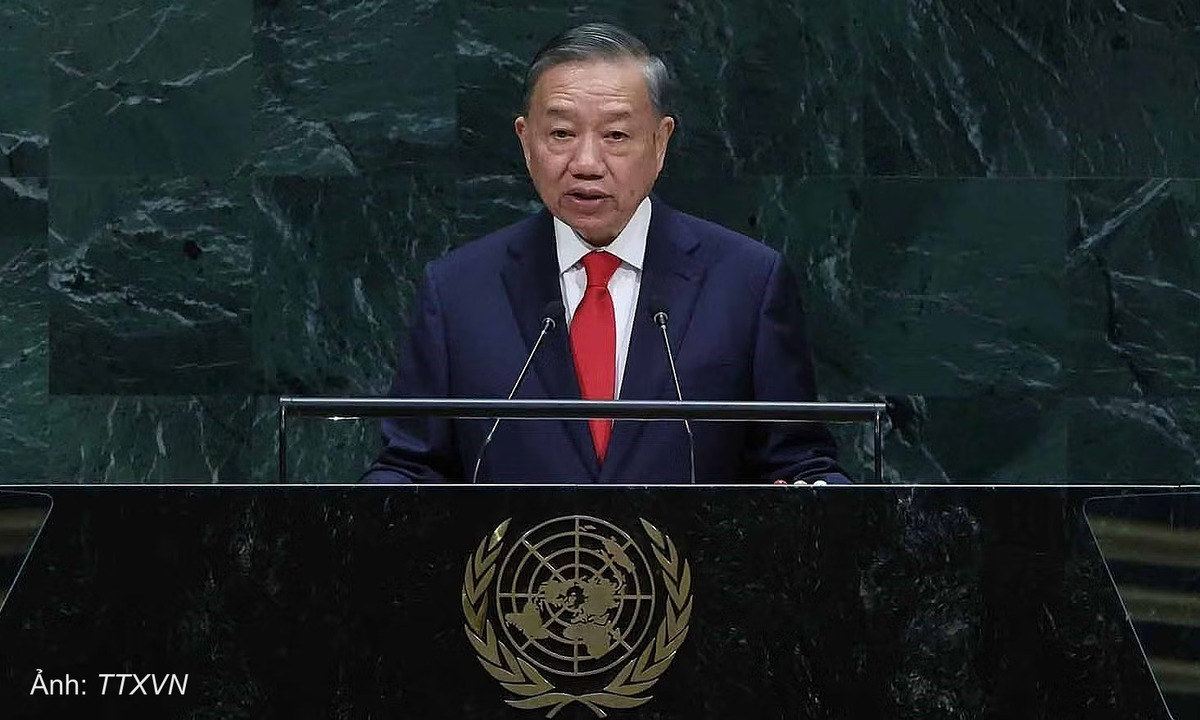
Top Vietnamese leader offers suggestions for global order at UNGA 81
Vietnamese President To Lam addressed the UN General Assembly, proposing trust restoration based on international law and the UN Charter, fostering equitable and sustainable development, shaping technology governance, and strengthening multilateralism. He also touched upon issues like the East Sea and lifting sanctions on Cuba.
Vietnam's Party General Secretary and President To Lam delivered a significant address at the high-level general debate of the 81st session of the United Nations General Assembly (UNGA 81) at the UN headquarters in New York on September 22, 2026, outlining four key proposals for managing global change. Firstly, he called for restoring trust among nations based on respect for the UN Charter and international law, emphasizing that these form the foundation of the world order and must be respected fully, consistently, and without selectivity. All nations must respect one another's independence, sovereignty, territorial integrity, and right to choose their own development paths, refraining from interference in internal affairs and threats of force in violation of the UN Charter. Restoring trust, he elaborated, does not require nations to eliminate their differences but rather to manage them responsibly together, preventing crises, controlling competition, maintaining dialogue, and honoring commitments. Major powers, he stated, need to take the lead in respecting international law, exercising restraint, and addressing common issues responsibly, with the UN playing a central role. In all conflicts, civilians must be protected, international humanitarian law respected, and humanitarian aid access ensured. Vietnam supports the Palestinian people's right to self-determination and the two-state solution, with an independent State of Palestine coexisting peacefully alongside the State of Israel, in accordance with international law and relevant UN resolutions. In the Asia-Pacific region, the nearly 60-year development of ASEAN demonstrates that countries can transform suspicion into trust, confrontation into dialogue, division into cooperation, and individual strength into collective strength. In this spirit, Vietnam steadfastly resolves disputes, including those in the East Sea, through peaceful means in accordance with international law, particularly the 1982 UN Convention on the Law of the Sea (UNCLOS), while resolutely safeguarding its sovereignty, sovereign rights, and jurisdiction. Seas and oceans must be spaces for peace, cooperation, connectivity, and sustainable development. He also underlined Vietnam's solidarity with the State and people of Cuba, calling on the U.S. to end unilateral embargoes and energy blockades against Cuba, and to remove the Caribbean country from the list of state sponsors of terrorism. Secondly, the General Secretary and President urged fostering equitable, humane, inclusive, and sustainable development, saying international commitments must be translated into action to deliver a peaceful, safe, civilized, and happy life for the people. Therefore, the Pact for the Future and the 2030 Agenda must be implemented seriously and fully. Commitments regarding financing for development, including the Sevilla Commitment, must also be realized through concrete solutions, including expanding access to long-term capital at affordable costs, supporting debt-burdened nations, and enhancing the voice of developing countries within international financial and monetary institutions. The multilateral trading system also needs to be strengthened to ensure it remains open, fair, and transparent, thereby guaranteeing development opportunities for all nations. Climate change response should be accorded due priority in development cooperation, particularly regarding adaptation finance, technology transfer, and a just energy transition. Development must be people-centered, leaving no one behind. Growth must go hand in hand with social progress and equity, as well as the protection of the environment and people's livelihoods, especially in vulnerable nations and communities. Global progress must ensure humane conduct among nations, safeguard legitimate interests, and respect differences in history, culture, and stages of development. Thirdly, it is necessary to proactively shape technology governance to ensure progress serves humanity and fosters shared development, he said, noting that science, technology, digital transformation, and artificial intelligence are opening up unprecedented opportunities while simultaneously presenting new challenges. A technological future does not automatically guarantee equity. Technological progress must contribute to narrowing gaps and expanding development opportunities, rather than creating new forms of dependency or sources of conflict. General Secretary and President Lam stressed the need to establish governance principles and frameworks that are inclusive, secure, transparent, and responsible, ensuring that technology serves humanity while respecting national sovereignty, digital sovereignty, and the right to autonomous development. He recommended that developing nations be enabled to participate meaningfully in rule-making processes and enjoy equitable access to the fruits of scientific and technological progress. Hosting the signing ceremony for the UN Convention against Cybercrime in Hanoi in 2025 reflects Vietnam’s desire to make a practical contribution to global digital cooperation. Vietnam stands ready to work with partners to foster cooperation and enhance capabilities in combating cybercrime, thereby ensuring that people can live safely and benefit from technological advancements. It is also willing to support international initiatives on green and digital transitions and the establishment of effective governance frameworks, ensuring that science and technology truly become a driving force for shared development. Fourthly, the Vietnamese leader underscored the importance of reinforcing multilateralism and the central, irreplaceable role of the UN. He said the strength of the UN lies not in assuming the responsibilities of individual nations, but in its prestige and capacity to build consensus, establish norms, develop rules, and mobilize global efforts to jointly address common challenges. To ensure the UN adapts to the transformations of the times, Vietnam supports efforts to reform the organization, particularly the General Assembly, the Security Council, and the Secretariat, aimed at enhancing effectiveness, prioritizing structural reform and apparatus streamlining, while leveraging its strengths in implementing global initiatives. Information source: VnExpress International
Original source
VnExpress International