General articles are free for 24 hours after publish.
Vietcombank Tower Anchors Ho Chi Minh City's Financial Core, Bolstering International Hub Aspirations
More than a decade after its opening, the iconic Vietcombank Tower in Ho Chi Minh City's financial district has become a nexus for numerous international companies, shaping the urban landscape. Its high occupancy and success in attracting global firms symbolize Vietnam's economic growth and international integration.
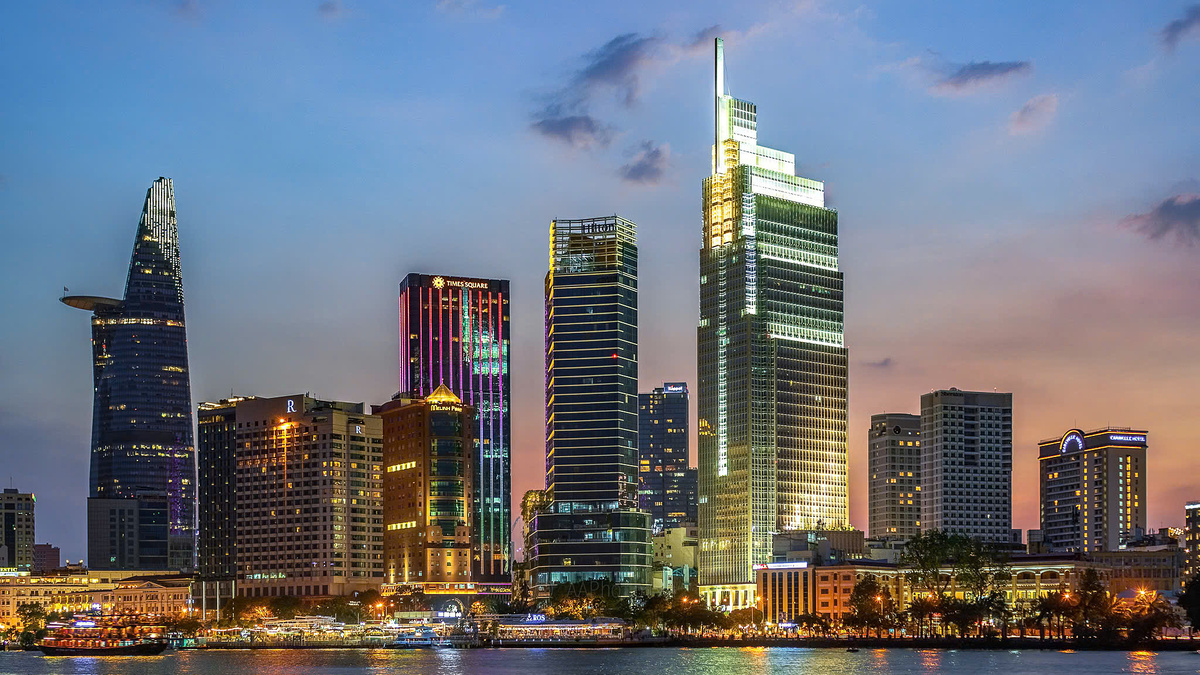
Ho Chi Minh City, Vietnam – Over a decade since its completion, the Vietcombank Tower stands as a prominent landmark in Ho Chi Minh City's central business district, serving as a hub for numerous international corporations and contributing significantly to the area's financial landscape. Historically, the area around Ben Bach Dang and Me Linh Square has been a vital commercial gateway for Southern Vietnam since the 19th century, hosting shipping companies, import-export firms, and international trade activities. This locale has since evolved from a traditional port into one of the country's most crucial financial and commercial centers. In 2015, Vietcombank completed and commissioned the 206-meter-tall Vietcombank Tower. Designed by architect Cesar Pelli, the building features a stepped crown inspired by the traditional Hùng King's hat, symbolizing a tribute to national cultural heritage within contemporary architecture. Strategically positioned in the prime Ben Bach Dang area, Vietcombank Tower offers direct connectivity to Me Linh Square, Nguyen Hue Walking Street, and the Thu Thiem New Urban Area. The vicinity is a concentration of banks, securities firms, investment funds, multinational corporations, and providers of financial and legal services. Currently one of the tallest structures in Ho Chi Minh City, the tower acts as a focal point, witnessing the transformation of the Saigon River's economic core. Economic experts note its role in shaping the modern appearance of the Ben Bach Dong area as Ho Chi Minh City intensifies its international integration and investment attraction efforts. This district commands some of the highest commercial real estate values in the country, solidifying its status as the economic heart of the city. For over ten years, Vietcombank Tower has housed offices for a diverse range of multinational companies across sectors including finance, insurance, consumer goods, energy, trade, and legal services. Notable tenants include Heineken, Johnson & Johnson, Shiseido, Sumitomo Corporation, Sojitz, Baker McKenzie, and Sun Life. According to building management, Vietcombank Tower has maintained an occupancy rate of approximately 97% in recent years. This figure not only reflects the efficient operation of a Grade A office asset but also underscores the allure of Ho Chi Minh City's central district for the international business community. The co-location of numerous companies fosters a business ecosystem, facilitating connections between financial institutions, enterprises, and professional service providers—a model common in global financial hubs where such concentration drives synergy and collaboration. Prior to administrative boundary expansions, Ho Chi Minh City contributed around 15-16% of the national GDP and over 25% of state budget revenue, consistently ranking among the top regions for foreign direct investment. Within this developmental trajectory, Vietcombank has been a key financial institution supporting the city's trade, investment, and international integration for over half a century. "Vietcombank Tower is not merely an office building at Me Linh Square; it represents the continuation of our bank's long-standing commitment to the nation's economic 'heart,'" stated a Vietcombank representative. The investment in and development of the tower reflect the bank's long-term strategic presence in Ho Chi Minh City's financial and commercial center. As the city aims to become an international financial hub, the presence of buildings that gather businesses and financial institutions, alongside robust institutions, human capital, and capital flows, enhances the city's appeal to international investors.
Original source
VnExpress