General articles are free for 24 hours after publish.
Cambodia Records One of PISA’s Fastest Learning Gains as Science Score Jumps 52 Points Since 2018
Cambodia has achieved one of the fastest learning outcome improvements among participating education systems in the PISA (OECD Programme for International Student Assessment), with its average science score rising 52 points between 2018 and 2025. Mathematics and reading also saw significant gains, with notable progress among rural and disadvantaged students.
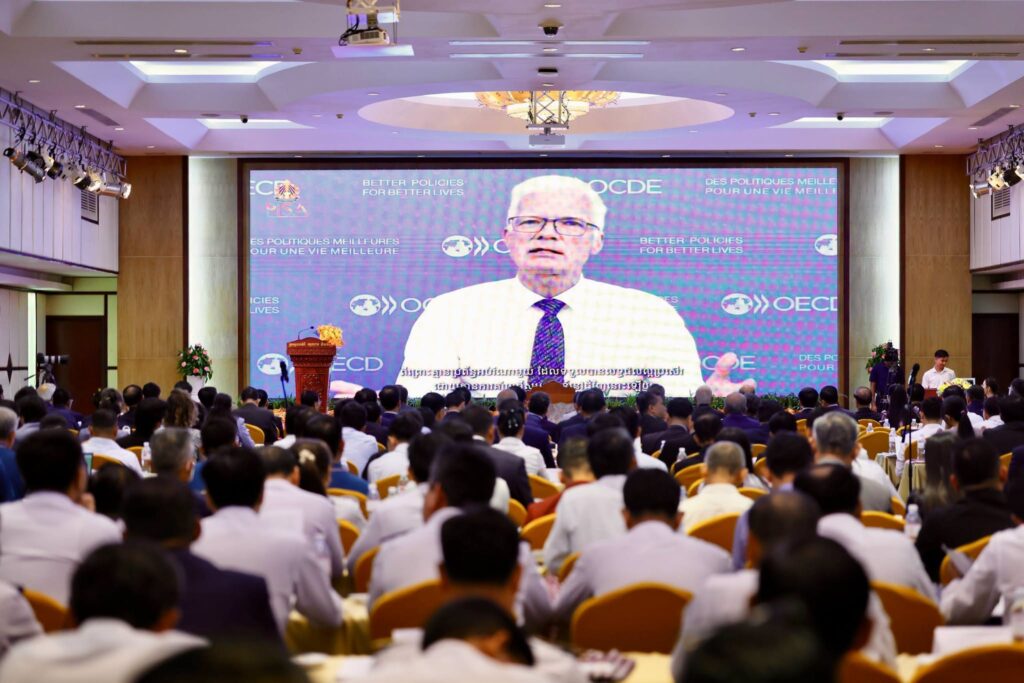
PHNOM PENH, Sept 9, 2026 (KPT) — Cambodia has posted one of the sharpest improvements in student learning outcomes among participating education systems, with its average science score rising 52 points between 2018 and 2025, the Ministry of Education, Youth and Sport said Tuesday. According to the PISA 2025 results, Cambodia’s science score climbed from 330 points in 2018 to 382 in 2025. Mathematics rose from 325 to 366, a 41-point gain, while reading increased from 321 to 347, up 26 points. The OECD estimates that 20 PISA points correspond to roughly one year of learning, placing Cambodia’s trajectory among the fastest globally. Between 2022 and 2025 alone, science scores jumped 35 points, mathematics 30 points and reading 18 points. The OECD identified Cambodia’s science improvement as the third-largest among 27 comparable systems. Despite the progress, Cambodia’s scores remain below OECD averages of 482 in science, 463 in mathematics and 461 in reading. Still, the ministry noted the country has already surpassed its Pentagonal Strategy–Phase I target of a 10-point gain in each subject by 2028. The gains were broad-based. The urban-rural learning gap narrowed significantly, with rural students recording strong advances: reading rose from 310 to 342, mathematics from 311 to 360 and science from 323 to 376. Public schools also improved, with scores up 25 points in reading, 39 in mathematics and 49 in science. Students from disadvantaged backgrounds made some of the largest strides, gaining 58 points in science, 54 in mathematics and 34 in reading. The share of resilient disadvantaged students — those performing well despite adversity — also increased across all subjects. Participation expanded as well, with the proportion of Cambodia’s 15-year-olds covered by PISA rising from 28.1% in 2018 to 43.8% in 2025, reflecting improved access and retention. The ministry attributed the gains to reforms aimed at strengthening teaching, expanding access, improving school quality and promoting stronger learning outcomes. It cautioned, however, that closing the gap with OECD-level performance will require sustained investment in literacy, teaching quality and targeted support for lower-performing students.
Original source
Kampuchea Thmey English