General articles are free for 24 hours after publish.
Vietnam Strengthens Power Grid Safety Ahead of Rainy Season and Typhoon Season
Ho Chi Minh City Power Corporation (EVNHCMC), under Vietnam Electricity (EVN), is enhancing power grid inspections, reinforcement, 24/7 monitoring, and rapid response systems to ensure stable electricity supply and public safety during the rainy and typhoon seasons. Coastal areas are particularly focusing on salt corrosion prevention and frequent maintenance.
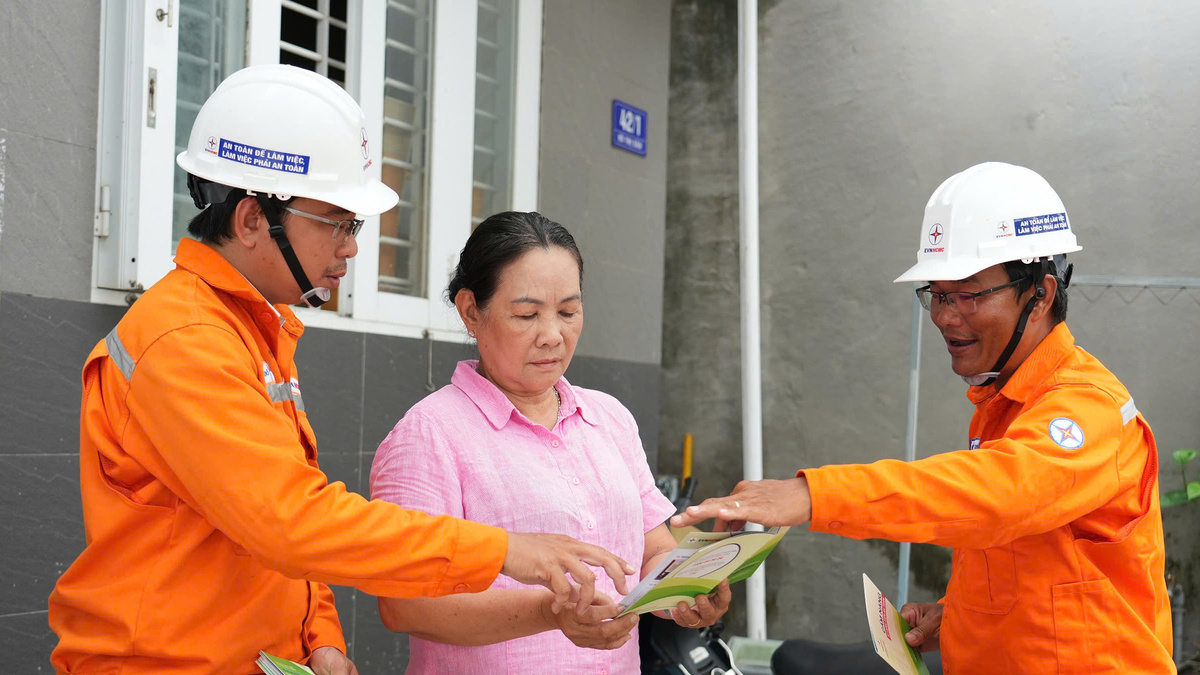
Ho Chi Minh City Power Corporation (EVNHCMC), under Vietnam Electricity (EVN), is strengthening safety measures for its power grid in preparation for the rainy season, typhoons, and high tides, prioritizing the continuity of electricity supply and the safety of its citizens. In coastal areas such as Dat Do and Vung Tau, the company is implementing solutions including reinforcing the power grid, maintaining 24/7 operational monitoring, preparing for "four on-site" readiness (personnel, equipment, command, and training), and disseminating electricity safety knowledge to households, businesses, and tourist sites. The Dat Do Power Company manages a power grid stretching along approximately 60 km of coastline. In addition to risks like falling trees, flooding, and high tides, the coastal environment's salinity necessitates more frequent inspection and maintenance of electrical equipment. Specifically, hotline washing of insulators with high-pressure water is conducted approximately every two weeks. Mr. Nguyen Tien Dung, Deputy Director of Dat Do Power Company, emphasized the importance of early preparation of plans for disaster prevention, search and rescue, and power supply during abnormal situations, coupled with regular inspections and maintenance tailored to the coastal region's specific characteristics. The company is also proactively coordinating with local authorities on electricity safety awareness campaigns, clearing hazardous trees, and identifying areas prone to flooding and high tides. "We are fully prepared with personnel, materials, and equipment under the 'four on-site' principle, maintaining 24/7 operations to respond as quickly as possible when incidents occur," he stated. At the operational control center, Mr. Le Tran Bao Phuong, Deputy Head of the Grid Operation Team, explained that the force operates in a three-shift, four-team system, connecting the central control room with satellite stations in the area. Before the rainy and typhoon season, priority feeders and loads are reviewed; materials and equipment are prepared; and plans for power cuts in low-lying, flood-prone areas are established. According to Mr. Phuong, the most common situation during storms is falling trees onto power lines. Upon receiving information, the operation team must quickly inspect, isolate dangerous areas, resolve the incident, and restore power when safety conditions are met. According to Mr. Luan Quoc Hung, Deputy General Director of EVNHCMC, ensuring human safety is paramount in disaster response. EVNHCMC has directed units to review and complete plans for disaster prevention, search and rescue, and to proactively prepare personnel, materials, equipment, and vehicles. The corporation has developed plans to ensure electricity supply for critical loads and is ready to respond to situations of widespread power outages, communication disruptions, or grid control interruptions. Mr. Hung added that in all situations, the primary requirement is to ensure the safety of citizens, customers, and employees. When an electrical safety risk is identified, grid management units must proactively implement necessary operational measures, including temporarily cutting power in high-risk areas to prevent accidents, and then quickly restoring power supply once safety conditions are met. In parallel with grid operations, EVNHCMC also directs units to enhance inspections of electrical systems, equipment, and transformer stations; to review poles, billboards, and wires that pose a risk of electric leakage. The corporation requires coordination with tree management units to address locations with tall trees that could easily fall onto power lines. For areas at risk of flooding due to heavy rain combined with high tides, units must proactively develop operational plans and promptly isolate or cut power when necessary to prevent electrical accidents in the community. In Long Dien commune, local authorities stated that they are coordinating with the power sector to disseminate information via the public address system, banners, posters, and direct outreach to residents. Risks such as trees, kite flying, and advertising boards near power lines, or violations of electrical safety corridors, are regularly reminded. For Mr. Huynh Huu Phuoc, a resident of Long Dien commune, these direct guidance sessions help residents better understand what to do when they detect unusual electrical wires, trees posing a risk of falling onto power lines, or during heavy rainfall. While Dat Do Power Company faces the challenge of managing a long coastal area, Vung Tau Power Company encounters additional difficulties as it is a major tourist destination with numerous hotels, services, and densely populated areas. Mr. Tran Thanh Hai, Deputy Director of Vung Tau Power Company, stated that the unit has strengthened its rapid response team for natural disaster prevention and search and rescue. The company has stationed personnel on-site, developed response scenarios for various extreme weather conditions, and organized drills in coordination with local authorities. Furthermore, power supply plans for critical loads such as hospitals, police, military, and water supply facilities have been prepared. According to Mr. Hai, Vung Tau's characteristic is the intermingling of densely populated tourist areas, industrial zones, seaports, and agricultural production areas. Therefore, power supply and disaster response plans must consider the specific characteristics of each area and customer group. On the customer side, Mr. Nguyen Van Dinh, Head of the Technical Department at Grand Palace Hotel, stated that the enterprise regularly coordinates with the power sector to inspect electrical cabinets, lines, and transformer stations, especially before heavy rainfall. Equipment inspection, cleaning, and prevention of short circuits are considered part of the hotel's operational activities. At the Ho May Tourist Area, Mr. Dau The Anh, General Director, views electrical safety as directly related to employees, tourists, and business operations. The enterprise is regularly updated by the power sector on weather information and risk warnings. It also maintains direct contact points between the tourist area's technical staff and power company personnel to handle unusual situations quickly. According to EVNHCMC, the organization of power supply assurance during the rainy and typhoon season is multi-layered. The electricity sector inspects and operates the grid; local authorities address risks in their areas; businesses manage their internal electrical systems; and citizens monitor equipment after the meter and report any abnormalities. Early detection... Source: VnExpress
Original source
VnExpress