General articles are free for 24 hours after publish.
Indonesia's Coal Underpricing Hurts Economy and Environment
Indonesia's coal exports are consistently priced below market rates in a phenomenon known as 'underpricing.' This practice is exacerbating environmental damage and economic losses, necessitating urgent reforms.
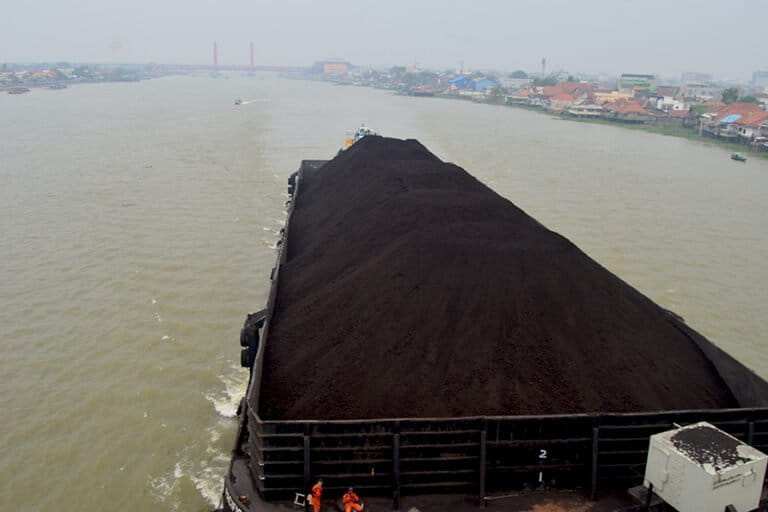
Indonesia controls a significant 47.3% share of the global market for thermal coal exports—both low and medium calorific value—which are highly sought after as fuel for power plants across Asia. However, the export price of this coal has consistently remained below market rates, a phenomenon known as 'underpricing.' This situation, if allowed to continue, is poised to inflict substantial damage on both the environment and the national economy. A study by Bersih (Clean Transition) titled 'Reforming Export Governance: Ending the Era of Coal Underpricing,' released in July, defines underpricing not merely as selling coal at a cheap price. It refers to a situation where the export value falls below a reasonable market price after accounting for factors such as quality, energy content, logistics costs, shipping terms, and transaction timing. "Simply put, a low price is not necessarily problematic. A transaction is considered underpriced if the price difference remains significant even after all these factors are considered," stated Muhammad Irfan Islami, a senior analyst at Bersih, during the report's launch. The research utilized the price difference between Indonesian coal and global benchmarks, such as Australia's Newcastle 6,000 kcal/kg NAR (Net As Received), commonly used for high-quality coal. According to economic theory, two energy commodities that can substitute for each other should only have price differences that reflect their quality, energy content, and transportation costs. "However, what we found is that Indonesian coal is traded at a discount far greater than what would be justified solely by adjustments for its energy content." The research team also analyzed exports from 20 major exporting countries, including Australia, Russia, South Africa, and Colombia, between 2020 and 2024. They converted prices not only per ton but also to a US$ per gigajoule (GJ) energy unit. The results consistently showed Indonesian coal exports priced between US$50–60 per ton, cheaper than other exporters—and this remained stable regardless of fluctuations in the benchmark coal price (HBA). This underpricing not only intensifies environmental burdens within Indonesia but also leads to missed economic opportunities for the nation. The failure to generate revenue from the coal industry at its potential level could strain investments in infrastructure development and social welfare. Furthermore, lax environmental regulations and opaque processes in determining export prices are also cited as root causes of this issue. This article was originally published on Mongabay.
Original source
Mongabay Indonesia