General articles are free for 24 hours after publish.
Vietnam Boosts Semiconductor Talent Training for Global Supply Chain Integration
Experts emphasize Vietnam's urgent need to enhance semiconductor workforce training to meet growing market demand and boost its participation in the global value chain, highlighting the importance of close collaboration between training, industry, and research.
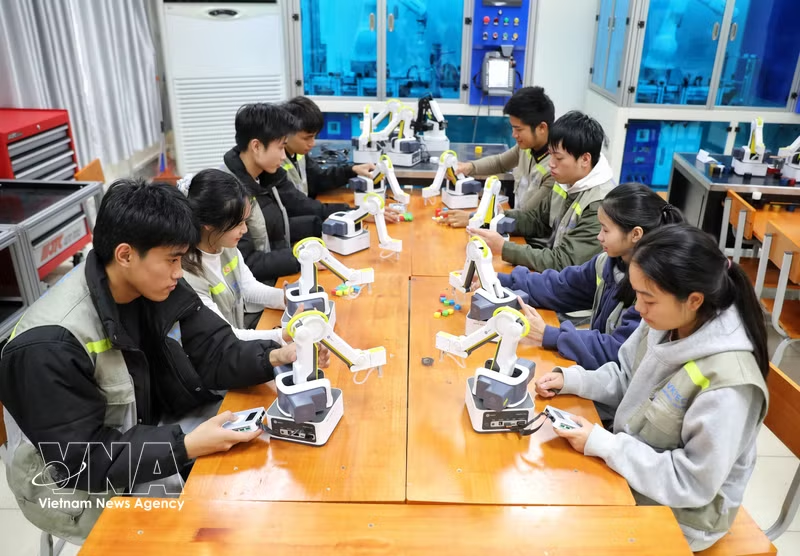
Vietnam needs to step up semiconductor workforce training to meet growing market demand and enhance its capacity to participate in the global technology value chain, experts said, highlighting the importance of closely linking training with businesses, production and technological research. Vietnam seeks deeper integration into global semiconductor value chains Vietnam-China semiconductor cooperation gains momentum Expert gives advice to Vietnam’s semiconductor sector from Malaysia’s experience As Vietnam seeks deeper integration into global semiconductor value chains, the enhancement of its workforce training in this sector has become an urgent priority. Experts emphasize that close collaboration between educational institutions, businesses, and technological research is crucial to meet the escalating market demand and bolster the nation's capacity to participate in global tech supply chains. In recent years, Vietnam has been increasing its presence in the global semiconductor supply chain, partly due to the intensification of US-China tensions and efforts to diversify geopolitical risks. Many multinational corporations are considering or expanding investments in Vietnam as part of their manufacturing base diversification strategies, leading to a surge in demand for highly skilled personnel. However, the current supply of specialized professionals in Vietnam's semiconductor sector is not keeping pace with demand. This is particularly true for talent involved in advanced processes such as design, manufacturing, and testing. Therefore, experts stress the importance of universities and vocational training centers understanding the specific needs of businesses and developing curricula accordingly. Strengthening collaboration with research and development institutions to acquire the latest technologies and foster innovation is also essential. Drawing lessons from countries with established semiconductor industries, such as Malaysia, Vietnam must build integrated training programs involving industry, academia, and government. This will enable Vietnam to move beyond being merely a manufacturing hub and advance into higher value-added upstream processes in the value chain, further accelerating economic growth.
Original source
VietnamPlus English