General articles are free for 24 hours after publish.
Vietnam-France Ties Forge New Opportunities for Europe and ASEAN Business
Vietnam and France are deepening economic, industrial, and technological cooperation under their Comprehensive Strategic Partnership. France aims to be Vietnam's gateway to the EU, while Vietnam serves as France's gateway to ASEAN, fostering business opportunities for both nations and the wider region.
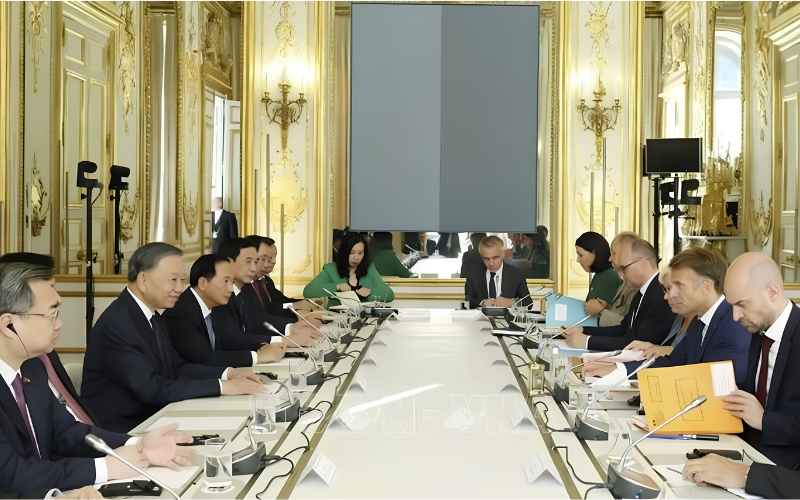
Vietnam and France are strengthening their Comprehensive Strategic Partnership, aiming to deepen cooperation in economic, industrial, and technological fields. A key outcome of the official visit by General Secretary and President Tô Lâm to France in September 2026 was the reaffirmation of this partnership and the signal to move towards greater collaboration. French Prime Minister Sébastien Lecornu articulated the broader significance, stating that France can serve as Vietnam's gateway to the European Union, while Vietnam can act as France's gateway to ASEAN. This reciprocal positioning is expected to unlock new business opportunities for both countries and the wider region. During the visit, Tô Lâm met with French President Emmanuel Macron and Prime Minister Lecornu to discuss accelerating the implementation of commitments made since the partnership was elevated in 2024. The second France-Vietnam High Business Council also convened, facilitating discussions between government and business leaders on the future of bilateral economic ties. Tô Lâm's attendance at the International Space Summit in Paris underscored Vietnam's growing focus on science, technology, and strategic industries. Discussions covered cooperation in aerospace, strategic transport infrastructure, clean energy, critical minerals, science and technology, innovation, and digital transformation. France expressed interest in projects related to energy, strategic infrastructure, and minerals, also indicating support for Vietnam's international financial center initiatives in Ho Chi Minh City and Da Nang. The collaboration aims to combine French technological expertise with Vietnam's expanding industrial capacity, thereby enhancing connections to regional and global supply chains. The utilization of the EU-Vietnam Free Trade Agreement (EVFTA), in force since 2020, is also being prioritized. Bilateral trade in goods is projected to reach €76 billion (approximately US$88 billion) in 2025, highlighting Vietnam's position as the EU's largest trading partner within ASEAN. These developments are building a stronger policy and institutional foundation for exploring commercial partnerships, industrial projects, investment, and technology cooperation. International expertise is seen as crucial for complementing Vietnam's industrial base, particularly in sectors such as infrastructure expansion, energy, advanced manufacturing, and digital transformation. The enhanced ties are expected to go beyond mere trade volume increases, fostering the connection of businesses, technology, capital, and industrial capabilities on both sides. Vietnam continues to attract international businesses seeking new markets, manufacturing capacity, and a stronger foothold in Southeast Asia. Closer ties with France and the EU are anticipated to further bolster this environment through enhanced institutional dialogue, strengthened business networks, and increased visibility for priority industries. For French and European businesses, several approaches to the Vietnamese market are possible, from engaging local distributors to establishing local entities. Manufacturers can integrate Vietnam into broader Asian supply-chain strategies, diversifying production while maintaining access to regional suppliers and markets. The key for assessing Vietnam lies not just in market growth but in a company's fit with local demand, appropriate partner structures, and a sustainable operating model. This strategic alignment is particularly relevant in sectors like energy, infrastructure, advanced manufacturing, transportation, technology, and supporting industries, where international expertise can significantly complement Vietnam’s developing industrial base. While a favorable bilateral environment is beneficial, practical market entry challenges, including understanding local demand, identifying reliable partners, assessing competition, and navigating regulations, remain crucial considerations for businesses. Information Source: Vietnam Insider
Original source
Vietnam Insider