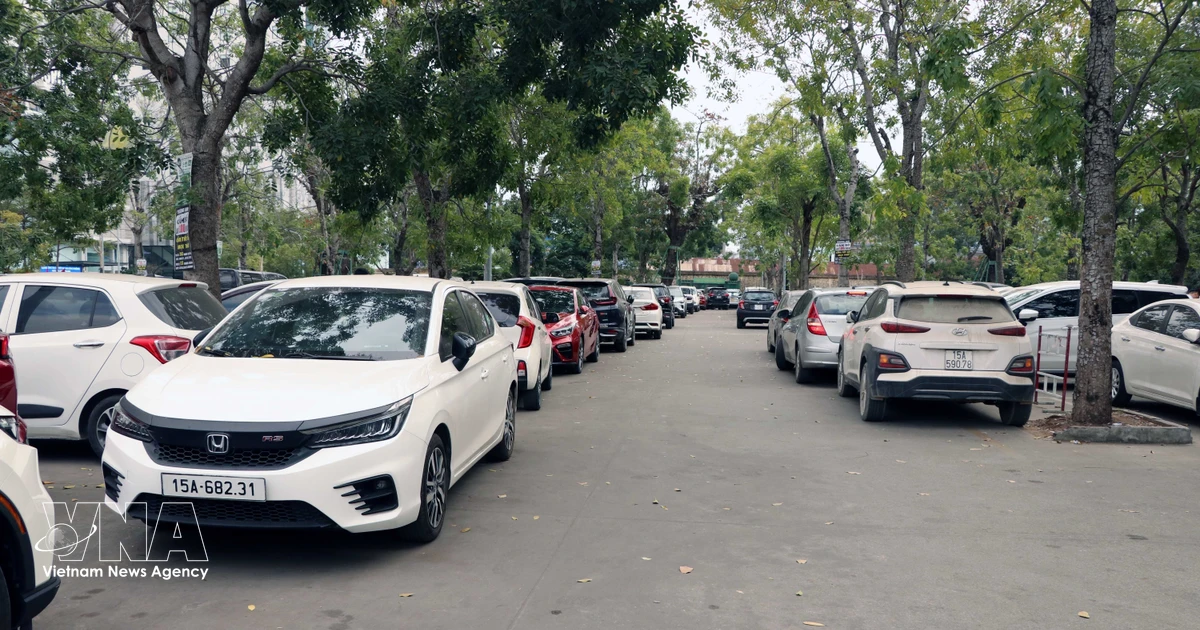
Vietnam's Auto Sales Rise 15%, Hybrid and Imported Vehicles Continue to Outperform
Vietnam's automotive sales surged 15% year-on-year, with hybrid and imported vehicles showing sustained strength. While the need to bolster domestic production and foster innovation is highlighted, infrastructure development and workforce training for EV adoption remain key challenges.
Private passenger vehicles account for the overwhelming majority, with 369,849 battery electric passenger cars in operation, alongside 3,396 electric trucks and 1,571 electric buses. Some argue that removing conditions entirely could lead to an influx of low-cost imports and weaken domestic production capacity, while others say the current system imposes unnecessary costs and slows innovation. Hyundai Motor of the Republic of Korea (RoK) will directly participate in developing technical training programmes aimed at supplying job-ready workers for auto parts production and assembly plants. To convert these opportunities into growth, it is a must for Vietnam to continue improving its investment climate, upgrading logistics and energy infrastructure, accelerating digital transformation and developing a highly skilled workforce that meets requirement of emerging technology sectors, an expert has said. Vice Chairman of the provincial People's Committee Nguyen Huu Que said ESG is no longer a communications message or a cost burden, but an essential requirement for accessing global capital. Gia Lai has chosen ESG as a pillar for building new competitive advantages and achieving sustainable development. Vietnam Airlines said weather-related schedule changes are unavoidable and are made to ensure the safety of passengers and crew. Built on nearly 20 hectares at Huu Thanh Industrial Park, the facility is the company's largest and most advanced plant in Vietnam and the biggest production site in Suntory PepsiCo's Asian manufacturing network. The factory has a designed annual production capacity of over 1.24 billion litres and is equipped with highly automated production, filling and warehousing systems. With its enlarged development space, Ho Chi Minh City now combines strengths in urban development, industry and services with high-tech agriculture, the marine economy, logistics and diverse ecological areas. These conditions provide an ideal testing ground for UAV applications in urban management, land administration, environmental monitoring, disaster prevention and response, agriculture, logistics and public services. The projects, which have a combined investment of around 12 trillion VND (approximately 460 million USD), comprise the expansion and upgrading of Provincial Roads DT769 and DT773, along with the construction of DT770B, all of which are expected to play a strategic role in the region's transport network. The city's tourism sector has continued to benefit from expanding air connectivity. In the first six months of this year, Da Nang welcomed nearly 9.77 million overnight visitors, up 22% year-on-year. International tourist arrivals exceeded 5.16 million, an increase of 28%. The Vietnam Association of Motorcycle Manufacturers (VAMM) announced on July 10 that its five member companies sold 638,431 motorcycles in the second quarter, up 4.4% from the same period last year. Despite headwinds from Middle East tensions that have pushed up freight and logistics costs, exports of wood and wood products were estimated at 1.53 billion USD in June, lifting first-half export turnover to 8.54 billion USD, up 4.4% from a year earlier, according to the Ministry of Agriculture and Environment (MAE). Despite the encouraging performance, Vietnam's exports remain heavily dependent on a limited number of major markets and product groups, while the domestic value added of many export products remains relatively low because of their reliance on imported raw materials and components. Speaking at the at the city's regular socio-economic press briefing on July 9, Deputy Head of the Ho Chi Minh City Export Processing and Industrial Zones Authority (HEPZA) Tran Viet Ha said that foreign direct investment (FDI) accounted for nearly 1.6 billion USD of the total, including 65 newly licensed projects worth more than 867 million USD and 83 existing projects that added over 707 million USD in registered capital. With the current trading band of +/- 5%, the ceiling rate applicable for commercial banks during the day is 26,475 VND/USD, and the floor rate 23,953 VND/USD. The initiative marks a shift from traditional investment promotion toward a digital ecosystem that standardises information and provides transparent connections with investors worldwide. Textile and seafood exporters are struggling to retain enough workers to meet recovering export demand, underscoring a shift in constraints from demand to workforce capacity. National flag carrier Vietnam Airlines will increase frequencies on several routes to Japan, the Republic of Korea (RoK) and Taiwan (China) to meet rising demand for tourism, business and family visits between Vietnam and Northeast Asia. Israeli businesses and experts introduced a wide range of technologies and solutions for sustainable agricultural development, including smart irrigation systems, greenhouse technologies, crop varieties, microbial technologies, post-harvest solutions, aquaculture technologies, and digital transformation in agriculture. The maximum retail price of E5RON92 was set at 19,191 VND (0.73 USD) per litre, down 539 VND from the previous ceiling and 812 VND lower than E10RON95-III. The latter was capped at 20,003 VND per litre, a decrease of 412 VND. The recognition marks a significant milestone for Vietnam’s maritime industry as it advances the development of smart, green ports and sustainable logistics. Singapore-based United Overseas Bank (UOB) has sharply raised its forecast for Vietnam's 2026 GDP growth to 8.5%, more than reversing the previous downgrade to 7%, citing stronger-than-expected first-half economic performance driven by manufacturing, investment and foreign direct investment (FDI). PM Le Minh Hung said the fulfilment of the capital disbursement target should become a key criterion in evaluating the performance of ministries, sectors and local authorities. Copyright, VietnamPlus, Vietnam News Agency (VNA) Editor-in-chief, Mr. Tran Tien Duan.
多角的分析
ベトナムの自動車市場は、ハイブリッド車や輸入車の人気に支えられ、15%増という堅調な成長を遂げている。これは、国内消費者の多様化するニーズと、国際的な自動車メーカーの積極的な市場参入の結果と見られる。一方で、国内生産能力の強化と技術革新の促進は、保護主義的な措置と自由化のバランスという、ベトナム経済が常に直面する課題を浮き彫りにしている。EV普及に向けたインフラ投資や人材育成は、今後の経済成長の鍵となるが、そのペースと質が国際競争力に直結するだろう。また、輸出依存度の高さと国内付加価値の低さは、グローバルサプライチェーンの変動に対する脆弱性を示唆しており、より高付加価値な産業への転換が急務である。
ベトナムの自動車市場の成長は、自動車メーカーや関連部品サプライヤーにとって魅力的な投資機会を提供する。特に、ハイブリッド車やEV関連技術への投資は、将来的な成長が見込まれる。しかし、国内生産能力の強化と技術革新を巡る規制の不確実性は、投資家にとってリスク要因となり得る。インフラ、特に物流とエネルギー分野への投資は、事業運営の効率性を高め、投資リターンの向上に寄与するだろう。UOBによるGDP成長率予測の引き上げは、ベトナム経済全体の投資環境の改善を示唆しており、多様なセクターへの投資を促進する可能性がある。
自動車販売の増加は、ベトナムの都市部における所得水準の向上と消費文化の変化を反映している。ハイブリッド車や輸入車の人気は、環境意識の浸透や、より洗練されたライフスタイルへの志向を示唆している。EV普及に向けたインフラ整備の遅れや、国内生産能力の強化と技術革新を巡る議論は、国民生活に直接的な影響を与える可能性がある。例えば、EV充電インフラの不足は、EV購入を検討している市民の不安材料となる。また、労働力不足は、繊維・水産物輸出業者だけでなく、国内の様々な産業に影響を及ぼし、賃金上昇圧力につながる可能性がある。Gia Lai省のESGへの取り組みは、地方レベルでの持続可能な開発への意識の高まりを示す一方、全国的な普及と実効性が問われる。
ベトナム市民の可処分所得の増加と、より環境に配慮した、あるいは高性能な自動車への関心の高まりが、自動車販売の15%増につながっている。特に都市部では、ハイブリッド車や輸入車がステータスシンボルとしても認識されつつある。しかし、EVへの移行は、充電インフラの整備状況や、車両価格、そして国内での部品調達の容易さといった、市民の購入決定に影響を与える要因がまだ多い。国内自動車産業の保護と技術革新のバランスに関する議論は、将来的に購入できる車両の種類や価格に影響を与える可能性がある。また、労働力不足が続く産業分野では、労働条件の改善や賃金の上昇が期待される一方で、一部の輸出産業では生産能力の限界が顕在化する可能性もある。
背景・歴史的文脈
ベトナムの一党体制下では、経済成長と社会安定の両立が最優先課題とされる。自動車産業においては、国内自動車メーカーの育成と、国際競争力の強化という二律背反の課題に直面してきた。1990年代以降のドイモイ(刷新)政策により市場経済化が進む中で、外国直接投資(FDI)の誘致と国内産業の保護・育成が並行して行われてきた。近年、環境意識の高まりと技術革新の波を受け、EVシフトへの対応が急務となっているが、インフラ整備の遅れや、国内生産能力の限界が課題となっている。これは、ベトナムがグローバルなサプライチェーンの一部として、どのように自国の産業基盤を強化していくかという、より大きな文脈で理解する必要がある。
原文ソース
VietnamPlus English