General articles are free for 24 hours after publish.
Vinh Long Province Recognizes Over 300-Year-Old White Plum Tree with Vietnam Record
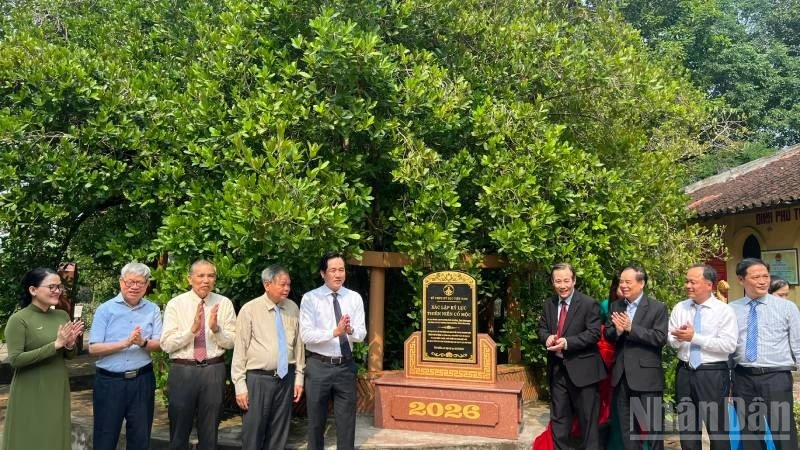
Vinh Long City's Phu Khuong Ward in Vinh Long Province announced the recognition of an ancient white plum tree, over 300 years old, with a 'Vietnam Record' by the Vietnam Record Organization. Concurrently, star fruit and cinnamon trees, both over 200 years old at Phu Tu Temple in the same area, were recognized as 'Vietnam Heritage Trees'.
On September 15, Phu Khuong Ward in Vinh Long City, Vinh Long Province, announced the recognition of an ancient white plum tree, over 300 years old, with a 'Vietnam Record' by the Vietnam Record Organization. The Phu Tu Temple in the same area also celebrated the recognition of its star fruit and cinnamon trees, both over 200 years old, as 'Vietnam Heritage Trees' by the Vietnam Association for Nature and Environmental Protection. The recognized white plum tree features 10 main trunks originating from a single root, a result of natural regeneration. Each trunk measures between 75cm and 130cm in circumference. The star fruit and cinnamon trees were acknowledged for their contribution to preserving biodiversity, landscape, and historical-cultural values in the region. Phu Tu Temple, established around the mid-18th century during the area's pioneering phase, venerates the local tutelary deity. The temple's architecture and the white plum tree were previously recognized as a provincial-level historical-cultural relic. The white plum tree itself was designated a 'Vietnam Heritage Tree' in 2014. The addition of the star fruit and cinnamon trees is expected to enhance the temple's status as a cluster of heritage trees, fostering community awareness in nature conservation and the preservation of local heritage. Local authorities anticipate that leveraging the heritage tree cluster in conjunction with Phu Tu Temple will attract tourists for sightseeing and research. This initiative aims to develop tourism products and routes, contributing to the goal of making tourism a key economic sector by 2030.
Original source
Nhan Dan