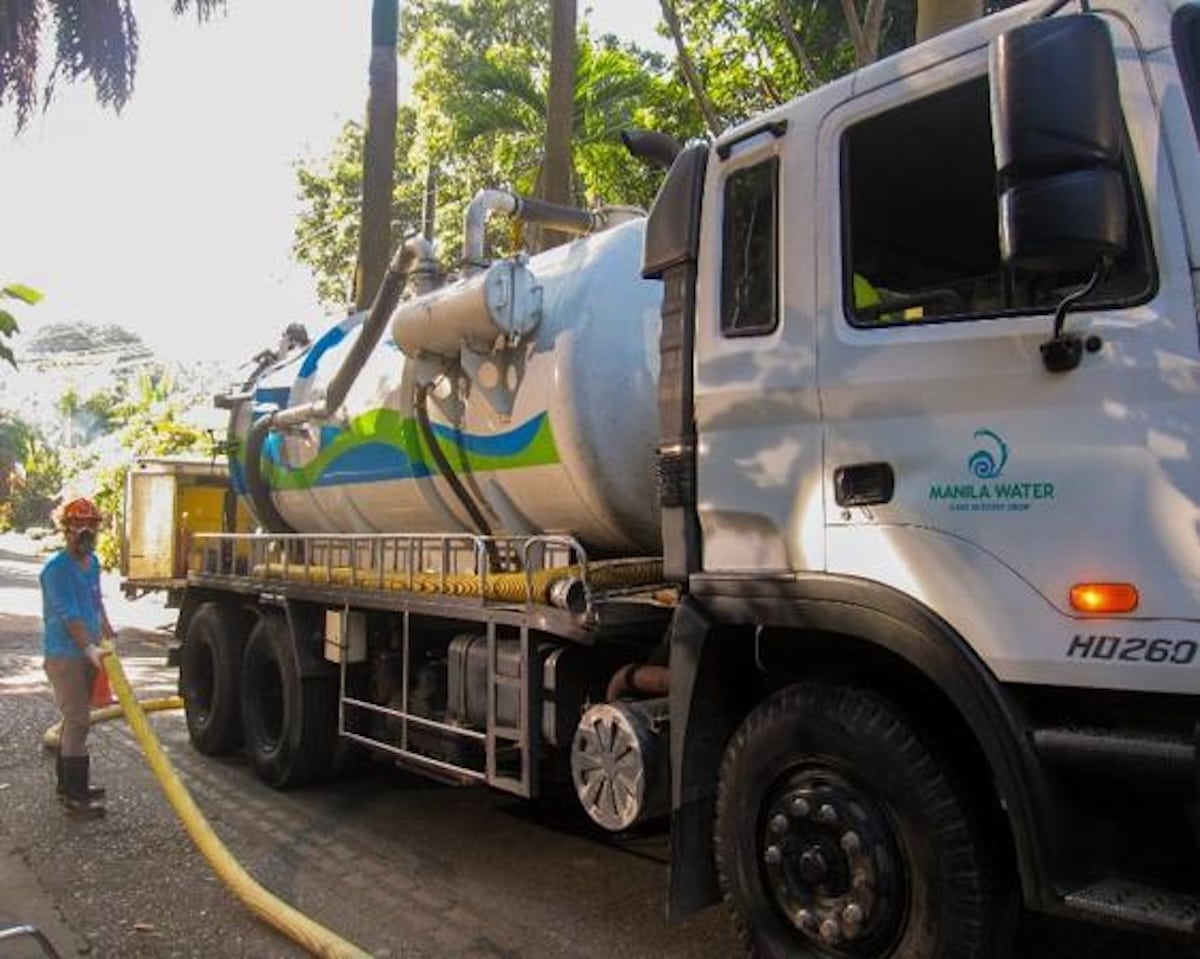
Manila Water Urges Preventive Desludging Amid El Niño
Amid El Niño's dry spells and localized heavy rains, Manila Water is strongly urging its customers to avail of its scheduled desludging services for septic tanks. This proactive measure aims to prevent sanitation issues and water contamination, ensuring stable water supply.
This article requires PRO
This article is outside the free access window or is a special report. PRO unlocks it and the full archive.
Related articles
- Angat Dam Water Level Slightly Rises After Allocation Cut, El Niño Threat Looms
The water level at Angat Dam in Bulacan, Philippines, has slightly surpassed its critical level following a reduction in water allocation for Metropolitan Waterworks and Sewerage System (MWSS). Concerns over water scarcity due to El Niño persist.
- Maynilad Assures Water Supply Amid El Niño Fears
Maynilad Water Services, Inc. has assured the public of a reliable water supply in Metro Manila, despite declining water levels at Angat Dam due to the looming El Niño phenomenon. The company has bolstered its efforts in securing alternative water sources and increasing storage capacity, drawing from past experiences.
- Maynilad Scales Up El Niño Preparations Amid Angat Dam Water Level Concerns
Maynilad, the water concessionaire for Metro Manila's West Zone, is intensifying its preparations for the El Niño phenomenon due to declining water levels at Angat Dam. The company is implementing multi-faceted measures, including enhanced Laguna Lake treatment capacity, increased reservoir storage, and a non-revenue water reduction program.
- Metro Manila Water Supply Seen Adequate Ahead of El Niño
Metro Manila water concessionaires are implementing measures to stabilize water supply ahead of El Niño's impact, which has led to reduced levels at Angat Dam. They are enhancing supply capacity through additional sources and reduced water losses.