Vietnamese Businesses Aim to Climb Global Value Chains Through Tech and Brand Enhancement
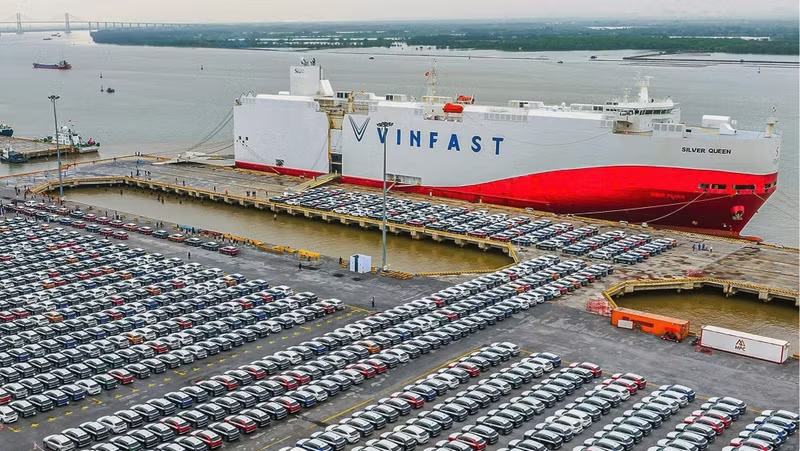
Vietnamese businesses are focusing on technological prowess, high-value product development, and building internationally competitive brands to elevate their position in global value chains. This is part of the nation's growth strategy for a new era, with growing domestic momentum evidenced by numerous business leaders receiving accolades.
Read up to 3 eligible full articles per Japan day (JST) for free
Create a free account to open up to 3 eligible full articles per Japan calendar day (JST). Headlines and summaries remain available across ASEAN 7.
Related articles
- Vietnam Boosts Cultural Industry with New Strategy, Hanoi Leads
Vietnam is accelerating the development of its cultural industry with a new strategy. Notably, the capital Hanoi is advancing projects integrating cultural heritage with cutting-edge technology and constructing a cultural industry center, aiming to enhance national brand value and contribute to economic growth.
- Vietnam Offers Businesses Flexible Tet Holiday Options for 2027
Vietnam's Ministry of Home Affairs has issued flexible guidelines for the 2027 Lunar New Year (Tet) holiday, allowing businesses to choose from three distinct holiday patterns for their employees. This aims to enable workers to plan their holidays proactively and align with company operations.
- Vietnam Resumes $500 Million Potash Mine Project in Central Laos
Vietnam Chemical Industry Group (Vinachem) has restarted a potash mine development and processing project in Khammouane province, central Laos, with an estimated investment of approximately $492 million. The project aims to produce 500,000 tons of potassium chloride annually and is expected to create over 600 jobs.
- Vietnam Pledges Support for Firms, Pushes Tech Self-Reliance
Vietnamese Prime Minister Pham Minh Chinh urged women entrepreneurs to expand their role in the digital economy and contribute to innovation. He also emphasized the importance of securing power supply and developing infrastructure, signaling a push for corporate support and technological self-reliance.