General articles are free for 24 hours after publish.
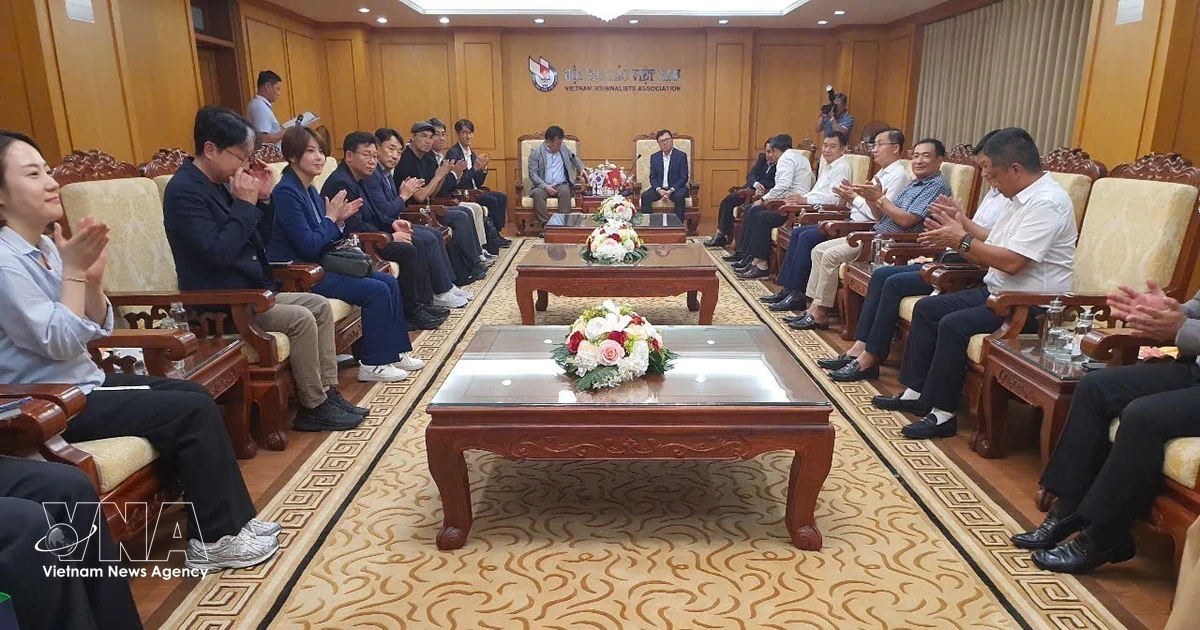
Vietnam, Korea Journalists Boost Exchanges in Digital Era
Vietnamese and Korean journalists are strengthening exchanges in the digital era, aiming for cooperation and progress in various economic, cultural, and social fields. Particular focus is placed on technology transfer from Korea, support for overseas Vietnamese communities, and educational reforms.
Vietnamese and Korean journalists are enhancing their exchanges in the digital era, aiming to strengthen bilateral cooperation across diverse fields including economy, culture, and society. In the economic sphere, Korean companies have shown significant interest in Vietnam International Sourcing (VIS 2026), particularly in sectors such as food, logistics, digital technology, mechanics, shipbuilding, seafood, and distribution. Vietnam looks to leverage the expertise of the Korea Innovation Network and experts to share and transfer knowledge and international experience, especially in technology development, mastery, and commercialization from the Republic of Korea (RoK). On the cultural and social front, strengthening the community of overseas Vietnamese is a key policy priority. The preservation and promotion of the Vietnamese language are considered vital not only for communication but also for nurturing affection for the homeland and cultural bonds. The Communist Party of Vietnam Central Committee has identified overseas Vietnamese as an important strategic resource, emphasizing the mobilization of their knowledge, experience, and networks for national development. This reflects a more comprehensive and contemporary approach to overseas Vietnamese affairs, evolving from the Politburo's Resolution No. 36-NQ/TW issued in 2004. Education is another area of focus, with Vietnam planning a significant transition towards substantive changes in its education and training development for the 2026–2027 academic year, aligned with Politburo Resolution No. 71-NQ/TW. The emphasis is on learner-centric methods, strengthening educational foundations, the role of teachers, and fostering support from families and society. Additionally, in Russian language teaching, there is a focus on applying digital technology and AI in lesson design to enhance teachers' professional capacity. Infrastructure development includes Hanoi's plan for six resettlement urban areas for residents affected by the Red River Landscape Boulevard project. For disaster response, Hanoi is implementing a map application with a standard color scale to visually assess danger levels, aiming to strengthen the capital's disaster preparedness. In security and safety, joint efforts between Vietnam and Laos are progressing in the search and collection of remains of martyrs. The dry season of 2026-2027 will see teams striving to meet collection targets based on provided information. Diplomatically, the state visit to Russia by Vietnam's top leader is anticipated to be a significant milestone in deepening traditional friendship and cooperation. Furthermore, Phu Quoc's selection to host the 2027 APEC Economic Leaders’ Week marks a historic diplomatic opportunity for the island to enhance its global standing. Socially, stringent law enforcement is evident with the death sentence handed down to 11 defendants in a drug trafficking case in Ho Chi Minh City. In response to natural events, Vietnam Airlines adjusted flights between Hanoi, Ho Chi Minh City, and Jakarta due to volcanic ash. Thirty-two fishermen were also rescued after their vessel encountered an accident at sea. These developments highlight Vietnam's multifaceted progress as it pursues economic growth under its one-party system, strengthens international relations, and advances its domestic social, cultural, and infrastructural agenda.
Original source
VietnamPlus English