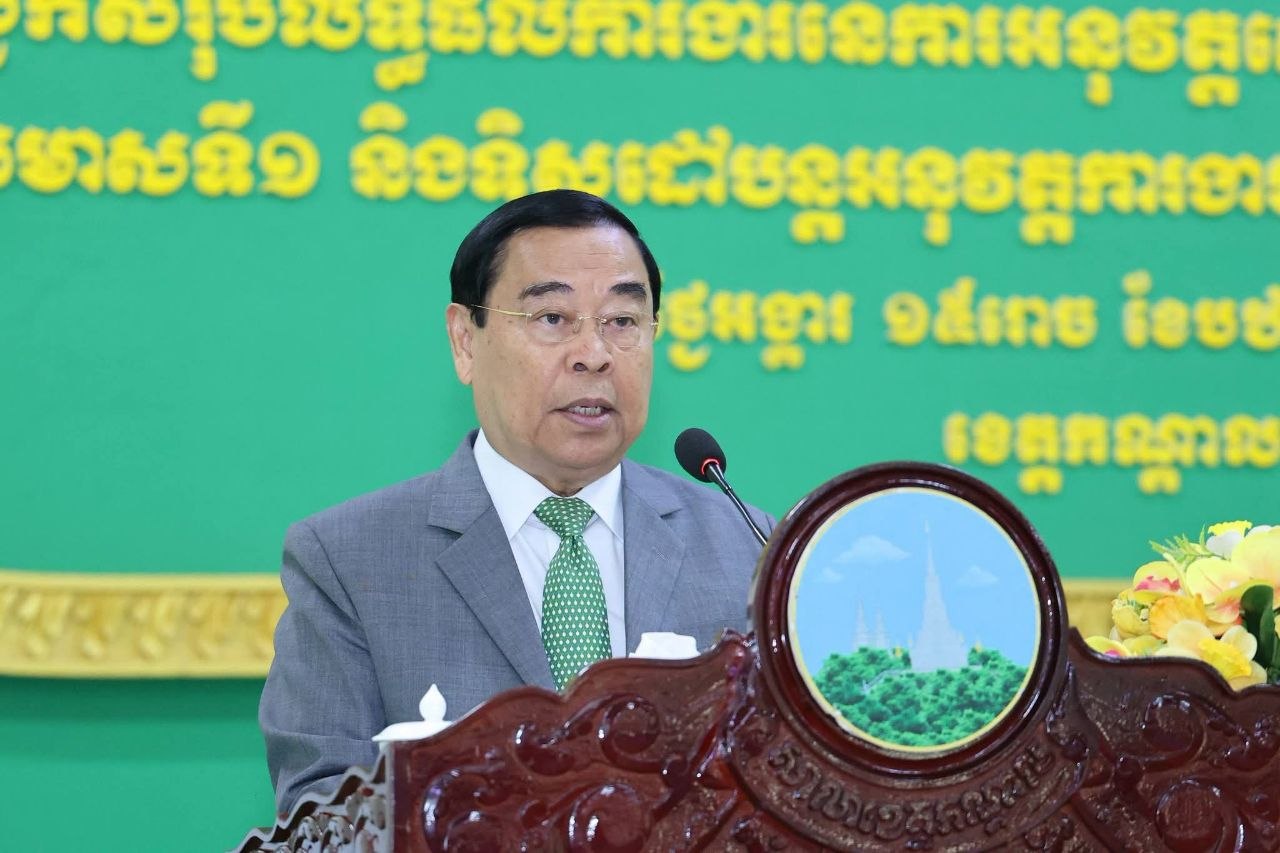
Kandal Province Reviews Progress of 'Safe Village-Commune-District' Policy
Kandal Province, Cambodia, held a meeting to review the implementation of the 'Safe Village-Commune-District' policy for the first half of 2026, addressing security, public welfare, education, and health initiatives.
Kandal Province, Cambodia, held a meeting on July 14, 2026, to review the results of the 'Safe Village-Commune-District' policy implementation for the first half of 2026 and to set directions for the second half. The meeting was chaired by H.E. Ong Mongkol, Secretary of State of the Ministry of Interior, H.E. Aim Samnang, Undersecretary of State of the Ministry of Interior, H.E. Nu Sakorn, President of the Provincial Council, and H.E. Kuoch Chamroeun, Governor of Kandal Province. Numerous officials from city/district authorities, commune/sangkat administrations, provincial departments, and security forces attended. During the meeting, Governor Kuoch Chamroeun instructed all levels of authorities and relevant forces to continue cracking down on all types of crimes in their localities, with a particular focus on providing moral support to military families and forces performing duties to protect territorial integrity along the borders. The governor also urged all levels of authorities to promptly and effectively address the challenges faced by citizens, thereby improving their living standards and safety. Furthermore, authorities and security forces were directed to prepare for the upcoming high school diploma examinations by strengthening security, order, and traffic facilitation to ensure candidates can reach their examination centers on time and that the examination process proceeds smoothly. Regarding dengue fever, the governor appealed to local authorities to cooperate with the health department in educating the public about preventive measures, mosquito spraying, and precautions for dengue symptoms. He stressed the importance of sending suspected patients to hospitals promptly. All levels of authorities were also instructed to increase public awareness regarding drowning risks and to prepare emergency rescue plans in case of flooding. Speaking at the meeting, H.E. Ong Mongkol, Secretary of State of the Ministry of Interior, praised and highly commended the provincial administration for its diligent efforts and commendable results in implementing the 'Safe Village-Commune-District' policy. He encouraged all levels of security forces to continue strengthening the dissemination of the 'Safe Village-Commune-District' policy to civil servants, all levels of security forces, commune/sangkat administrations, citizens, civil society organizations, and other stakeholders to enhance understanding and promote effective participation in implementing the policy for even better results in the coming years. He urged the provincial administration to reinforce the provincial unified command structure, grasp all situations occurring in districts and cities within their jurisdiction for timely resolution, conduct direct outreach to citizens' households about the 'Safe Village-Commune-District' policy, and organize public forums to listen to citizens' concerns and requests for joint timely solutions. According to the work results of the 'Safe Village-Commune-District' policy implementation for the first half of 2026, new Cambodian national identification cards for those of age were processed for 12,751 individuals, representing 58.89%, and 9,498 cards were distributed. For expired cards, new applications were processed for 135,485 individuals, and 87,767 new cards were distributed. For monks, applications were processed for 253 individuals out of a total of 3,681 monks. Residence books (Form K2) were provided to 6,772 families, including 4,067 new ones and 2,712 renewals. Family books (Form K4) were provided to 2,534 families, including 1,811 new ones and 723 renewals. The Provincial Hall's One-Stop Service Unit received 29,600 service requests. The Kandal Provincial Forestry Administration issued 11 permits for the establishment of forest product processing workshops and 11 processing factory permits. By: Noy Norn (Source: Kandal Provincial Administration)
多角的分析
「安全な村・町・地区」政策は、直接的な経済活動への影響は限定的であるものの、治安の安定は投資環境の改善に不可欠である。犯罪率の低下は、地域経済の活性化、特に観光業や小規模ビジネスの成長を促進する可能性がある。また、住民生活の安全確保は、消費活動の安定にも寄与すると考えられる。しかし、政策の実施には行政コストがかかるため、その費用対効果の評価も重要となる。
治安の安定は、カンボジアへの投資を検討する上で最も基本的な要素の一つである。この政策は、特に地方部における犯罪抑止に焦点を当てており、外国投資家にとって、事業運営におけるリスク低減に繋がる可能性がある。ただし、具体的な投資判断には、経済成長率、インフラ整備、法制度の透明性など、他の要因も総合的に考慮される必要がある。
「安全な村・町・地区」政策は、住民の日常生活の安全と安心に直結する。特に、犯罪の取り締まり強化や、デング熱、溺水事故といった健康・安全リスクへの対策は、地域住民の生活の質向上に貢献する。また、試験期間中の交通整理や、住民の懸念に耳を傾けるための公開フォーラムの設置は、政府と市民との間の信頼関係構築に繋がる可能性がある。しかし、政策の実施が一部の地域や層に偏らないよう、公平な配慮が求められる。
この政策の進捗会議は、カンダール州の住民にとって、自分たちの住む地域がより安全になることへの期待を高める機会となる。特に、知事が言及した犯罪対策や、デング熱、洪水といった具体的な生活上のリスクへの対応は、住民の不安を軽減するだろう。また、試験期間中の交通整理や、住民の声を聞くためのフォーラム設置は、行政が市民の生活に寄り添おうとしている姿勢を示すものとして、好意的に受け止められる可能性がある。
背景・歴史的文脈
カンボジア政府は、国民の安全と社会秩序の維持を最重要課題の一つとして位置づけている。この「安全な村・町・地区」政策は、2010年代初頭から推進されており、地方レベルでの犯罪抑止、交通安全、公衆衛生、そして住民参加を促進することを目的としている。特に、2018年の総選挙後、フン・セン政権下で治安維持と社会安定化への取り組みが強化され、地方行政の役割が再評価されている。本会議は、これらの政策の進捗状況を確認し、地方当局の責任を明確化する場となっている。
原文ソース
AKP Khmer