Thai PM Visits Malaysia to Boost Economic and Security Cooperation
Thai Prime Minister Anutin Charnvirakul made an official visit to Malaysia, holding talks with Prime Minister Anwar Ibrahim. Discussions focused on boosting economy, trade, investment, and tourism, as well as addressing security issues in the southern border region, confirming strengthened bilateral cooperation. A new border checkpoint was also inaugurated.
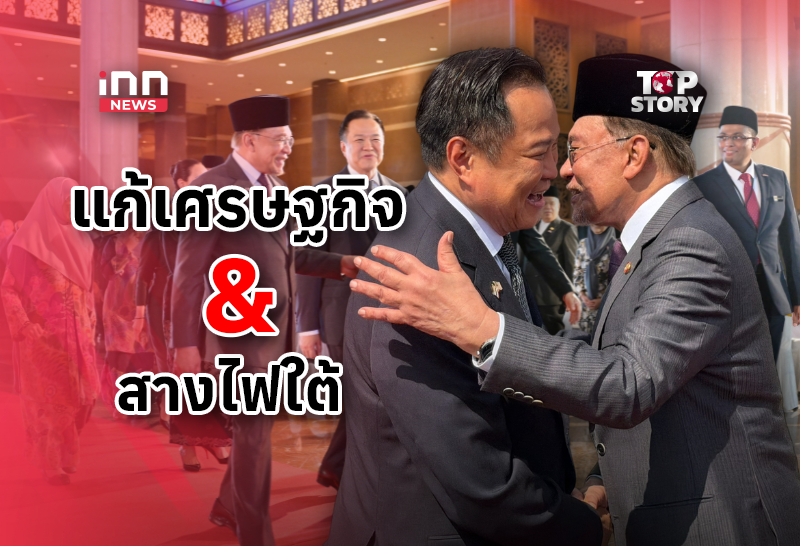
Thai Prime Minister Anutin Charnvirakul made an official visit to Malaysia from July 9-10, holding talks with Prime Minister Anwar Ibrahim. Amidst the ongoing unrest in Thailand's southern border provinces, this visit was not merely a diplomatic courtesy but also a crucial test for enhancing security cooperation while simultaneously accelerating economic, trade, and border connectivity, potentially shaping the future direction of Thai-Malaysian relations. This marked the first official visit since Anutin assumed the premiership for his second term and came at a time of particular scrutiny, following continuous violent incidents in the southern border provinces. While the main agenda focused on economy, trade, investment, and tourism, security cooperation, especially regarding the resolution of issues in the southern border provinces—a significant challenge for the Thai government requiring Malaysian collaboration—garnered equal attention. The importance of this mission was evident in the delegation accompanying the Prime Minister. It included not only economic ministers but also the Minister of Defence, Secretary-General of the National Security Council, Director-General of the National Intelligence Agency (who also serves as the chief negotiator for peace talks in the southern border provinces), and high-ranking military officials, indicating that security discussions were a key agenda item. During their one-on-one meeting, which later expanded into a full bilateral session, the Thai and Malaysian Prime Ministers exchanged views and promoted cooperation in various areas, including combating transnational crime, human trafficking, online scams, disaster management, and resolving trade and energy obstacles. Economically, the visit aimed to bolster ties, as Malaysia is a major trading partner for Thailand within ASEAN. Discussions covered promoting trade, investment, agriculture, tourism, and improving transportation links to increase opportunities for Thai entrepreneurs, farmers, exporters, and workers to access the Malaysian and regional markets. A significant highlight was witnessing the exchange of a Memorandum of Understanding (MOU) on agriculture, which is expected to elevate food security and agricultural development cooperation. Furthermore, the leaders jointly presided over the opening ceremony of a new Thai-Malaysian border crossing and the connecting road between Thailand's Sadao customs checkpoint and Malaysia's Bukit Kayu Hitam checkpoint in Kedah. This project has been jointly promoted by both countries since 2019. This new facility is envisioned not just as an improvement for travel but as a new economic gateway, enhancing border trade capacity, reducing logistics costs, and connecting Thailand's transportation network to Malaysia, Singapore, and onward to Southern China, thereby contributing to long-term economic value and expanding export opportunities for Thailand. The warm reception, with the Malaysian Prime Minister personally greeting the Thai Prime Minister at the airport, accompanying him for the inspection of the guard of honor, and sharing a car to the Prime Minister's office, underscored the close relationship and trust between the two leaders, which is crucial for translating cooperation into tangible results. Politically, former Thai Prime Minister Thaksin Shinawatra was also in Malaysia during Anutin's official visit. Anutin had previously indicated that a meeting might be unlikely due to his packed schedule. Source: INN News
多角的分析
タイにとってマレーシアはASEAN域内での重要な貿易相手国であり、今回の訪問は経済関係の深化を目指すものでした。特に、新たな国境検問所の開通は、物流コストの削減と貿易量の増加に直結するため、両国経済にプラスの影響を与えると考えられます。タイは、マレーシアを介してシンガポールや中国南部へのアクセスを強化し、輸出市場の拡大を図る戦略です。農業分野でのMOU締結も、食料安全保障の観点から重要であり、タイの農業セクターの発展に寄与する可能性があります。
今回のタイ首相のマレーシア訪問は、両国間の経済協力強化への期待感から、投資家にとってポジティブなシグナルと捉えられます。特に、国境検問所の開通は、国境貿易に関わるインフラ投資や物流関連企業にとって、新たなビジネスチャンスをもたらす可能性があります。また、農業分野での協力強化は、関連産業への投資を促進するかもしれません。ただし、タイ南部国境地域の治安問題が依然として懸念材料であり、投資リスクとして考慮される可能性があります。
タイ南部国境地域の治安問題は、地域住民の日常生活に直接的な影響を与えています。今回の訪問で、マレーシアとの治安協力強化が確認されたことは、住民の安全確保に向けた前進と言えます。また、新たな国境検問所の開通は、地域住民の移動や経済活動の活性化につながる可能性があります。しかし、長年の治安問題の根本的な解決には、両国の継続的な努力と、地域住民の生活改善に向けた具体的な施策が求められます。
タイ南部国境地域の治安悪化は、住民の安全への不安を増大させ、経済活動にも影を落としてきました。今回のタイ首相とマレーシア首相の会談で、治安協力の強化が確認されたことは、住民にとって希望の光となるでしょう。しかし、具体的な治安改善策がいつ、どのように実施されるのか、そしてそれが地域住民の生活にどのように還元されるのかが、今後の住民の関心事となります。また、新たな国境検問所の開通は、地域経済の活性化と移動の自由化に繋がり、住民の生活水準向上に貢献することが期待されます。
背景・歴史的文脈
タイ南部国境地域(ヤラー県、パッターニー県、ナラティワート県およびソンクラー県の一部)では、長年にわたり separatism(分離独立運動)を背景とした武装闘争が続いています。この地域は、歴史的にマレー系イスラム教徒が多く居住しており、タイからの分離を求める動きがあります。マレーシアは、この地域と国境を接しており、平和対話の仲介役や治安協力において重要な役割を担っています。2004年以降、この地域では爆弾テロや襲撃事件が頻発し、多くの犠牲者を出しています。タイ政府は、マレーシアとの協力を通じて、治安の安定化と平和的な解決を目指していますが、問題の根源は複雑であり、長期的な取り組みが必要です。
原文ソース
INN News