General articles are free for 24 hours after publish.
Vietnam Boosts Support for Semiconductor Industry to Enhance Domestic Production
The Vietnamese government is set to strengthen support for its electronics and semiconductor industry, focusing on enhancing domestic component manufacturing capabilities and supply chains. The aim is to correct trade imbalances and increase added value through preferential policies and talent development.
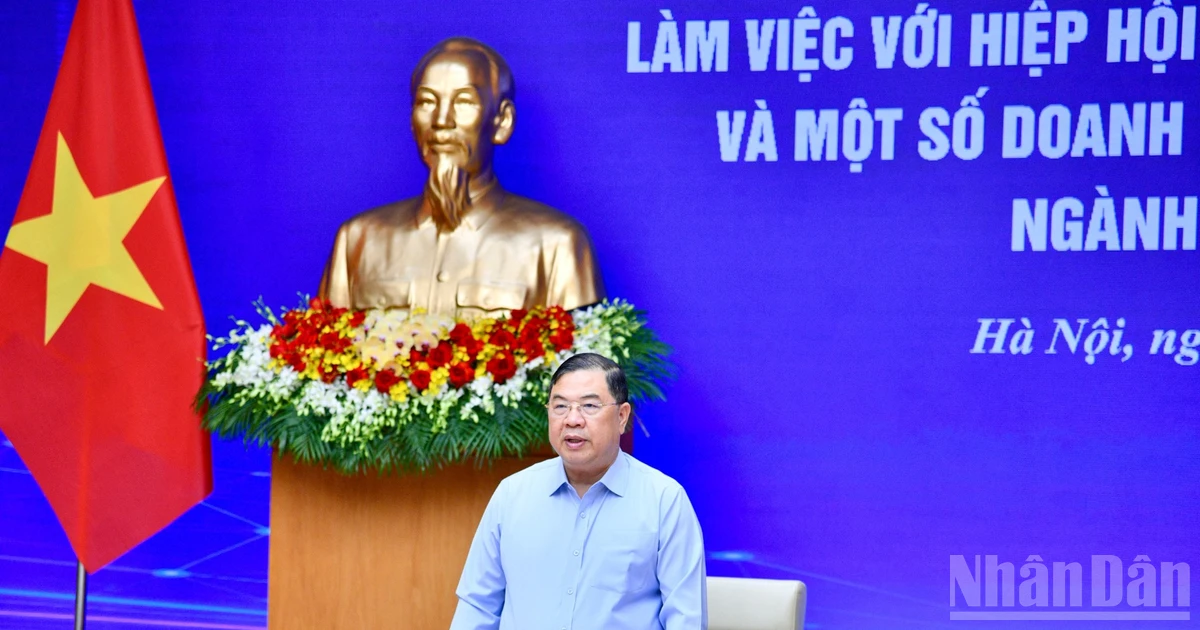
The Vietnamese government is set to strengthen support for its electronics and semiconductor industry, aiming to foster growth and enhance domestic production capabilities. On September 8, Standing Deputy Prime Minister Pham Gia Tuc chaired a meeting with the Vietnam Electronics Business Association and major electronics and semiconductor export-import enterprises to discuss challenges and solutions for future industrial development. Vietnam's electronics exports have shown robust performance. From January to August 2026, the export value of computers, electronic products, telephones, and their components reached approximately $101 billion, a 51% increase year-on-year. Notably, the export of telephone components has surged, indicating Vietnam's progress beyond mere assembly into component manufacturing. However, during the same period, while total trade reached $770 billion, the electronics and semiconductor sector recorded a trade deficit of $60 billion, with imports totaling $161 billion against exports of $101 billion. This deficit is attributed to the import of production materials essential for advanced technologies such as AI, data centers, and chip testing, including integrated circuits, memory, processors, displays, and circuit boards. The meeting highlighted that the underdeveloped state of domestic supporting industries and heavy reliance on imported components pose significant challenges. To address this and increase domestic added value, proposals included refining preferential policies, amending decrees on supporting industries, and implementing a supporting industry development program for 2026-2035 to boost the localization rate. The urgent need for high-quality human resource development, particularly in areas like integrated circuit and semiconductor design and automation, was also emphasized. Standing Deputy Prime Minister Pham Gia Tuc pledged that the government will continue to improve institutions and streamline administrative procedures to create a fair and favorable business environment for both domestic and FDI enterprises looking to expand production and business in Vietnam. He also instructed the Ministry of Industry and Trade to work with companies experiencing significant trade imbalances, especially those with large deficits, to clarify the structure and purpose of imports and their contribution to export production, thereby developing solutions to accelerate production and export activities. The government plans to regularly review and update the list of supporting industrial products, prioritizing the electronics industry. The focus will be on components and materials with high demand and domestic production potential, with a shift towards targeted support mechanisms based on regions and products, moving away from broad, individual support. Efforts will also be made to respond to international trade fluctuations, provide guidance on rules of origin and trade defense measures, leverage new generation Free Trade Agreements (FTAs), and promote trade and diversify export markets and raw material sources. The Vietnam Chamber of Commerce and Industry (VCCI) was urged to promote linkages between domestic and FDI enterprises and establish a specialized unit to build and continuously update a database of Vietnamese businesses, which will help FDI investors easily find domestic suppliers. The Vietnam Electronics Business Association (VEIA) is expected to act as an effective bridge between FDI and domestic firms, identify products, components, and materials suitable for localization, and promote supply chain integration. Source: Nhan Dan
Original source
Nhan Dan