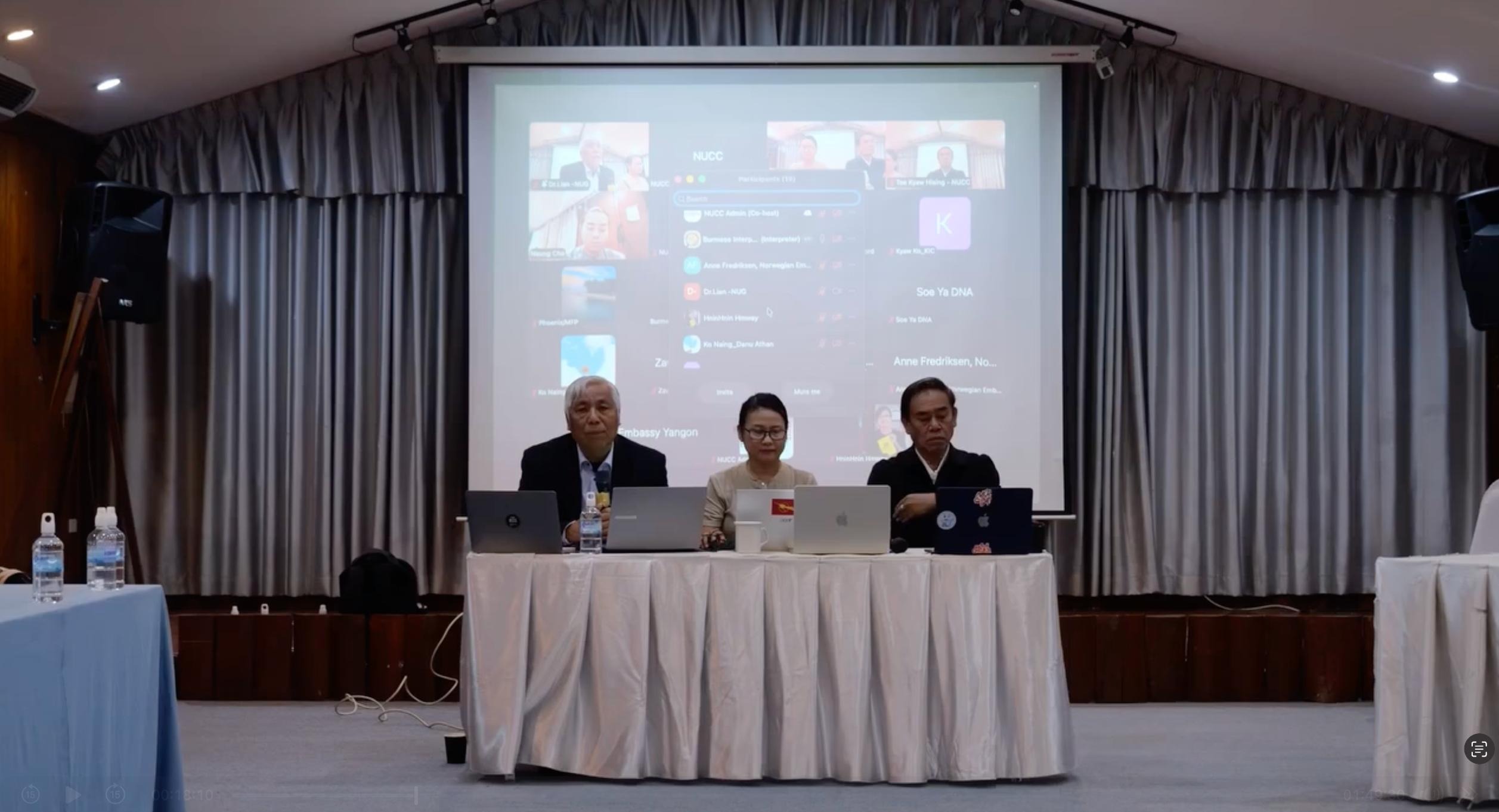
NUG Urges China to Drop Support for Junta, Citing Cyber-Scam and Drug Ties
The National Unity Government (NUG) has accused the chief of the military junta, U Min Aung Hlaing and his regime of deep involvement in global drug trafficking and cyber-scam operations, urging Beijing to reconsider its continued backing of the junta. The remarks were made by Dr. Lian Hmung Sakhong, the NUG’s Minister of Federal Union Affairs, during a July 5 event marking the completion of the zero draft of the Articles of Federal Transitional Arrangements (AFTA) — a framework aimed at guiding the country's political transition. “My comments are directed at China. The very U Min Aung Hlaing that you are supporting has not only destroyed Myanmar, but has also become one of the world's biggest drug traffickers and the individual who turned our country into a global telecom scam hub,” Dr. Lian Hmung Sakhong said. “Will China continue supporting someone who has displaced millions and devastated the country? Or will it choose to support us, who can stabilize the nation, build a better future, and establish a democratic federal union?
This article requires PRO
This article is outside the free access window or is a special report. PRO unlocks it and the full archive.
Related articles
- Illegal buildings used for online scam and gambling in Shwe Kokko area continue to be demolished
It has been learned that the demolition of illegal buildings remaining to be demolished among those used for online scam and gambling businesses in the Shwe Kokko area began as a second phase today (October 6). The natio
- Prize money fraud using fake ticket at POWER lottery shop in Pyin Oo Lwin city
It has been learned from the POWER lottery shop that an incident of fraudulently claiming prize money using a fake 50 million kyat lottery ticket occurred at the POWER lottery shop in Pyin Oo Lwin city. It was learned th
- Army attacks IDP camps in Ponnagyun using cluster bombs, drops 18 bombs on Taungkok
It is known that the interim government army has been continuously carrying out airstrikes from the air using jet fighters, cluster bombs, and 300-pound bombs on IDP camps and former military bases where battles have occ
- Nigeria military plane crashes with 32 on board
A military aircraft carrying 25 passengers and 7 crew members crashed in southern Nigeria, resulting in the deaths of all 32 people on board. Regarding this incident, Nigerian President Bola Tinubu has expressed his cond